
What to do after CA Foundation exams
Blog, CA Inter

What to do after CA Foundation exams?

Finishing your CA Foundation exams feels like a huge relief. After months of studying, mock tests, revisions, and stress, suddenly you have free time — and one big question in your mind: “What should I do now?” Some students feel confident about clearing the exam. Some are confused about their performance. Others are worried about results. But the truth is simple: The period after CA Foundation exams is extremely important. The students who use this time smartly stay ahead in CA Intermediate preparation and reduce future pressure. In this blog, we will discuss the best things you should do after CA Foundation exams, mistakes to avoid, and how to prepare yourself for the next stage of the CA journey. First of All — Take a Small Break You have worked hard for months. Your mind and body need recovery. Take 4–7 days to relax: Many CA students immediately start overthinking after exams: But constantly analyzing papers changes nothing. Instead, use this time to mentally recharge. A fresh mind performs better in CA Intermediate. Understand the Reality of CA Journey CA Foundation is only the first step. The real challenge begins in: That’s why students who start planning early usually perform better in the long run. Even if you are unsure about your result, this waiting period should not be wasted. If You Are Confident About Passing If your papers went well, this is the perfect time to start early preparation for CA Intermediate. Why Start Early? CA Intermediate syllabus is much bigger than Foundation. Students often underestimate: Starting early gives you: Most successful CA students begin preparation before results. Start Exploring CA Intermediate Subjects You do not need to study 10 hours daily right now. Start slowly: Important CA Intermediate subjects include: Initially, focus more on understanding the level difference between Foundation and Intermediate. Improve Your Skills During the Waiting Period One mistake many students make is only waiting for results. Instead, use this time to build practical skills. Skills You Can Learn Today companies value practical knowledge along with academic performance. Students and mentors across CA communities also discuss the importance of consistency, practical skills, and early preparation during this transition phase. Focus on ICAI Study Material Many toppers repeatedly say one thing: ICAI material should be your first priority. Whether you prepare through coaching or self-study: Experts continue to recommend ICAI study material, revision practice, and mock tests as the core strategy for CA success. Make a Simple Study Routine Do not suddenly create a 14-hour study timetable. Start with a balanced schedule: The goal is consistency, not temporary motivation. As many CA students share online, consistency matters more than extreme study schedules. What If You Are Not Confident About Passing? First, do not panic. Many students feel their exams went badly but still clear Foundation. Until results are declared: If results do not go as expected, your preparation will still help in the next attempt. Avoid These Common Mistakes After CA Foundation 1. Taking a Very Long Break A 1-week break is fine.A 2-month break destroys momentum. 2. Comparing Yourself With Others Everyone’s CA journey is different. 3. Ignoring Health Sleep, exercise, and mental health matter during CA preparation. 4. Only Watching Motivation Videos Motivation helps for one day. Discipline helps for years. 5. Waiting for “Perfect Time” There is no perfect time to start Intermediate. Start small and continue consistently. Should You Join Coaching Immediately? It depends on: But early guidance helps many students because CA Intermediate requires: Choose faculty carefully based on teaching style and support system — not only popularity. Build Good Habits Before CA Intermediate This is the best time to improve: These habits matter more than studying for extremely long hours. Final Advice for CA Foundation Students Your CA Foundation exams are over, but your CA journey is just beginning. Do not waste the post-exam period in: Instead: Small consistent efforts during this phase can create a huge advantage later.Remember: CA is not a sprint. It is a long journey of consistency, patience, and smart preparation. Still Confused? So Here Parag Sir is available with a video to help FAQ’s

how to get rank in ca?
Blog, CA Course

How to Get Top Rank in CA with StudyByTech Classes

Are you aspiring to achieve top ranks in your CA exams and wondering how to elevate your preparation to the next level? Look no further! In this blog post, we’ll explore valuable insights and strategies to help you climb the ladder of success in your CA journey, with a special focus on the exceptional resources provided by StudyByTech for CA classes. Understanding the CA Exam Landscape The Chartered Accountancy (CA) exams are known for their rigorous nature and high competition. To secure a top rank, it’s crucial to comprehend the exam pattern, syllabus, and the level of preparation required. CA aspirants should have a comprehensive study plan covering all subjects and ample practice with mock exams. The Role of Quality Education For CA One of the key elements in achieving success in CA exams is quality education. Here’s where StudyByTech comes into play. Known for its exceptional CA Classes, StudyByTech offers a comprehensive and structured curriculum designed to cater to the specific needs of CA aspirants. Advantages of StudyByTech CA Classes 1. Expert Faculty:  StudyByTech boasts a team of experienced and knowledgeable faculty members who are experts in their respective fields. Their guidance can prove invaluable in understanding complex concepts and mastering challenging topics. 2. Comprehensive Study Material:  The study material provided by StudyByTech is meticulously crafted to cover the entire CA syllabus. It is updated regularly to align with any changes in the exam pattern, ensuring that students are well-prepared. 3. Interactive Learning Environment:  StudyByTech classes provide an interactive learning experience, with live sessions, doubt-solving forums, and personalized attention to each student. This fosters a conducive environment for effective learning. Effective Study Strategies While quality education is crucial, it is equally important to adopt effective study strategies. Here are some tips to enhance your preparation: 1. Time Management:  Create a realistic and well-structured study schedule. Allocate sufficient time to each subject and prioritize based on your strengths and weaknesses. 2. Consistent Revision:  Regular revision is key to retention. Plan periodic revisions of previously covered topics to reinforce your understanding. 3. Practice with mock Exams: Familiarize yourself with the exam pattern by practicing with mock exams. This not only boosts your confidence but also helps in identifying areas that need more attention. Staying Motivated During CA Exam The journey to securing a top rank in CA exams can be challenging, and staying motivated is crucial. Set realistic goals, celebrate small victories, and surround yourself with positive influences. Joining StudyByTech classes not only equips you with the knowledge but also offers a supportive community to keep you motivated throughout the preparation phase. In conclusion, Achieving a top rank in CA exams requires a combination of quality education, effective study strategies, and unwavering determination. Enrolling in StudyByTech’s CA classes can undoubtedly provide you with the edge you need to excel in your CA journey. So, gear up, follow these tips, and embark on the path to success!

Direct Entry in CA 2026_ Complete Guide
Blog, CA Foundation, Direct entry

CA Foundation or Direct Entry in CA: Which Is Better?

If you completed graduation and now want to become a Chartered Accountant, the Direct Entry in CA route can save you a lot of time. Instead of appearing for the CA Foundation exam, eligible students can directly register for CA Intermediate through the ICAI Direct Entry Scheme. Many students still think CA is possible only after Class 12, but that’s no longer true. Thousands of B.Com, BBA, BAF, BMS, MBA, and even non-commerce graduates are now choosing the direct entry route because it offers a faster pathway toward becoming a CA. In this detailed guide, we’ll explain everything about the CA Direct Entry Scheme 2026 — eligibility, registration process, fees, duration, articleship, and important ICAI rules. What is Direct Entry in CA? The Direct Entry Scheme is a special route introduced by the Institute of Chartered Accountants of India (ICAI) that allows eligible graduates and postgraduates to enter directly into the CA Intermediate level without clearing CA Foundation. This route was introduced mainly for students who already have academic knowledge through graduation and want to start CA after college. Who is Eligible for Direct Entry in CA? You can register through the CA Direct Entry Route if you fall into any of these categories: 1. Commerce Graduates/Postgraduates Students from commerce backgrounds must score: Applicable courses include: 2. Non-Commerce Graduates/Postgraduates Students from science, arts, or other streams need: 3. Students Who Cleared CMA or CS Intermediate Students who passed: can also directly enter CA Intermediate. Can Final Year Students Apply for Direct Entry? Yes. Final-year graduation students can apply provisionally for CA Intermediate through Direct Entry. However, they must submit proof of passing graduation with the required percentage within the ICAI timeline. Benefits of Direct Entry in CA Skip CA Foundation The biggest advantage is that you can directly enter CA Intermediate. Save Time You save approximately 8–12 months compared to the regular CA route. Faster Start to CA Career Graduates already have basic understanding of accounts, business laws, and taxation, making CA preparation smoother. Better Career Transition Students who decide late to pursue CA after graduation still get a direct opportunity to become a Chartered Accountant. CA Direct Entry Registration Process 2026 The registration process is completely online through the official ICAI SSP Portal. Step 1: Visit ICAI SSP Portal Go to the official ICAI student portal. Step 2: Create Student Account Register yourself as a new student. Step 3: Choose CA Intermediate (Direct Entry) Select the Direct Entry Route option. Step 4: Upload Documents Upload scanned copies of: Step 5: Pay Registration Fees Complete the payment online. Step 6: Confirmation After successful verification, ICAI confirms your registration. CA Direct Entry Fees 2026 Particulars Approx Fees CA Intermediate Registration ₹15,000 Student Activities Fee ₹2,000 Registration as Articled Assistant ₹1,000 Total Approx Fees ₹18,000 Additional training fees for ICITSS may also apply. Articleship Rules Under Direct Entry Under the new ICAI scheme, students entering through Direct Entry must complete: Students should regularly check ICAI notifications because articleship rules and eligibility timelines may change based on ICAI updates. Duration of CA Through Direct Entry The approximate duration becomes: Stage Duration CA Intermediate Preparation 8–12 Months Articleship Training 2 Years CA Final Preparation 6–8 Months Overall, the CA course through Direct Entry usually takes around 4 to 4.5 years depending on exam attempts. Is Direct Entry in CA Difficult? Honestly, many students initially struggle because CA Intermediate syllabus is much more advanced than graduation. However, graduates also have some advantages: The key is proper planning, consistency, revision, and practice. Common Mistakes Direct Entry Students Make Starting Articleship Too Early Without Preparation Many students underestimate CA Intermediate and focus only on articleship. Ignoring ICAI Study Material ICAI questions are heavily based on ICAI material, RTPs, and MTPs. Poor Time Management Balancing articleship and studies becomes difficult without a proper schedule. Depending Only on YouTube Lectures Free resources help, but structured preparation matters a lot for CA exams. Best Strategy for Direct Entry Students Complete Syllabus Early Try to finish at least one full revision before exams. Focus on ICAI Material ICAI modules, RTPs, MTPs, and PYQs should be your priority. Build Strong Concepts Subjects like: need conceptual clarity, not rote learning. Revision is Everything Most students fail because of lack of revision, not lack of classes. Should You Choose Direct Entry in CA? Final Thoughts The Direct Entry in CA route is one of the best opportunities for graduates who want to become Chartered Accountants without starting from the Foundation level. If planned properly, this route can save time and help you enter the professional world faster. But remember — CA is not easy. Whether you enter through Foundation or Direct Entry, consistent preparation and smart strategy matter the most. Students who stay disciplined, revise regularly, and practice ICAI questions properly usually perform much better in CA Intermediate exams. FAQ’S

CA Inter: Both Groups vs. Single Group
CA Inter

CA Inter: Both Groups vs. Single Group

Ah, the age-old dilemma of CA Inter aspirants: do I attempt both groups or just one? It’s a decision that can make or break your study schedule, your sanity, and ultimately, your progress towards that coveted CA title. Worry not, future chartered accountants; this blog is your compass through the choppy waters of this crucial choice.   The Case for Both Groups: Double the Triumph: Clear both groups in one go, and you’ll experience the double whammy of academic accomplishment and a head start on your CA journey. Efficiency in disguise: Juggling both groups forces you to manage your time effectively, a skill that will serve you well throughout your career. Rank Potential: Attempting both groups makes you eligible for a coveted CA rank, opening doors to better job opportunities. The Single Group Argument: Focused Preparation: Dedicating all your energy to one group allows for deeper understanding and thorough revision. Reduced Pressure: Less syllabus means less stress, potentially boosting your confidence and exam performance. Flexible Schedule: You can adapt your study plan to personal commitments and work requirements more easily. Still confused? So here Parag sir is available with a video to help you through https://youtube.com/shorts/d374c7QXpxgPro Tip: You shall prepare for both groups simultaneously and try to cover the whole syllabus together. At the time of filling out your exam form, you will decide whether you are ready for one or both groups or Group 1 or group 2 first. So, how will you decide- Ask yourself: Time Management: Can you dedicate sufficient hours to both groups without compromising quality? Personal Commitments: Do you have other responsibilities that might limit your study time? Confidence Level: Are you confident in your ability to handle the pressure of both groups together? Remember: There’s no one-size-fits-all answer. Choose the path that aligns with your learning style, abilities, and goals. Talk to CA mentors, professors, and seniors for their insights and experiences. Don’t be afraid to change your mind! If you feel overwhelmed, switching to a single group after starting with both is an option. Ultimately, the key is to make an informed decision and stick to it with unwavering dedication. Whether you conquer both groups at once or take them one at a time, remember, the CA journey is filled with challenges and rewards. Embrace the grind, celebrate your victories, and keep your eyes firmly fixed on your ultimate goal: that prized CA degree. So, future CAs, choose your weapon wisely, wield it with passion, and charge into the CA Inter battlefield with the confidence of a champion. Remember, the path to success may be different for each of us, but the destination—the pinnacle of the accounting world—awaits us all. Good luck! Can we prepare for CA inter in 3 months? Yes and no. If you are a first-timer and you have only 3 months in hand, you should attempt only one group. But, if you’re planning to attempt both groups, 3 months won’t be sufficient. Which group is harder in CA Intermediate? The majority of individuals concur that auditing is the most challenging CA Intermediate subject. For many students, independent study is challenging and competitive. A deeper grasp of auditing can be achieved by studying legal topics such as corporate law, accounting, and other legal topics. Is it better to take both groups in CA Inter? The only way you can compete for CA rank is if you sit for both groups at the same time. Therefore, even if you receive great grades in each of the two groups on your own, you will not be able to receive a rank. By making the endeavor, you take a chance. Can I clear CA Inter by self study? You can manage to clear CA inter exams through self-study. To do that, you will need a solid routine and strict discipline to stick to it. While ICAI material, previous years’ papers, and RTP are good enough, most students benefit from specialized CA inter coaching classes, especially the mock tests.

How & When to Study CA Final SPOM? Let's dive more in this!
CA Final

How & When to Study CA Final SPOM? Let’s dive more in this!

Attention, future CAs! The Institute of Chartered Accountants of India (ICAI) has rolled out a significant update to the CA Final SPOM course curriculum, introducing Self-Paced Online Module (SPOM) for May 2024 exams onwards. Feeling bewildered? This blog is your compass, guiding you through the essential details of this crucial change. What are Self-Paced Online Modules (SPOM)? Self-Paced Online Modules (SPOM) are interactive online learning modules designed to enhance your understanding of specific subject areas. These modules cover Set A: Corporate and Economic Laws and Set B: Strategic Cost & Performance Management. Why the change? The ICAI aims to provide students with greater flexibility and self-directed learning opportunities. SPOM allow you to tailor your learning pace and schedule, catering to your individual needs and preferences. Key Features of SPOM: Preparing for the New Exam Format: The Takeaway: The introduction of Self-Paced Online Modules (SPOM) presents both challenges and opportunities for CA Final aspirants. Don’t view it as a burden, but rather as a chance to take ownership of your learning and gain a deeper understanding of crucial subject areas. Adapt your study strategies, embrace flexibility, and conquer the New CA Final with confidence! Bonus Tips: Telegram: https://t.me/CAFinalGroup Instagram: https://www.instagram.com/studybytech/ Twitter: https://twitter.com/StudyByTech Linkedin: https://www.linkedin.com/company/studybytech/ Pinterest: https://in.pinterest.com/studybytech/ Facebook: https://www.facebook.com/StudyByTech/ Instagram: https://www.instagram.com/studybytech/ WhatsApp: https://whatsapp.com/channel/0029VaALt4684Om9Nynyhk2U Remember, while the syllabus may evolve, the essence of the CA journey remains the same – dedication, perseverance, and the relentless pursuit of knowledge. So, buckle up, future chartered accountants, and embark on this new chapter of your professional journey with an agile learning spirit! FAQS Want to enroll to the classes?

CA Final SCPM By Parag Gupta Sir
CA Final

Master CA Final SCPM: Unlock Success with Parag Gupta’s Expertise & StudyByTech’s Comprehensive Self-Paced Module

Facebook Twitter Youtube Whatsapp Telegram Linkedin Instagram Pinterest Introduction Aspiring to excel in the CA Final SCPM examination? Look no further than StudyByTech, your gateway to success in the world of Chartered Accountancy. In this blog, we will delve into the intricacies of StudyByTech’s CA Final SCPM Self-Paced Module classes, meticulously crafted and delivered by Parag Gupta Sir – India’s eminent faculty for CA Final SCPM. Let’s explore how this program, renowned for its excellence, can help you prepare effectively for the upcoming exam. The Essence of CA Final SCPM The CA Final Strategic Cost and Performance Management (SCPM) paper is a crucial stepping stone in the journey to becoming a Chartered Accountant. It demands a profound understanding of strategic cost management, performance measurement, and business valuation. Given its complexity, aspirants often seek guidance from the best in the field, and Parag Gupta Sir stands tall as a beacon of knowledge and expertise. Parag Gupta Sir: India’s Best Faculty for CA Final SCPM When it comes to preparing for the CA Final SCPM, having the right mentor can make all the difference. Parag Gupta Sir, with his extensive experience and deep understanding of the subject matter, has earned the reputation of being India’s best faculty for CA Final SCPM. His teaching methodology blends theoretical concepts with practical insights, making the learning process not only comprehensive but also engaging. StudyByTech: Your Learning Companion StudyByTech, a renowned educational platform, has collaborated with Parag Gupta Sir to offer classes for CA Final SCPM. This module is designed to cater to the diverse learning needs of aspirants, providing them with the flexibility to study at their own pace while ensuring comprehensive coverage of the syllabus as per ICAI. Key Features of StudyByTech’s CA Final SCPM Self-Paced Module 1.Comprehensive Study Material: The self-paced module includes a well-structured study material provided by ICAI that covers the entire CA Final SCPM syllabus. The content is not only comprehensive but also aligned with the latest examination trends, ensuring that aspirants are well-prepared for any curveballs that may come their way. Parag sir will be teaching the course from this ICAi study material only and add important notes to the study material itself. 2. Recorded Lectures by Parag Gupta Sir: The self-paced module provides recorded lectures by Parag Gupta Sir himself. This feature allows aspirants to revisit complex topics, grasp difficult concepts, and learn at their own pace. The ability to pause, rewind, and replay lectures ensures that no doubt remains unresolved. 3. Strategic Exam Preparation: Parag Gupta Sir, known for his strategic approach to teaching, guides aspirants not just in understanding the subject matter but also in developing an effective exam strategy. Tips, tricks, and insights into the examination pattern are invaluable assets that set StudyByTech apart. 4. Doubt Resolution Sessions: A unique feature of StudyByTech’s module is the provision for doubt resolution sessions. Aspirants can clarify their doubts directly with Parag Gupta Sir, ensuring that no query goes unanswered. This personalized touch adds immense value to the learning experience. Preparing for CA Final SCPM exam: A Roadmap Now that we’ve explored the features of StudyByTech’s CA Final SCPM Self-Paced Module, let’s outline a roadmap to help you make the most of this comprehensive program. 1. Familiarize Yourself with the Study Material: Begin by acquainting yourself with the well-structured study material provided. Take note of the key concepts, formulas, and case studies to be covered. This initial overview will help you understand the scope of the syllabus. 2. Attend Online : Leverage the flexibility offered by StudyByTech’s module. Attend online or offline classes as per your convenience. Parag Gupta Sir’s engaging teaching style ensures that even complex topics become comprehensible. 3. Revisit Recorded Lectures: Use the recorded lectures to revisit challenging topics. The ability to pause, rewind, and replay ensures that you grasp every concept thoroughly. This feature is particularly beneficial when dealing with intricate subjects within SCPM. 4. Attend Doubt Resolution Sessions: Take advantage of doubt resolution sessions to seek clarification on any lingering questions. Parag Gupta Sir’s expertise ensures that you receive accurate and insightful responses, enhancing your overall preparation. 5. Review and Revise: In the final weeks leading up to the exam, allocate time for comprehensive review and revision. Focus on key concepts, formulae, and case studies. The goal is to reinforce your understanding and solidify your grasp on the subject.  6. Practice: Check previous year question papers, Mock tests and Revision test papers released by ICAI of atleast 5 years and with time bound scenario, practice questions by writing their answers. Conclusion In conclusion, StudyByTech’s CA Final SCPM Self-Paced Module, curated and delivered by Parag Gupta Sir, emerges as a beacon of excellence for aspirants preparing for the CA Final SCPM examination. With its comprehensive study material, flexible learning options, and the guidance of India’s best faculty for CA Final SCPM, this module equips you with the tools needed to navigate the complexities of strategic cost and performance management. Embark on your journey to success with StudyByTech, where preparation meets excellence. Join for more daily information on the WhatsApp channel. Read more: ICAI FAQ’s Is IBS an open book exam? Yes, IBS Paper 6 is an open book exam. As per ICAI’s official notification, Final Paper 6: Integrated Business Solutions is an open book and case study-based examination. You are allowed to bring all your subject materials, ICAI modules, concept notes, and question banks to the exam. What is IBS in CA final? IBS is Paper 6: Integrated Business Solutions – a mandatory multidisciplinary case study paper for CA Final Group 2. It integrates all seven subjects of the earlier CA syllabus into integrated business situations. The paper tests students’ skills in analyzing intricate business situations and offering complete solutions. Can I pass the CA final without coaching? Though self-study is feasible, CA Final has an extremely low pass percentage of 8-10%. With such a huge syllabus and complexity, studying with expert faculties like Parag Gupta sir really augments your prospects. The methodical

Blog, CA Course

Scope of Chartered Accountant course

Chartered Accountant has long been one of India’s most popular professions. This profession isn’t always smooth to get into but in case you control to achieve this, it gives a excellent profession route, revenue, and appreciate among human beings. One of the reasons why people like Chartered Accountants is that becoming one isn’t easy. The route to becoming a Chartered Accountant or CA is difficult and it could be effortlessly stated that it is one of the hardest profession. We want to preserve our profession guides very actual and sincere, so we needed to open with the cruelest truths approximately this career.Allow us to help you through this career guidebook if you believe you have done your homework and are committed! What is Chartered Accountancy? Chartered Accountant or Accountancy basically means the same thing. This job involves managing the business finances. These include financial debt management, budgeting, auditing, business ventures and taxation. The differentiation in the middle of an accountant and a chartered accountant is that the latter has studied for many years and passed numerous tests in various accounting subjects to accomplish chartered accountant status. Chartered Accountancy course starts with the enrollment in ICAI under CA Foundation exam. This exam is a entry level exam which require knowledge about Account, Law, Maths & Economic. After clearing this exam, your next level is CA Inter exam, which is divided into 2 groups with 3 subjects in each groups. Once you clear CA Inter, you need 2 yrs of Articleship under some CA firm to gain some practical knowledge. Then you are eliglible to give CA Final exam which is actually last level of exam, after which your name will get a prefix CA. What is the role of a Chartered Accountant? Chartered Accountants are professionals overall who work in a variety of sectors of the economy, managing an entity’s budget, providing financial advice, and assisting with cash management. This may be for a commercial enterprise, person or government, Consulting firms assign chartered accountants to a variety of clients to help them achieve their short- and long-term economic goals.. So, if you want to paintings for multiple customers then a consultancy company might be the right healthy for you. Scope of Chartered Accountancy Services Options – Accounting Internal audit, Tax audit, or Financial Reporting – Corporate services Corporate Finance, Mergers and Acquisitions, or Risk Management  – Banking and finance Banking, Insurance, or Investment firms – Teaching Teach Accountancy or Commerce at a college or institution – Entrepreneurship Start your own Business or join a family business – Government Auditor, Tax Officer, or Accounts Officer in Government Departments – Law Pursue a law Degree and work in Civil, Corporate, Labor, or other areas of Law – Other Work as a Financial Advisor, Tax Consultant, or Risk Analyst CA Chartered accountants are always in high overall demand within the sectors cited above. See courses of Chartered Accountant- Click here Tools for chartered accountants Chartered Accountants used to utilize manual logs and registers to keep track of essential data and accounting for a business. Now with the advancement, Chartered accountants can use a variety of tools to manage their accounts and do a variety of duties online. Here’s a quick run over some of the most famous used accounting software worldwide: Advice on how to become a successful Chartered Accountant Every business searches for certain characteristics in potential employees. As a result, it’s crucial to focus on both your entire personality and your Chartered Accountant abilities. Here also are a few frequent characteristics or behaviour that will help you stand out in an interview and land your ideal job. Communication Communication, both written and spoken, is critical to landing any job. As a CA chartered accountant, you will need to communicate with colleagues, stakeholders, and decision-makers, therefore you must be able to convey your message professionally. Business understanding Chartered accountants can help a firm with budgeting, forecasting, taxation, and much more. As a result, they must keep up with current business trends and the ever-changing financial industry.So, keep reading to stay on top of all the newest trends. Patience Chartered accountants have a demanding and demanding also work environment that takes a great deal of patience. Because you are in charge of an entity’s finances, accounts, and much more as a CA, any rash choice might have disastrous implications. So practise your patience. This will enable you to have a more steady career. Self-discipline Chartered accountants are always learning new things. When you become a chartered accountant, you must continue to educate yourself on financial developments. This continuous learning will keep you sharp and distinguish you from your peers.Nobody will force you to learn these new skills; You must by choice be self-motivated. *To check Parag Gupta sir Latest CA Courses- Click Here FAQ’s

ca foundation full course for sept & jan attempt 2026- 2027
Blog, CA Foundation

CA Foundation: Full Course 2026

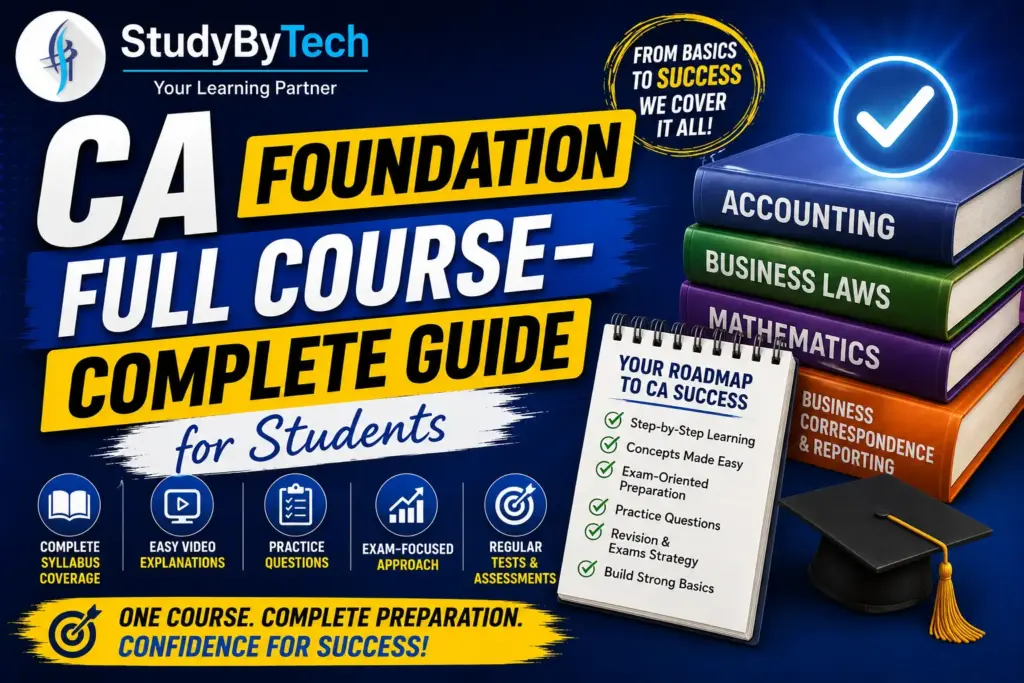
CA Foundation Full Course– Complete Guide for Students Preparing for Sept 26 & Jan27 Attempts <figure> <img width="1536" height="1024" src="https://www.paraggupta.com/wp-content/uploads/chatgpt-image-may-14-2026-04_44_05-pm.webp" alt="ca foundation full course for sept &amp; jan attempt 2026- 2027" srcset="https://www.paraggupta.com/wp-content/uploads/chatgpt-image-may-14-2026-04_44_05-pm.webp 1536w, https://www.paraggupta.com/wp-content/uploads/2023/11/chatgpt-image-may-14-2026-04_44_05-pm-300×200.webp 300w, https://www.paraggupta.com/wp-content/uploads/2023/11/chatgpt-image-may-14-2026-04_44_05-pm-1024×683.webp 1024w, https://www.paraggupta.com/wp-content/uploads/2023/11/chatgpt-image-may-14-2026-04_44_05-pm-768×512.webp 768w, https://www.paraggupta.com/wp-content/uploads/2023/11/chatgpt-image-may-14-2026-04_44_05-pm-600×400.webp 600w" sizes="(max-width: 1536px) 100vw, 1536px" /> <figcaption></figcaption> </figure> <!– KEY TAKEAWAYS SECTION – CA FOUNDATION FULL COURSE 2026 –></p><h3 style="margin: 0 0 8px 0; color: #1a2a6c; font-size: 24px;">📌 Key Takeaways – CA Foundation Full Course 2026</h3><p style="margin: 0 0 20px 0; color: #555; border-bottom: 2px solid #fdbb4d; display: inline-block; padding-bottom: 5px;">What you get when you enroll with StudyByTech 1Complete 4-Subject CoverageAll subjects from basic to advanced: Principles & Practice of Accounting, Business Laws, Quantitative Aptitude (Maths, LR & Statistics), and Business Economics. 100% aligned with ICAI pattern.2Live + Recorded Classes with Test SeriesAttend live interactive classes and watch recorded lectures for revision. Includes weekly tests, subject-wise tests, full syllabus mock tests, and performance tracking.3Beginner-Friendly + Exam-Oriented ApproachStep-by-step teaching for beginners (including students weak in Maths/Accounts). Focus on concept application, PYQ practice, ICAI pattern MCQs, time management, and writing practice for Law. 🎯 Target Exams: Sept 2026 & Jan 2027📅 Best Time to Join: Immediately after Class 12📞 Contact: +91 9968875529 💡 Recommended Study Plan: Daily 4-6 focused hours | One practical + one theory subject daily | Weekly revision | Monthly mock tests Preparing for the CA Foundation exam is not just about studying hard — it’s about studying smart with the right guidance, strategy, and consistency. Whether you are starting your CA journey after Class 12 or switching from self-study to structured preparation, choosing the right CA Foundation full course can make a huge difference in your results. At StudyByTech, we understand what CA students actually struggle with — backlog, confusion in Law, fear of Maths, lack of revision, and not knowing how to manage all four subjects together. That’s why our CA Foundation Full Course 2026 is designed for complete beginners as well as repeaters who want proper conceptual clarity, regular practice, mentorship, and exam-oriented preparation. Unlike many platforms that focus only on completing lectures, our focus is on helping students stay consistent till the final ICAI exam. Why Students Choose a CA Foundation Full Course Instead of Individual Subjects Many students start preparing subject-wise from YouTube or different faculties. Initially, it feels manageable, but after a few weeks, most students face: Lecture backlog No proper study routine Lack of revision planning Confusion between multiple teachers No accountability Weak test practice A structured CA Foundation full course solves these problems because everything is planned in one place. According to Physics Wallah CA Foundation Batches, students commonly struggle with choosing the right batch, managing multiple subjects, and staying consistent throughout preparation. What You Get in StudyByTech CA Foundation Full Course 2026 Complete Coverage of All 4 Subjects The course includes complete preparation for: Principles & Practice of Accounting Business Laws Quantitative Aptitude (Maths, LR & Statistics) Business Economics Every subject is taught from basic to advanced level so even beginners can understand concepts easily. Live + Recorded Classes Students can attend live interactive classes and also watch recorded lectures for revision or backlog coverage. This helps students who: Go to school/college Miss live classes Need extra revision before exams Demo Classes- Click Here Concept Clarity + Exam-Oriented Preparation The CA Foundation exam is not just theoretical. ICAI focuses heavily on: Concept application Presentation MCQs Time management Our teaching approach focuses on: Practical understanding PYQ practice ICAI pattern questions Mock tests Writing practice for Law Regular Tests & Performance Tracking Consistency is one of the biggest reasons students fail CA Foundation. That’s why regular: Weekly tests Subject-wise tests Full syllabus mock tests Performance analysis are included in the course. Even top coaching platforms emphasize weekly practice tests and continuous evaluation because they help students identify weak areas early. Best Time to Join CA Foundation Full Course 2026 The earlier you start, the better your preparation becomes. If You Are Targeting September 2026 Attempt Start immediately after Class 12 boards or as early as possible. If You Are Targeting January 2027 Attempt You can prepare comfortably with proper revision cycles and mock test practice. Students who start early usually get: Better revision time Less stress Stronger concepts More mock test exposure Online vs Offline CA Foundation Coaching – Which Is Better? Today, most CA students prefer online coaching because of flexibility and affordability. Benefits of Online CA Foundation Classes Learn from home Save travel time Watch recordings anytime Affordable fees Access from any city However, success in online coaching depends heavily on: Discipline Proper mentorship Test practice Doubt solving That’s why StudyByTech combines online flexibility with structured guidance. Common Mistakes CA Foundation Students Make 1. Ignoring Revision Students keep watching lectures but never revise properly. 2. Studying Without Tests Mock tests are extremely important for ICAI exams. 3. Fear of Maths & Law Most students avoid difficult subjects instead of improving gradually. 4. Depending Only on Free Content Free content helps initially, but structured preparation becomes necessary later.On Reddit, many CA students discussing online batches mention that backlog management and consistency become major issues during preparation. How to Prepare for CA Foundation Along with School or College Many students preparing for CA Foundation are also handling: Class 12 studies B.Com Regular college Here’s a simple strategy: Daily 4–6 focused study hours One practical + one theory subject daily Weekly revision day Monthly mock tests Avoid lecture backlog Consistency matters more than studying 14 hours randomly. Why StudyByTech for CA Foundation Full Course 2026? Student-Focused Learning We focus on: Concept clarity Doubt solving Exam strategy Revision planning Student mentorship Beginner-Friendly Teaching Even students weak in Maths or Accounts can understand concepts easily with step-by-step explanation. Affordable & Accessible Our aim is to provide quality CA coaching accessible to students across India. Regular Motivation & Guidance CA preparation is a long journey. Proper guidance and accountability help students stay consistent. Final Thoughts CA Foundation is the first step toward becoming a Chartered

Blog, CA Foundation

Objectives of Accounting Simplified I CA Foundation Accounts

Objective Of Accounting Simplified Introduction Accounting is a crucial aspect of the business world, often seen as the “language of business.” As you prepare for the CA Foundation Accounts exam in May 2024, understanding the objectives of accounting is essential. ICAI study material is one of the most important resources of knowledge that no CA Foundation student should ignore. Let’s break down these objectives in simple terms to help you grasp the fundamentals, Simplified I CA Foundation accounts I May 24. Objective 1: Systematic Recording of Transactions The primary goal of accounting is to keep a well-organized record of all financial transactions that occur in a business. This process, often called bookkeeping, involves writing down every money-related activity. Later, these records are sorted and summarized logically to create financial statements, which help in understanding the financial health of the business. Objective 2: Knowing Business Profits and Losses Accounting helps us figure out if a business is making money or losing it. Accountants prepare something called a profit and loss account. If the money earned (revenue) is more than the money spent (expenses), the business is making a profit. But if expenses exceed revenue, it’s running at a loss. This account helps the management and stakeholders make wise decisions. For example, if a business isn’t profitable, they can investigate the reasons and take corrective actions. Objective 3: Understanding the Financial Position Business owners don’t just want to know if they’re making money; they also want to know what they owe (liabilities) and what they own (assets) at a specific point in time. To get this information, accountants create a financial statement called a Balance Sheet. It’s like a snapshot of the business’s financial health at a particular moment. Objective 4: Providing Information for Decision-Making Accounting is often called the “language of business” because it communicates a company’s financial results to various people, such as investors and managers, through financial statements. These financial statements help decision-makers make informed choices based on the company’s financial performance. Objective 5: Assessing Solvency By preparing the balance sheet, management not only reveals what the company owns and owes but also assesses the business’s ability to meet its short-term (liquidity) and long-term (solvency) obligations when they become due. This helps in understanding whether the company can pay its bills now and in the future. Conclusion These simplified explanations of the objectives of accounting are essential not only for the CA Foundation Accounts exam but for your understanding of accounting in the real world. Remember, accounting is not just about numbers; it’s a powerful tool for making informed decisions and ensuring the financial well-being of a business. Mastering these objectives will set you on the right path to becoming a proficient accountant or finance professional, Simplified I CA Foundation Accounts I May 24. We sincerely hope you enjoy reading our blog. To help CA students from all over India, we offer BOTH ONLINE & OFFLINE classes. Enrol in our latest CA Foundation course, where all of our faculty members have the greatest professional qualifications & extensive experience, to learn more about the topics or to attend additional classes about CA Foundation Accounts under the New course valid from June 2024 exams onwards, join for more daily information on the WhatsApp channel

Blog, CA classes, CA Foundation

Understanding the Indian Contract Act, 1872: Meaning, Nature, and Scope

Introduction The Indian Contract Act, 1872 is a foundational piece of legislation that governs contracts and agreements in India. It provides a legal framework for individuals and entities to enter into agreements, which are crucial in everyday life, business, and commerce. ICAI study material is one of the most important resources of knowledge that no CA Foundation student should ignore. In this blog, we will delve into the meaning, nature, and scope of the Indian Contract Act, as outlined in the ICAI book used by students, while also providing additional insights and explanations. What is Indian Contract Law, 1872? The Indian Contract Act, 1872, is a significant piece of legislation in India that defines the rules and principles governing contracts, serving as the cornerstone of contract law in the country. The Indian Contract Act, 1872, defines and outlines the rules and principles that govern contracts. It addresses various elements of a valid contract, such as offer and acceptance, consideration, free consent, lawful object, and the capacity of parties to contract. It also deals with different types of contracts, including contracts of sale, contracts of agency, and contracts for services. The Basics of a Contract The Indian Contract Act, as stated in Section 10, defines a contract as an agreement made by free consent between parties competent to contract, for lawful consideration, with a lawful object, and not expressly declared to be void. This definition encapsulates the fundamental elements that must be present for an agreement to be legally binding. However, it’s important to note that the Act contains other requirements and principles that further refine the scope of a valid contract. 1. Two Parties One of the fundamental requirements for a contract is the involvement of at least two parties, where one party makes an offer, and the other party accepts it. This principle ensures that contracts involve distinct individuals or entities. For example, in a contract of sale, there must be a seller and a buyer, as a person cannot buy their own goods. This principle helps maintain the integrity and legality of contracts. 2. Intention to Create Legal Obligations For an agreement to qualify as a contract, both parties must have the intention to create a legal relationship. Social or domestic agreements, that lack this intention, are not enforceable in a court of law and, therefore, do not constitute contracts. For instance, an agreement between a husband and wife for maintenance may not be legally enforceable because the parties did not intend to create a legal relationship. 3. Other Formalities While contracts can be either written or spoken, certain contracts require specific formalities to be legally enforceable. For example, insurance contracts are generally valid only in writing. Additionally, some agreements, such as those involving immovable property, may need to be registered in compliance with relevant laws. These formalities ensure that certain types of agreements are executed with the appropriate level of documentation and oversight. 4. Certainty of Meaning A valid contract requires that the terms of the agreement be clear and definite. Vague or indefinite agreements are not legally binding. For example, an agreement to sell “a hundred tons of oil” without specifying the type of oil lacks the necessary certainty to be considered a valid contract. This requirement helps prevent disputes arising from ambiguities in contract terms. 5. Possibility of Performance The terms of an agreement should be capable of being performed. Agreements that involve actions that are impossible to perform are not enforceable as contracts. For instance, an agreement to find treasure using magic cannot be enforced because it is impossible to perform. This principle ensures that contracts are rooted in practicality and reason. SCOPE OF CONTRACT LAW: The entirety of the agreement is covered by the contract’s extension. Contracts might be little or large in value, and they can take many different forms. While some contracts have lengthy terms, some have shorter ones. Contractual content also varies according to how it is intended to be used. There are many facets to commercial law, and it might be difficult to define each one in detail. Commercial law generally requires a great deal of research, mostly on contracts, sales of goods, taxes, insurance, and leasing, among other topics. The basic parameters of the contract are established during the identification phase. Certain projects may fall under different contract scopes and have unique developmental and managerial linkages. As a result, other parties engaged may receive additional duties or services. For example, a hospital-related project can involve offering clinical services. In addition to deciding whether to offer extra services like cleaning and catering, in addition to its maintenance services, the hospital must also consider whether to assign clinical services to a commercial partner. The services that fall under the purview of the contract must also be specified by the hospital. Additionally, expertise in contracts encompasses a number of areas, such as- Club membership agreements Domestic or marriage agreements Unformed contractsfully executed contracts Conclusion The Indian Contract Act of 1872 plays a pivotal role in regulating agreements and contracts in India, providing a legal framework that upholds the principles of free consent, lawful consideration, lawful object, and the absence of express voidness. Additionally, it incorporates the essential elements discussed in the ICAI study material: the involvement of two parties, the intention to create legal obligations, the observance of required formalities, the certainty of terms, and the possibility of performance. These principles collectively define the meaning, nature, and scope of contracts under the Act, ensuring that agreements in India adhere to legal standards and maintain the integrity of commerce and relationships. We sincerely hope you enjoy reading our blog. To help CA students from all over India, we offer both online and offline classes. Enroll in our latest CA Foundation course, where all of our faculty members have the greatest professional qualifications & extensive experience, to learn more about the topics or to attend additional classes about CA Foundation Law under the New course valid from June 2025 exams onwards.

Scroll to Top