CA Final SCPM

ca parag gupta is explain ca final costing topic value chain analysis in just 60 second
Blogs, CA Final, SCPM

Value Chain Analysis: Quick Concept with Parag Gupta

Value chain analysis (VCA) that Michael Porter had developed is a very effective tool for every operational step that might be involved in the production process, which makes the company final product or service. In the CA Final Costing, this technique is very important as it is the one that will help the students understand how to obtain cost efficiency and value addition. Let’s quickly break down how Value Chain Analysis can help CA students tackle costing questions, thus sharpening your basic understanding using a 60-second video by Parag Gupta sir. What is Value Chain Analysis? Value Chain Analysis is a careful investigation of the functions that a company performs in a course of the production of a product or service. It is a missing link between the companies where value is created on the production line and where the problems are along with the appropriate solutions, cost reduction or, opportunities for differentiation, are shown. The main aim is to improve effectiveness, to cut expenses, and to enhance the business’s competitiveness level. Value Chain Analysis in 60 Seconds Primary Activities Primary activities are the essential business operations that directly create and distribute value to customers. They consist of: Support Activities Support activities such as teamwork, planning, and strategic management facilitate the flow of primary activities efficiently. The various support activities include the following: Why Use Value Chain Analysis? An effect between a strategy and profit could be established if the entity continuously scanning through allocating for those specific tasks that are non-expensive and assigning competitive advantages to the higher priced-costs ones. In brief, the analysis can raise the lowermost expenses and increase the efficient service more which will have a direct or indirect impact on the level of satisfaction of every user. Value Chain Ability of business is additionally the ability to concentrate on their main competence, get subcontractors to do non-critical tasks, and be more innovative wanted areas respectively. Conclusion Value Chain Analysis can reveal how your business operates most efficiently and it shows the potential for strategic growth. This could be achieved by dismantling every step in logistics as well as the sales process to identify where the cost can be cut, whether it’s changing the kind of supplier or some other solution that the customer will find appealing. With the help of experts such as Parag Gupta. FAQ’s

CA Final IBS – Expert Strategy & Case Study Tips by Parag Sir
CA, Blogs, CA Final

CA Final IBS – Expert Strategy & Case Study Tips by Parag Sir

What is CA Final IBS? CA Final IBS (Integrated Business Solutions), is quite difficult in nature with its long case studies that do not only need the technical knowledge but the strategic thinking too. The powerful part of the curriculum is the application of knowledge through case studies of all CA Final subjects, be it from self-paced online modules, or CA Final Group 1 subjects or CA Final Group 2 subjects. So this exam actually tests your applicability of all subjects in 1 exam. This blog is by CA Parag Gupta who is a well-known faculty in the CA Final SCPM(SPOM-set B). He has come up with a couple of ideas that can help you manage the long case studies in the CA Final IBS paper. The Council has decided that the duration of the examination of this paper would continue to be four hours and the manner of assessment of this paper would also be 40% by way of MCQs and 60% in the form of Descriptive Questions in each case study of 25 marks. Accordingly, there will be five case studies of 25 marks each out of which students will be required to attempt any four. Quick Tips for Long Case Studies | CA Final IBS | CA Parag Gupta: Why CA Parag Gupta is the Best Mentor for CA Final IBS? Parag Gupta sir is considered the most experienced and most recommended faculties amongst CA students. With his 2 decades of teaching experience as CA Inter Costing SM and CA Final SCPM(SPOM-set B) & IBS(SCPM portion), he has always helped & guided lakhs of students to achieve their goal of becoming CA. After every few years, ICAI make changes in syllabus and pattern of exams, which always confused CA students. Everytime, CA Parag Gupta sir’s guidelines has being the most helpful guide. His years of analysis and experience has helped him to understand how the course is evolving and how ICAI is actually thinking to take the examination and evaluation process. CA Final IBS May 25 Exam review: Break Down the Questions The initial stage in solving any long case study is to correctly comprehend the scenario. Frequently, scholars question their understanding of the case itself, which eventually leads to errors and confusion further in. Here are the ten essential steps to follow when working on the case: One important step that should not be missed is to comprehend the whole case before moving on to the set of questions. In the in IBS paper, a large number of questions are composed of different parts and involve detailed analysis. Follow these steps: CA Final IBS | How to Solve Case Studies (70+ Strategy) by Parag Sir: IBS Case Study Strategy The IBS paper deliberated over the management of strategic cost where cost management and decision making, performance measurement, and cost control are examined. By applying a framework, it is possible to follow a schedule to approach a case study. Several such concepts might be useful: Applying the use of these frameworks demonstrates to the examiner the fact that you are strategic in your mindset and you are not just working with numbers. Also, these frameworks help you in the way that they enable you to break the masses of information down into smaller parts which you can easier manage. Common Mistakes in IBS Exam & How to Avoid Them One can be tempted to retell the case study’s information, but instead, examiners are looking for original independent analysis. Utilise information provided to: Structure Your Answer Well Understanding is what plays a major role in lengthy case studies. Even with a perfect analysis, an improperly structured answer can lead the examiner to question your thoughts. The answers have always had to be structured as follows: Time Management Long case studies can be time-consuming, yet make sure they don’t take up all your exam time. Set a specific amount of time for each question, and if time is running down you should go to the next one. You are still able to revisit the question later if necessary. Conclusion To deal with these types of scenarios with the CA Final IBS paper, one must have a structured approach, logical analysis and good time management skills. This way, you can handle the exam even if there is a really difficult question, confidently and increase your marks also. FAQ’s

Altman’s Z, H Score, and Argenti’s A Score by CA Parag Gupta
Blogs, CA Final, SCPM

Understanding Financial Health: Altman’s Z, H Score, and Argenti’s A Score

In the field of financial analysis, evaluating a company’s stability and health is essential. Altman’s Z-Score, H Score, and Argenti’s A Score are three well-known models that are employed in this context. With the aid of these models, stakeholders can make well-informed judgements regarding a company’s financial situation. Each model provides distinct insights. Click here to learn Financial health & similar topic of SPOM-set B by Parag Gupta sir. ALTMAN’S Z score H Score The formula is: H = \frac{D_0 (1 + g_L) + D_0 H (g_S – g_L)}{r – g_L}H=r−gL​D0​(1+gL​)+D0​H(gS​−gL​)​ Where: Argenti’s A Score Argenti’s A Score is a diagnostic tool used to identify the risk of corporate failure. It was developed by John Argenti in the 1970s and focuses on three main areas: defects, mistakes, and symptoms. The A Score is calculated by assessing various factors within these areas, such as management quality, financial structure, and operational efficiency. The scoring system is: Each factor is scored, and the total score indicates the likelihood of corporate failure. Conclusion Altman’s Z-Score, H Score, and Argenti’s A Score are powerful tools for assessing the financial health of a company. While the Z-Score focuses on bankruptcy prediction, the H Score evaluates growth potential, and Argenti’s A Score diagnoses the risk of failure. Together, these models provide a comprehensive view of a company’s financial stability, aiding stakeholders in making well-informed decisions. FAQ’s

CA Final SCPM: Value Chain Analysis
Blog, Self paced online module

CA Final Costing: Mastering Value Chain Analysis

CA Final classes CA Final IBS classes(SPOM-set B portion) StudyByTech Offers Contact us Understanding Value Chain Analysis in CA Final Costing At Parag Gupta Classes, we recognize the critical importance of Value Chain Analysis in the CA Final Costing curriculum. This powerful strategic tool, developed by Michael Porter, enables organizations to identify and optimize their core competencies, ultimately leading to enhanced competitive advantage and improved profitability. The Fundamentals of Value Chain Analysis By separating a company’s activities into primary and support activities, Value Chain Analysis makes it possible to thoroughly examine how each step contributes to the process of creating value as a whole. By understanding these interconnected exercises, trying Sanctioned Bookkeepers can form bits of knowledge into cost drivers and likely regions for separation. Primary Activities Support Activities Applying Value Chain Analysis in Real-World Scenarios We at Parag Gupta Classes believe in putting theory into practice. Our CA Last Costing course incorporates contextual investigations and genuine models that exhibit how Worth Chain Examination can be utilized to: Advanced Techniques in Value Chain Analysis Benchmarking and Competitive Analysis We teach students how to identify best practices and areas for improvement by comparing their organization’s value chain activities to those of industry leaders. Future Chartered Accountants can develop strategies that outperform rivals thanks to this comparative analysis. Value Chain Mapping Advanced mapping techniques that visually depict the flow of activities, information, and resources throughout the value chain are introduced in our course. This amazing asset helps with distinguishing bottlenecks, redundancies, and open doors for process enhancement. Activity-Based Costing Integration By combining Value Chain Analysis with Activity-Based Costing (ABC), we show how costs can be more precisely allocated to specific activities. This definite expense data empowers better independent direction and key preparation. Leveraging Technology in Value Chain Analysis We emphasize the significance of utilizing technology to improve Value Chain Analysis in the digital age of today. Our educational plan covers: Sustainability and Value Chain Analysis In light of the growing significance of sustainability in business, our course investigates the applications of Value Chain Analysis for: Preparing for the CA Final Exam At Parag Gupta Classes, we provide comprehensive exam preparation, including: Conclusion: Empowering Future Chartered Accountants Aspiring Chartered Accountants gain a powerful tool for strategic decision-making and organizational improvement by mastering Value Chain Analysis in our CA Final Costing course. We at Parag Gupta Classes are dedicated to providing the upcoming generation of financial professionals with the knowledge and abilities they need to succeed professionally and in business. FAQ’s

Kano Model
CA Final, CA Final IBS, Self paced online module

The Kano Model of Customer Satisfaction and its Importance

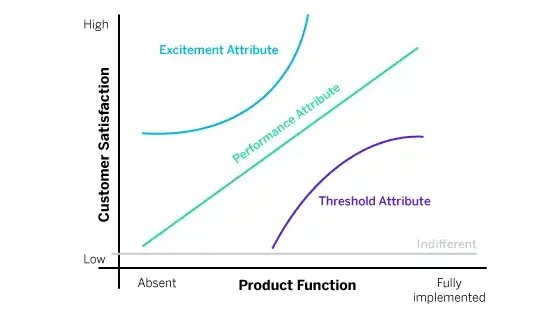
CA Final classes CA Final IBS classes(SPOM-set B portion) StudyByTech Offers Contact us Introduction Customer satisfaction is a cornerstone of successful business strategy. Understanding and addressing the diverse needs and expectations of customers can set a business apart from its competitors. The Kano Model, developed by Dr. Noriaki Kano, provides a valuable framework for categorizing and prioritizing these needs. This blog delves into the intricacies of the Kano Model, exploring its key components—Threshold Attributes, Performance Attributes, Excitement Attributes, and Indifferent Attributes—and highlighting its practical applications in enhancing customer satisfaction. In today’s highly competitive market, businesses strive to understand and meet customer expectations effectively. The Kano Model of Customer Satisfaction, introduced by Japanese quality management guru Dr. Noriaki Kano in the 1980s, offers a systematic approach to achieve this goal. By categorizing product or service attributes based on how they influence customer satisfaction, the Kano Model helps businesses prioritize their development efforts to maximize customer delight and loyalty. Parag Sir’s insight on Kano’s Model Parag Gupta Sir breaks down the intricacies of the Kano Model, explaining its core principles and illustrating its importance in the realm of customer satisfaction and quality management. Watch this video to get a great insight on this topic: https://youtu.be/fyk1KpZ6nwA Product attributes based on Kano’s model Threshold Attributes Threshold Attributes, also known as Basic Attributes or Must-Be Attributes, are the fundamental features that customers expect in a product or service. These attributes are not typically vocalized by customers because their presence is assumed. However, their absence leads to significant dissatisfaction. Performance Attributes Performance Attributes, or One-Dimensional Attributes, are those features that directly correlate with customer satisfaction. The better these attributes perform, the more satisfied the customers will be. Conversely, poor performance in these areas leads to dissatisfaction. Using the smartphone example again, performance attributes might include camera quality, processing speed, and screen resolution. Enhancing these attributes generally leads to higher customer satisfaction because customers can clearly see the benefits and improvements. Businesses should focus on continuously improving these attributes to stay competitive. Excitement Attributes Excitement Attributes, also known as Attractive Attributes, are the features that surprise and delight customers. These are unexpected and not typically demanded by customers, but their presence generates significant satisfaction. Conversely, their absence does not cause dissatisfaction because customers do not expect them. For instance, an innovative facial recognition feature in a smartphone can be considered an Excitement Attribute. When first introduced, it wasn’t an expected feature, but it created a “wow” factor and set the product apart from its competitors. Investing in these attributes can turn customers into enthusiastic promoters of the product or service. Indifferent Attributes Indifferent Attributes are features that neither contribute to customer satisfaction nor cause dissatisfaction. These attributes have little to no impact on how customers perceive the product or service. An example might be the color of the internal components of a smartphone. Most customers are indifferent to such aspects as they do not affect the user experience. Identifying and minimizing resources spent on Indifferent Attributes can help businesses allocate their efforts more effectively towards attributes that enhance customer satisfaction. Uses The Kano Model serves multiple purposes in the realm of customer satisfaction and product development: Conclusion The Kano Model of Customer Satisfaction is a powerful tool for understanding and prioritizing customer needs. By categorizing features into Threshold, Performance, Excitement, and Indifferent Attributes, businesses can strategically enhance their offerings to maximize customer satisfaction and loyalty. Utilizing the Kano Model can lead to more effective resource allocation, better strategic planning, and ultimately, a stronger competitive advantage in the market. In an era where customer expectations are constantly evolving, the Kano Model provides a structured approach to staying ahead and continuously delighting customers. FAQ’s

Scroll to Top