Self paced online module

CAI Self-Paced Module Details, Registration & Process
CA Final, Self paced online module

ICAI Self-Paced Online Module Details, Registration & Process

CA Final classes CA Final IBS classes(SPOM-set B portion) StudyByTech Offers Contact us In the fast-paced world of Chartered Accountancy, staying ahead of the curve is essential. With the advent of self-paced modules by the Institute of Chartered Accountants of India (ICAI), aspiring professionals now have a flexible and personalized way to enhance their skills and knowledge. In this comprehensive guide, we’ll delve into the details, registration process, and benefits of ICAI’s self-paced modules, empowering you to take control of your CA journey like never before. Understanding ICAI Self-Paced Modules: ICAI’s self-paced modules are designed to cater to the diverse learning needs and preferences of CA aspirants. These modules offer a flexible and convenient way to access high-quality study materials, lectures, and assessments at your own pace and convenience. Whether you’re a full-time student, a working professional, or someone with other commitments, self-paced modules provide the flexibility to learn anytime, anywhere, without compromising on the quality of education. Registration Process: The registration process for ICAI’s self-paced modules is simple and straightforward, allowing candidates to enroll with ease. Here’s a step-by-step guide to getting started: step 1– Visit the ICAI Website: Begin by visiting the official website of the Institute of Chartered Accountants of India (ICAI). step 2 – Navigate to Self-Paced Modules Section: Explore the website to locate the section dedicated to self-paced modules. step 3 -Choose Your Module: Browse through the available modules and choose the one that aligns with your learning objectives and career goals. step 4 -Register Online: Fill out the registration form provided on the website, providing accurate personal and contact information. step 5 -Make Payment: Complete the registration process by making the required payment online through secure payment gateways. step 6 -Access Study Materials: Upon successful registration and payment, you’ll gain access to the study materials, lectures, and other resources associated with the module. ICAI Self-Paced Module: What is Remote Proctoring? Basically, remote proctoring helps maintain the integrity of online exams by making sure everyone follows the rules, just like in a traditional exam hall. It gives students peace of mind that their hard work is being evaluated fairly and honestly, even when they’re not in a physical classroom. In ICAI’s self-paced modules, remote proctoring ensures that exams are conducted with the same level of security and credibility as in-person exams, allowing candidates to demonstrate their knowledge and skills confidently from the comfort of their own homes. ICAI Self-Paced Module Registration To register for the ICAI Self-Paced Module, students must visit https://icai.org/. The registration announcement will be available in the Students section of the Institute website and the PT test portal. The ICAI Self-Paced Module is not more accessible or challenging than the Center-Based Test, as it follows the same assessment criteria. Candidates must have a laptop or desktop computer to take the ICAI Self-Paced Module (Home Based Test), as mobile phones or tablets are not supported. Benefits of ICAI Self-Paced Modules: Flexibility: Self-paced modules offer unparalleled flexibility, allowing you to tailor your learning schedule to fit your lifestyle and commitments. Whether you prefer studying in the morning, evening, or during breaks, you have the freedom to learn at your own pace. Personalized Learning Experience: With self-paced modules, you take control of your learning journey. You can revisit challenging topics, skip ahead to areas of interest, or dedicate extra time to concepts that require more attention. This ensures a personalized and effective learning experience that caters to your unique needs. Quality Content: Experienced professionals and subject matter experts develop ICAI’s self-paced modules, guaranteeing high-quality study materials, lectures, and assessments. Cost-effectiveness: Self-paced modules are often more cost-effective compared to traditional classroom-based coaching. Without additional expenses for commuting or accommodation, you can save time and money while still accessing top-notch education. Accessible Anywhere, Anytime: Self-paced modules allow you to access study materials and lectures from anywhere with an internet connection. Whether you’re at home, in the office, or traveling, you have the flexibility to study at your convenience, without being bound by time or location. Conclusion: In conclusion, ICAI’s self-paced modules offer a flexible, convenient, and effective way for CA aspirants to enhance their skills and knowledge. By leveraging these modules, you can take control of your learning journey, access high-quality study materials, and prepare for success in your CA exams with confidence. So, why wait? Register for ICAI’s self-paced modules today and unlock your full potential as a chartered accountant.go through on studybytech for more information. FAQS

Revision of Kaizen By CA Parag Gupta
Blog, CA Final, Self paced online module

Revision of Kaizen: Mastering CA Final Costing | StudyByTech

CA Final classes CA Final IBS classes(SPOM-set B portion) StudyByTech Offers Contact us Unlocking Success in CA Final Costing When preparing for CA Final Costing (SCPM), one of the most crucial concepts students come across is Kaizen Costing. It’s not just a theoretical area but also a frequently tested one in exams through practical illustrations, case study-based MCQs, and descriptive questions. In this blog, we’ll revise what Kaizen means, its features, and the types of questions usually asked in CA Final exams, along with expert guidance from CA Parag Gupta Sir. What Is Kaizen? The term Kaizen is an acronym from Japanese: Therefore, Kaizen means “Continuous Improvement”.It’s a philosophy that seeks small, incremental reductions in costs and improvements in efficiency over time, as opposed to hoping for dramatic breakthroughs. In CA Final SPOM-set B, Kaizen is implemented in Cost Management, where companies continually strive to minimize costs, improve quality, and boost productivity without any loss of value. Kaizen Costing Features Following are some of the key features of Kaizen Costing that you need to recall for exams: FAQ’s

CA Final Costing by parag gupta sir
Blog, CA Final, Self paced online module

Parag Gupta Porter’s 5 Forces Strategic Positioning Opportunity Cost

CA Final classes CA Final IBS classes(SPOM-set B portion) StudyByTech Offers Contact us In the realm of Chartered Accountancy, mastering strategic concepts is crucial for success in the CA Final Costing examination. At Parag Gupta Classes, we recognize the importance of providing our students with comprehensive insights into complex topics such as Porter’s Five Forces, Strategic Positioning, and Opportunity Cost. This blog post delves into these critical concepts, offering CA aspirants a deep understanding of their application in real-world scenarios. Understanding Porter’s Five Forces Porter’s Five Forces framework, developed by Michael Porter, is a fundamental tool for analyzing industry competition and profitability. We at Parag Gupta Classes emphasize its significance in strategic decision-making. The five forces include: Strategic Positioning: Crafting a Competitive Edge Strategic positioning is pivotal in establishing a sustainable competitive advantage. At Parag Gupta Classes, we guide our students through various positioning strategies: Cost Leadership We demonstrate how firms can achieve lower costs than competitors, enabling them to offer competitive prices while maintaining profitability. Differentiation Our course material illustrates methods to create unique product features or services that command premium prices. Focus Strategies We explore niche market targeting, showing how specialized offerings can lead to market dominance in specific segments. Opportunity Cost: The Hidden Factor in Decision Making Opportunity cost is a critical concept in economics and business strategy. Our CA Final Costing program emphasizes its importance: Integrating Concepts for CA Final Success At Parag Gupta Classes, we believe in a holistic approach to learning. Our curriculum integrates these concepts to provide a comprehensive understanding: Advanced Applications for CA Professionals Beyond exam preparation, we equip our students with skills applicable in their future careers: The Parag Gupta Classes Advantage Choosing Parag Gupta Classes for CA Final Costing preparation offers numerous benefits: Conclusion At Parag Gupta Classes, we are committed to nurturing the next generation of Chartered Accountants. By mastering Porter’s Five Forces, strategic positioning, and opportunity cost analysis, our students gain a competitive edge in both their CA Final examinations and their future careers. We invite aspiring CAs to join our program and experience the transformative power of expert guidance and comprehensive learning. FAQ’s

CA Final SCPM: Value Chain Analysis
Blog, Self paced online module

CA Final Costing: Mastering Value Chain Analysis

CA Final classes CA Final IBS classes(SPOM-set B portion) StudyByTech Offers Contact us Understanding Value Chain Analysis in CA Final Costing At Parag Gupta Classes, we recognize the critical importance of Value Chain Analysis in the CA Final Costing curriculum. This powerful strategic tool, developed by Michael Porter, enables organizations to identify and optimize their core competencies, ultimately leading to enhanced competitive advantage and improved profitability. The Fundamentals of Value Chain Analysis By separating a company’s activities into primary and support activities, Value Chain Analysis makes it possible to thoroughly examine how each step contributes to the process of creating value as a whole. By understanding these interconnected exercises, trying Sanctioned Bookkeepers can form bits of knowledge into cost drivers and likely regions for separation. Primary Activities Support Activities Applying Value Chain Analysis in Real-World Scenarios We at Parag Gupta Classes believe in putting theory into practice. Our CA Last Costing course incorporates contextual investigations and genuine models that exhibit how Worth Chain Examination can be utilized to: Advanced Techniques in Value Chain Analysis Benchmarking and Competitive Analysis We teach students how to identify best practices and areas for improvement by comparing their organization’s value chain activities to those of industry leaders. Future Chartered Accountants can develop strategies that outperform rivals thanks to this comparative analysis. Value Chain Mapping Advanced mapping techniques that visually depict the flow of activities, information, and resources throughout the value chain are introduced in our course. This amazing asset helps with distinguishing bottlenecks, redundancies, and open doors for process enhancement. Activity-Based Costing Integration By combining Value Chain Analysis with Activity-Based Costing (ABC), we show how costs can be more precisely allocated to specific activities. This definite expense data empowers better independent direction and key preparation. Leveraging Technology in Value Chain Analysis We emphasize the significance of utilizing technology to improve Value Chain Analysis in the digital age of today. Our educational plan covers: Sustainability and Value Chain Analysis In light of the growing significance of sustainability in business, our course investigates the applications of Value Chain Analysis for: Preparing for the CA Final Exam At Parag Gupta Classes, we provide comprehensive exam preparation, including: Conclusion: Empowering Future Chartered Accountants Aspiring Chartered Accountants gain a powerful tool for strategic decision-making and organizational improvement by mastering Value Chain Analysis in our CA Final Costing course. We at Parag Gupta Classes are dedicated to providing the upcoming generation of financial professionals with the knowledge and abilities they need to succeed professionally and in business. FAQ’s

Kano Model
CA Final, CA Final IBS, Self paced online module

The Kano Model of Customer Satisfaction and its Importance

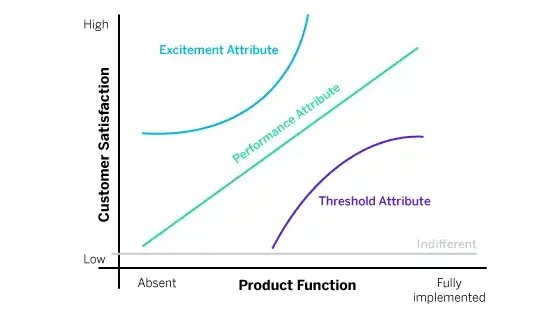
CA Final classes CA Final IBS classes(SPOM-set B portion) StudyByTech Offers Contact us Introduction Customer satisfaction is a cornerstone of successful business strategy. Understanding and addressing the diverse needs and expectations of customers can set a business apart from its competitors. The Kano Model, developed by Dr. Noriaki Kano, provides a valuable framework for categorizing and prioritizing these needs. This blog delves into the intricacies of the Kano Model, exploring its key components—Threshold Attributes, Performance Attributes, Excitement Attributes, and Indifferent Attributes—and highlighting its practical applications in enhancing customer satisfaction. In today’s highly competitive market, businesses strive to understand and meet customer expectations effectively. The Kano Model of Customer Satisfaction, introduced by Japanese quality management guru Dr. Noriaki Kano in the 1980s, offers a systematic approach to achieve this goal. By categorizing product or service attributes based on how they influence customer satisfaction, the Kano Model helps businesses prioritize their development efforts to maximize customer delight and loyalty. Parag Sir’s insight on Kano’s Model Parag Gupta Sir breaks down the intricacies of the Kano Model, explaining its core principles and illustrating its importance in the realm of customer satisfaction and quality management. Watch this video to get a great insight on this topic: https://youtu.be/fyk1KpZ6nwA Product attributes based on Kano’s model Threshold Attributes Threshold Attributes, also known as Basic Attributes or Must-Be Attributes, are the fundamental features that customers expect in a product or service. These attributes are not typically vocalized by customers because their presence is assumed. However, their absence leads to significant dissatisfaction. Performance Attributes Performance Attributes, or One-Dimensional Attributes, are those features that directly correlate with customer satisfaction. The better these attributes perform, the more satisfied the customers will be. Conversely, poor performance in these areas leads to dissatisfaction. Using the smartphone example again, performance attributes might include camera quality, processing speed, and screen resolution. Enhancing these attributes generally leads to higher customer satisfaction because customers can clearly see the benefits and improvements. Businesses should focus on continuously improving these attributes to stay competitive. Excitement Attributes Excitement Attributes, also known as Attractive Attributes, are the features that surprise and delight customers. These are unexpected and not typically demanded by customers, but their presence generates significant satisfaction. Conversely, their absence does not cause dissatisfaction because customers do not expect them. For instance, an innovative facial recognition feature in a smartphone can be considered an Excitement Attribute. When first introduced, it wasn’t an expected feature, but it created a “wow” factor and set the product apart from its competitors. Investing in these attributes can turn customers into enthusiastic promoters of the product or service. Indifferent Attributes Indifferent Attributes are features that neither contribute to customer satisfaction nor cause dissatisfaction. These attributes have little to no impact on how customers perceive the product or service. An example might be the color of the internal components of a smartphone. Most customers are indifferent to such aspects as they do not affect the user experience. Identifying and minimizing resources spent on Indifferent Attributes can help businesses allocate their efforts more effectively towards attributes that enhance customer satisfaction. Uses The Kano Model serves multiple purposes in the realm of customer satisfaction and product development: Conclusion The Kano Model of Customer Satisfaction is a powerful tool for understanding and prioritizing customer needs. By categorizing features into Threshold, Performance, Excitement, and Indifferent Attributes, businesses can strategically enhance their offerings to maximize customer satisfaction and loyalty. Utilizing the Kano Model can lead to more effective resource allocation, better strategic planning, and ultimately, a stronger competitive advantage in the market. In an era where customer expectations are constantly evolving, the Kano Model provides a structured approach to staying ahead and continuously delighting customers. FAQ’s

ICAI self-paced Module details,registration & process
Blog, CA Final, Self paced online module

ICAI self-paced Module details, Registration process

The Institute of Chartered Accountants of India (ICAI) recognizes this need and offers Self-Paced Modules tailored to meet the evolving demands of finance and accountancy professionals. These modules provide a convenient and flexible way to enhance expertise without compromising on existing commitments. In this guide, we will simplify the registration process and provide an overview of what individuals can expect from ICAI’s Self-Paced Modules, making the path to continuous learning accessible to all. Understanding ICAI Self-Paced Modules ICAI’s Self-Paced Modules, in partnership with Studybytech, are meticulously crafted to cater to the diverse needs of finance and accountancy professionals. These modules cover a wide range of subjects, including financial accounting, taxation, auditing, and more, ensuring that learners have access to comprehensive and up-to-date content. With Studybytech’s innovative learning platform, participants can delve into interactive lectures, engage in practical exercises, and access a wealth of resources to deepen their understanding of the subject matter. Registration Process At the time of registration of Final Course, students would also be registering for Self-Paced Online Modules. The form for Final Course registration will have the option for selecting the subjects under Self-Paced Online Modules SET C and SET D. No separate fee is payable for registration of Self-Paced Online Modules. Step 1: Visit the ICAI Website To register for Self-Paced Modules, visit the official website of the Institute of Chartered Accountants of India (ICAI) at www.icai.org. Step 2: Navigate to the Self-Paced Modules Section On the website, navigate to the section dedicated to Self-Paced Modules. This section typically provides comprehensive information about the available modules, including course details, fees, and registration guidelines. Step 3: Select the Desired Module Browse through the list of available modules and select the one that aligns with your learning objectives and career goals. Each module covers specific topics, so choose wisely based on your interests and professional requirements. Step 4: Register Online Once you’ve selected the module, proceed with the online registration process. This usually involves filling out a registration form with your personal details, contact information, and payment details. Ensure that all information provided is accurate to avoid any issues later on. Step 5: Pay the Course Fee There is no extra fees additionally added for SPOM. FAQ’s

Scroll to Top