Author name: Studybytech

Blog, CA Inter

A Comprehensive Guide to Cracking the CA Intermediate Exam

CA Inter Classes ICAI Registration Process, Fees, & Syllabus Admit Card Exam Dates Study Guides & Tips CA Inter faculties FAQ CA INTERMEDIATE EXAM: The CA Intermediate exam is a crucial milestone in your journey to becoming a Chartered Accountant. While the test is difficult, you may pass it with the appropriate strategy and perseverance. In this blog, we will provide you with valuable tips and tricks to help you prepare effectively for the CA Intermediate Exam. CA Intermediate Exam: Tips and Tricks 1-Create a Well-Structured Study Plan: To conquer the vast syllabus of the CA Intermediate exam, it is essential to create a well-structured study plan. Break down the subjects into manageable sections and allocate specific study time for each. Make sure to set realistic goals and stick to the schedule consistently. This approach will help you cover the entire syllabus efficiently and avoid last-minute cramming. 2-Stay Organized: When studying for the CA Intermediate test, being organized is critical. Maintain a separate binder or folder for each subject to keep your notes, practice exams, and study materials in one place. This organization will save you time and make it simpler for you to revise and find important data when required. 3-Practice with Mock Exams: Taking practice exams is an integral part of your preparation. Mock exams simulate the actual CA Intermediate exam environment, allowing you to familiarize yourself with the question patterns, time constraints, and exam format. Analyze your performance in mock exams, identify weak areas, and focus on improving them. This practice will boost your confidence and enhance your exam-taking skills. 4-Seek guidance from tutors or study groups: If you encounter difficulties in understanding specific subjects or topics, don’t hesitate to seek help from tutors or join study groups. Tutors can provide personalized guidance, clarify your doubts, and offer valuable insights. Study groups create a collaborative learning environment where you can exchange ideas, discuss complex concepts, and support one another. Utilizing these resources will strengthen your understanding and increase your chances of success. 5-Maintain a Positive Mindset: Maintaining a positive mindset throughout your CA Intermediate exam preparation is crucial. Acknowledge that the exam is challenging but believe in your abilities. Celebrate small achievements along the way and remind yourself of your determination to succeed. Surround yourself with positive influences and seek support from family, friends, or mentors. A positive mindset will keep you motivated, focused, and resilient in the face of challenges. CA Intermediate Exam Preparation with Studybytech: Your Comprehensive CA Intermediate Exam Preparation Partner Studybytech offers a comprehensive range of resources designed to help you excel in the CA Intermediate exam. Our online classes, practice exams, and study guides are developed by experienced professionals and experts in the field. We provide you with the following advantages: International Case Studies and Best Author References: Our study materials include case studies from prominent worldwide books, ensuring that you are exposed to the most recent accounting and auditing trends and best practices. This exposure broadens your perspective and enhances your problem-solving skills. Best-in-Class MCQs: We have curated a collection of best-in-class Multiple Choice Questions (MCQs) aligned with the latest exam pattern and trends. Practicing these MCQs will sharpen your knowledge, improve your speed, and familiarize you with the exam’s question format. Relevance to International Examinations: Our books and study materials are based on the best international content and questions. We look at question patterns and trends from prominent worldwide exams including CPA, CIMA/CGMA, ACCA, and ICAEW. This approach gives you a competitive edge and prepares you holistically for the CA Intermediate exam. Conclusion Cracking the CA Intermediate exam requires diligent preparation, determination, and a strategic approach. By following the tips outlined in this blog and leveraging the resources offered by Studybytech, you can enhance your chances of success. Remember to stay committed, believe in yourself, and maintain a positive mindset throughout your preparation journey. The CA Intermediate test can be challenging, but you can overcome any barriers with appropriate preparation, organized study habits, practice exams, and the assistance of instructors or study groups. Studybytech’s comprehensive study materials, including case studies, MCQs, and textbooks, are designed to provide you with the necessary tools to excel in the exam. Start your preparation early, create a study plan, and stay disciplined about following it. Use practice exams to familiarize yourself with the exam format and identify areas for improvement. Seek assistance when needed, whether through tutors or study groups, to clarify doubts and strengthen your understanding of complex subjects. Studybytech offers a range of resources and flexible learning options to fit your schedule. Their commitment to providing you with the best possible preparation for the CA Intermediate exam sets them apart. Their study materials are carefully curated to align with the latest exam patterns and incorporate international best practices. Stay motivated, celebrate your progress, and visualize your success as you work towards your goal of cracking the CA Intermediate exam. Remember that hard work, dedication, and the right resources are the key ingredients for achieving success in this challenging exam. Take the first step towards a successful career in accounting by exploring the programs and services offered by StudybyTech. Visit their website or reach out to them today to learn more and embark on your journey toward success in the CA Intermediate exam. FAQs Want to subscribe to latest lectures?

CA Final New Syllabus
Blog, CA Final

CA Final New Syllabus vs Old Syllabus: A Comprehensive Guide

The Chartered Accountancy (CA) Final examination is a prestigious milestone for aspiring accountants. It serves as the last hurdle before becoming a certified Chartered Accountant. The Institute of Chartered Accountants of India (ICAI) periodically updates the CA syllabus to align with the changing needs of the accounting profession. In this blog, we will explore the differences between the CA Final New Syllabus 2024 and the old syllabus, highlighting the key changes and their implications. Structure and Subjects: The CA Final New Syllabus 2024 brings significant changes to the structure and subjects of the examination. The old syllabus had eight papers divided into two groups, while the new syllabus has nine papers divided into three groups. This restructuring aims to provide a more holistic and comprehensive approach to accounting education. Incorporation of Advanced Technology: With the advent of advanced technology, the new syllabus emphasizes the integration of technology into the accounting profession. It includes subjects such as Advanced Management Accounting, Strategic Cost Management and Performance Evaluation, and Information Systems Control and Audit. These subjects equip students with knowledge and skills to navigate the digital transformation in the accounting industry. Emphasis on Integrated Reporting and Sustainability: Recognizing the importance of sustainability and integrated reporting in today’s business landscape, the new syllabus introduces the subject of ‘Strategic Financial Management and Economic Environment.’ This subject delves into the concepts of integrated reporting, sustainable development, environmental accounting, and corporate social responsibility. It equips students with the knowledge to address contemporary challenges faced by businesses. Updated Taxation Syllabus: The tax laws undergo frequent changes, and it is crucial for future accountants to stay updated with the latest regulations. The new syllabus incorporates changes in the tax laws and includes subjects such as Direct Tax Laws and International Taxation. These subjects provide students with a comprehensive understanding of tax planning, compliance, and international tax regulations. Practical Orientation: The new syllabus places increased emphasis on practical training and application-oriented learning. It introduces the subject of ‘Advanced Auditing and Professional Ethics,’ which equips students with practical skills required for auditing, assurance services, and professional ethics. Additionally, the ‘Advanced Management Accounting’ subject focuses on case studies, enabling students to apply theoretical concepts to real-life scenarios. Communication Skills and Professional Development: Apart from technical knowledge, effective communication skills and professional development are essential for a successful accounting career. The new syllabus includes a subject called ‘Advanced Enterprise Information Systems and Strategic Management.’ It helps students enhance their communication skills, understand business strategies, and develop a holistic approach to problem-solving. Exam Pattern Changes: The CA Final New Syllabus 2024 introduces changes in the exam pattern. Previously, the examination consisted of descriptive questions, but the new syllabus incorporates a mix of descriptive and objective questions. This change aims to test students’ understanding of concepts and their ability to apply them in real-life scenarios effectively. Study Material and Resources: With the implementation of the new syllabus, ICAI provides updated study material and resources to help students prepare for the examination. These resources include textbooks, practice manuals, revision test papers, and online platforms offering mock tests and interactive learning modules. Students are encouraged to make use of these resources to enhance their understanding and performance. Conclusion: The CA Final New Syllabus 2024 introduces significant changes to align accounting education with the evolving needs of the industry. It emphasizes technology integration, sustainability, practical training, communication skills, and professional development. FAQs <h2>Want to enroll to CA Inter classes?</h2> <a href=”https://www.studybytech.com/product/ca-final-scpm/”> <img width=”1024″ height=”1024″ src=”https://www.paraggupta.com/wp-content/uploads/3-3.webp” alt=”CA Final SPOM-SET B+ IBS (SCPM portion) by Parag Gupta sir” srcset=”https://www.paraggupta.com/wp-content/uploads/3-3.webp 1024w, https://www.paraggupta.com/wp-content/uploads/3-3-300×300.webp 300w, https://www.paraggupta.com/wp-content/uploads/3-3-150×150.webp 150w, https://www.paraggupta.com/wp-content/uploads/3-3-600×600.webp 600w, https://www.paraggupta.com/wp-content/uploads/3-3-768×768.webp 768w, https://www.paraggupta.com/wp-content/uploads/3-3-100×100.webp 100w” sizes=”(max-width: 1024px) 100vw, 1024px” /> </a> <a href=”https://www.studybytech.com/product/ca-final-classes/”> <img width=”1024″ height=”1024″ src=”https://www.paraggupta.com/wp-content/uploads/ca-final-best-teachers-1024×1024.webp” alt=”CA Final best teachers” srcset=”https://www.paraggupta.com/wp-content/uploads/ca-final-best-teachers-1024×1024.webp 1024w, https://www.paraggupta.com/wp-content/uploads/ca-final-best-teachers-300×300.webp 300w, https://www.paraggupta.com/wp-content/uploads/ca-final-best-teachers-150×150.webp 150w, https://www.paraggupta.com/wp-content/uploads/ca-final-best-teachers-600×600.webp 600w, https://www.paraggupta.com/wp-content/uploads/ca-final-best-teachers-768×768.webp 768w, https://www.paraggupta.com/wp-content/uploads/ca-final-best-teachers-100×100.webp 100w, https://www.paraggupta.com/wp-content/uploads/ca-final-best-teachers.webp 1200w” sizes=”(max-width: 1024px) 100vw, 1024px” /> </a>

CA INTERMEDIATE
Blog, CA Inter

CA Intermediate Exam Fees: What You Need to Know

A necessary step towards becoming a chartered accountant is passing the CA Intermediate exam administered by the Institute of Chartered Accountants of India (ICAI). For students aiming to become CAs, understanding the test fee structure is essential. In this article, we’ll delve into the particular expenditures associated with the CA Inter exam, including registration fees, exam fees, and other necessary charges. 1. Registration Fees: Before registering for the CA Inter test, candidates must complete the ICAI registration process. A lot of factors, including the candidate’s educational background and the registration date, affect the CA Inter registration cost. As of the deadline in September 2021, the following registration fees were applicable to CA Inter under the new system: It’s essential to remember that these costs might vary, so it’s best to check the official ICAI website or get in touch with the local ICAI office for the most recent details. 2. Examination Fees: In addition to the registration fee, candidates must pay examination fees for each try.When completing the exam application form, you must pay the examination cost for the CA Inter examinations. The following costs apply to each group: It is extremely important to remember that these costs were in effect at the time this blog was written but are liable to change. Candidates should consult the official ICAI website, which has the most up-to-date and accurate fee information. 3: Other Relevant Charges: Join us to learn the steps for How to Register for CA Intermediate Exams :Click Here Conclusion: It is advised to check the official ICAI website or contact the nearby ICAI office to get the most accurate and updated fee information. Remember that understanding the cost structure will help you plan your CA Inter trip well and prevent any unpleasant surprises. FAQ’s Want to subscribe to latest lectures?

online classes
Blog, CA Course

Major Benefits of Online Classes for CA Students

Are you still considering enrolling in online courses? Transitioning to virtual mode of classes for the first time can feel unfamiliar for students. Naturally, they might draw comparisons between this new experience and their prior interactions in conventional face-to-face classes. As students build their technical abilities, practise self-control, participate in interactive learning, and feel at ease in these programmes, learning may appear to be simpler. However, once you engage in the right type of classes and manage your time efficiently, you’ll discover the various benefits that virtual learning offers. For students, taking classes online is equally as beneficial as taking them in person. Here, we want to highlight some crucial Comparisons of online classes and face-to-face classes that will change the way you think about them. Online classes vs. face-to-face classes Aspect Online Classes Face-to-Face Classes Flexibility Can be more flexible in terms of schedule. Schedule is fixed, with set class times. Location Can be accessed from anywhere with internet. Requires physical presence on campus. Interaction Limited face-to-face interaction; mainly virtual. Direct interaction with instructors and peers. Learning Environment Learning environment is virtual and remote. Physical classroom with structured environment. Social Interaction Limited opportunities for in-person socialization. Offers social interactions and networking. Course Materials Digital resources and materials provided online. May involve physical textbooks and resources. Distractions Potential for distractions in home environment. Generally fewer distractions in a classroom. Engagement Requires self-discipline and strong time management. Immediate engagement due to structured classes. Accessibility Offers accessibility for remote and diverse learners. Some individuals may face accessibility barriers. Technical Challenges Technical issues like connectivity or platform use. Typically, fewer technical challenges. Hands-on Learning Limited opportunities for hands-on activities. Suitable for hands-on subjects like labs or arts. Networking Networking might be limited to virtual interactions. Offers in-person networking opportunities. Benefits of Online Classes for Students: 1. Flexibility The fact that online lessons are both recorded and live with unrestricted access for students is a significant advantage. Students can study whenever they want with the flexibility of online programmes. Even during live online classes, the instructors share the recorded lectures with those students who couldn’t attend. Even if they miss the online session, this enables them to catch up with the lecture afterwards. Students who take online classes have the flexibility to see the lectures at any time of day and even weeks afterwards. The pace of study is flexible for students. You can spend more time on challenging subjects and move on from simpler ones quicker. 2. Eliminates the distance barrier There is no need to commute because you may take online classes from anywhere. You can take online classes from the convenience of your home. Additionally, it reduces travel expenses and saves time. Attending your online lessons will relieve you of any travel fatigue. 3. More learning options You can choose which instructors you wish to take classes from and which online courses you must enrol in. This advantage will assist you in selecting instructors who will aid in a better comprehension of the subject or course. The classes will hold your interest, and you’ll pay closer attention. Your overall learning process will be enhanced. 4. Teacher Availability Students can simply and whenever connect with their teachers through the medium of virtual courses. This is one of the key advantages of online learning for students because they would not have access to such chances in a traditional classroom setting. Connecting can be done using messaging, voice calls, or video calls. In addition to the class times, the professors’ accessibility enables students to get more individualised instruction and quickly clear their problems. 5. Improve technical skills Students must utilise a wide range of technology in order to attend virtual classes. All of these technological interfaces—from computers, phones, and other tech devices to online applications—must be mastered by students. The regular use of them will aid in the development of technical abilities. 6. Self-discipline Online classes require self-discipline in students. Self-discipline If you are not dedicated to studies, you will find it hard to attend your online classes regularly and learn your course. You can learn how to be disciplined yourself if you treat every online course seriously. 7. Interactive learning Interactive education Options for interactive learning are expanded by taking classes online. Digital resources can be used by students for academics or technical skills. The use of a variety of media in the study plan facilitates a deeper comprehension of the lessons and subjects. 8. Comfortable Learning environment The flexibility of the learning environment is one of the advantages of online study. You can change your circumstances to make self-discipline more pleasant for you. Your stress level will drop, and you’ll focus more intently on your academics.This will help in a better learning experience. 9. Unlimited Access to Online Study material With the right technical abilities, students can access their learning resources at any time. In addition to having interactive courses, teachers often share notes and other study materials with their students, including practise tests that they can access at any time. Videos for CA Inter SM are available at the following link: May 24th, CA Inter Strategic Management Classes YouTube – I Parag Gupta Sir Also Read: Did you like reading the article on online classes? Please do so in the comments box down below. About the Author: I’m Meghana Trikovala, otherwise known as a learner and a dreamer. I adhere to the idea that improving one’s abilities while minimising one’s weaknesses can help one succeed in life. I watch a lot of films in English or with English subtitles because I’m interested in both English language and international relations, which has helped me build my vocabulary. I’d like to use those language abilities to provide knowledge and analysis to help people lead a better life. Read more: ICAI

Exam preparation smart studt tips and tricks
Blog, CA Course

Smart & Effective Study Tips for Exam Preparation

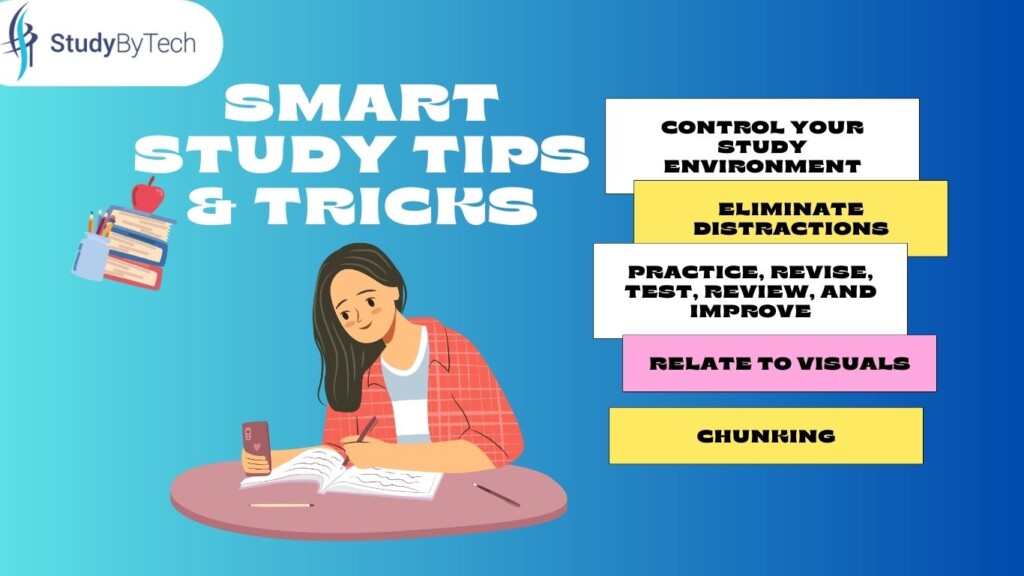
Don’t you think if you knew how to prepare for the exams, it would improve your performance? What is the secret behind the excellent performance of toppers? What steps should you follow and how to learn every bit of the vast syllabus for exam preparation? If these questions are also clouding your minds, then first understand that there is no secret that helps the toppers. They follow the simple methods of learning which you can also implement. Here we have shared the most important study tips for students of all types of courses, be it class 11-12th students or students of a professional course like CA. Read these study tips to become a topper and give the best in exams. want to become a CA then you will have to read it Smart Study Tips and Tricks: Control your Study Environment The place where you study matters a lot in your preparation. You cannot control your classroom environment, but you can set your study place when you are doing self-study or when you are at home. Having a suitable study place and environment will help you focus on your studies. So you can utilize your study time at the most. Eliminate Distractions There are so many things that can easily distract you from achieving your goals. To focus on your studies, you should ensure that any distracting thing is not in your surroundings. Social media and mobile games are major distractions in the life of students today. If you are also wasting your time, ask yourself “if these things are helping you in your studies or not.” If you think people around you in some way distract you (be it your friends or your siblings or any other family member), then you should request them politely not to disturb you when you are studying. Study to Learn, Not to PassWhen you study any topic or subject with interest and learn something new, you will remember those topics for the longer term. When you study for the sake of passing the exams, you may get good scores in the exams, but when those learnings will not stay with you forever. Get Right Guidance and Clear Your Doubts An important study tip that you should follow is—getting the right guidance for all your subjects. When you learn from the best teachers, you understand the concepts in the best way, and you know how to present the answers in the exams. If you face any difficulty in any topic, you don’t leave the topic, but ask the questions to clear your doubts. Practice, Revise, Test, Review, and Improve Follow this simple study tip for exams—practice questions in writing. Just looking over the steps won’t help until you solve the problems by yourself. Keep revising the topics that you learn regularly. Take practice tests to analyze how well you have understood. Review your answers strictly and find areas where you are lacking. Work on your weak points with more practice. Exam Preparation Extra Study Tips Keep yourself healthy and your mind calm when you are studying. To achieve this goal, you should follow these golden rules and tips: Self-Health Care: Eat healthy every day and exercise regularly. When you keep your health good, you save your time.Take breaks: Short breaks in between the studies don’t waste time; rather, they improve your productivity. Exam PreparationSleep well: Take a good sleep of 7-8 hours every day. Don’t avoid sleep to complete your studies. It will do you no good.Choose music wisely: If you listen to music while studying, you should select the music wisely. It is ideal if you listen to music without any words. Consistency and Discipline: These two things are very important, so always be self-disciplined and consistent towards your studies.Study Tips for MemorizationYou will find many topics in your syllabus where you will face difficulties in remembering the points later. For example, a long process with so many steps or names and years, etc. You understand the meaning completely in such topics, but you still can’t memorize all the points correctly. So whenever you come across any topics and challenges, you can use these methods: Mnemonics technique: We all know the mnemonics technique from an early age. This is a very effective technique for remembering long processes or steps, or even names and dates. Relate to visuals: You can use visuals, be it presentations, simple images and diagrams, or even mind maps and flowcharts. The visuals will help you in easy memorization. Write repeatedly: When you write any topic repeatedly, it leaves a better impact on your memory. You can also use different pens, notebooks, sticky notes, or a different writing style. So when this topic comes as a question, you can relate to the different things you used while writing it. Exam Preparation know more about Get Best tips to improve Reading & Comprehensive Skills in just 11 minutes Chunking: You can break things into small parts to remember them easily. For example: just like we remember mobile numbers or bank account numbers in small chunks. We hope these study tips for exams will help you a lot. You should start implementing these tips for a fruitful learning experience. Remember that you should take an interest in learning, manage your time efficiently, and show discipline towards your studies.

Unlocking Success: Essential Learning Hacks for CA Students
Blog, CA Course

Unlocking Success: Essential Learning Hacks for CA Students

Introduction In today’s fast-paced world, effective learning has become more crucial than ever before. Whether you’re a student striving for academic success or a professional looking to acquire new skills, the ability to learn efficiently can make a significant difference in your life. At STUDYBYTECH, we understand the importance of effective learning, unlocking Success: Essential Learning CA Students and we’re here to guide you through some powerful learning hacks that can enhance your studies and help you achieve your goals. With India’s best faculty for CA Inter SM & Costing, Parag Gupta sir, and our comprehensive study materials and resources, you can take your learning journey to the next level. Set Clear Goals The first step towards effective learning is setting clear, achievable goals. Without a roadmap, your efforts can become scattered and unfocused. When you know what you want to accomplish, you can tailor your study methods to align with your objectives. Parag Gupta sir’s guidance at STUDYBYTECH can help you define your goals and create a personalized study plan to reach them. Active Learning Techniques Passive reading and highlighting may not be the most effective ways to absorb information. Instead, engage in active learning techniques. This includes summarizing the content in your own words, asking questions, and teaching the material to someone else. Active learning not only helps you understand better but also enhances retention. Utilize Technology Embrace technology as a powerful tool for learning. Online resources, e-books, and educational apps can supplement your traditional study materials. At STUDYBYTECH, we offer a wealth of online classes and resources to complement your studies, making learning more interactive and engaging. Optimize Your Study Environment Your study environment plays a significant role in your ability to concentrate and learn effectively. Create a clutter-free and well-lit space where you can focus without distractions. Ensure you have all the necessary materials at hand, and consider using background music or white noise to enhance concentration. Practice Regularly Practice is key to mastering any subject. Regularly review and revise what you’ve learned to reinforce your understanding. Parag Gupta sir’s study materials provide ample practice questions and exercises to help you hone your skills and gain confidence in your abilities. Mindful Study Breaks Long study sessions without breaks can lead to burnout and reduced productivity. Incorporate short, mindful study breaks to refresh your mind. Use techniques like meditation or deep breathing to relax and refocus during these breaks. Collaborative Learning Studying with peers can be highly beneficial. Group discussions and study sessions allow you to gain different perspectives, clarify doubts, and reinforce your understanding through teaching others. STUDYBYTECH offers a platform for collaborative learning, enabling you to connect with fellow learners and exchange ideas. Visual Aids Visual aids such as diagrams, charts, and mind maps can simplify complex topics and make them easier to remember. Parag Gupta sir’s teaching approach at STUDYBYTECH often includes visual aids to enhance comprehension. Time Management Effective time management is crucial for balancing your studies with other commitments. Create a study schedule that allocates specific time slots for different subjects and activities. Stick to your schedule to ensure consistent progress. Seek Help When Needed Don’t hesitate to seek help when you encounter challenging topics. Whether it’s reaching out to a teacher or tutor or using online forums, getting clarification on confusing concepts is a proactive step toward effective learning. Stay Healthy Physical and mental health play vital roles in learning. Ensure you maintain a balanced diet, exercise regularly, and get enough sleep. A healthy body and mind are more receptive to new information. Test-Taking Strategies Effective test-taking strategies can make a significant difference in your performance during exams. Practice time management, read questions carefully, and answer the easiest questions first to maximize your score Conclusion Effective learning is a journey, not a destination. By implementing these learning hacks and taking advantage of the resources and guidance offered at STUDYBYTECH, you can significantly improve your study habits and achieve better results. unlocking Success: Essential Learning CA Students Setting clear goals, actively engaging with the material, and optimizing your study environment are just a few of the many ways to enhance your learning experience. Remember, the path to success is paved with dedication, continuous improvement, and a commitment to lifelong learning. With Parag Gupta, sir, and STUDYBYTECH by your side, you’re well-equipped to embark on this journey towards improved studies and a brighter future. Read more information: ICAI

Cost Saving Secrets Of Relevant Costing: Know Everything About It
Blog, CA Inter

Cost Saving Secrets Of Relevant Costing: Know Everything About It

Relevant Costing: Meaning, Examples and Techniques Explained By CA Parag Gupta | Updated October 2026 | 6 min read Relevant vs irrelevant costMake or buySunk costOpportunity costCA Inter Watch the quick video Relevant costing is a way of making business decisions by looking only at the costs and revenues that change because of that decision. It ignores sunk costs and unavoidable fixed costs. This guide is for CA Inter, CA Final and commerce students who want clear, simple examples. The key takeaway: if a cost stays the same whichever option you pick, leave it out, and compare only the future cash that differs. What’s on this page What is relevant costing? Relevant vs irrelevant costs How relevant costing works Relevant costing techniques Where you’ll use it A worked make-or-buy example Limitations FAQs Key takeaways Relevant costs are future costs that differ between your options. Sunk costs and historical costs never matter for the decision. Fixed costs are irrelevant only if they’re unavoidable. Avoidable fixed costs count. Opportunity costs are relevant, even though no cash leaves your pocket. It powers make-or-buy, special order and shutdown decisions. It looks at numbers only, so weigh quality, people and strategy too. What is relevant costing? Relevant costing is a managerial accounting technique. You use it to decide between alternatives by looking at just the costs and revenues that change with your choice. Everything else is noise. Think of it as a filter. You start with every number you can find. Then you throw out whatever stays the same no matter what you decide. What’s left is what actually drives the decision. It’s used across finance, marketing, production and operations management. And if you’re preparing for CA Inter Cost and Management Accounting, it’s one of the most useful chapters you’ll learn. For a formal definition, see AccountingTools or the Wikipedia entry on relevant cost. Relevant costs vs irrelevant costs Every cost in a decision falls into one of two buckets. Here’s the quick split. Relevant costs Future costs that change with the decision. Variable costs Opportunity costs Incremental costs Avoidable fixed costs Irrelevant costs Costs that stay the same whatever you choose. Sunk costs (already spent) Historical costs Unavoidable fixed costs Allocated overheads that won’t change Cost type Relevant? Why Raw material for a new order Yes You’ll spend it only if you accept the order. Machine bought last year No It’s a sunk cost. You can’t get it back. Rent that stops if you close a unit Yes It’s avoidable, so it changes with the decision. Head-office rent that continues anyway No It’s the same under every option. Profit you give up by using a machine for one job Yes That’s the opportunity cost. How relevant costing works You can run almost any decision through the same six steps. Spot thedecision List youroptions Keep futurecash only Drop whatdoesn’t differ Comparewhat’s left Pick thebest option Relevant costing techniques Differential analysis This is the main tool. You list the relevant costs and revenues for each alternative, then compare them. The cheapest or most profitable option wins. Marginal costing Marginal costing separates fixed and variable costs. It then works out the contribution margin per unit, which is selling price minus variable cost. It’s handy when you’re deciding whether extra units are worth making. Activity-based costing (ABC) ABC assigns indirect costs to products based on the activities that cause them. It isn’t a relevant costing method by itself. But it helps you spot which overheads really change with a decision. Read more on activity-based costing. Where you’ll use relevant costing Make or buy Should you produce a part in-house or outsource it? Compare the avoidable cost of making with the vendor’s price. Special order Should you accept a one-off order at a lower price? If it covers its extra costs and your capacity is idle, it can add profit. Shutdown Should you stop a product or unit? Compare the revenue you’d lose with the costs you’d truly avoid. A real-life example: last-minute train seats Picture a train with a few empty seats just before departure. Once it leaves, those seats earn nothing. Carrying one more passenger adds almost no cost. So the relevant cost of filling a seat is tiny, and even a discounted fare adds revenue. Last-minute seat sales follow exactly this logic. A worked make-or-buy example A company needs 1,000 units of a component. Making it costs the figures below per unit. A vendor offers it at ₹90 per unit. Item (per unit) Make (₹) Buy (₹) Relevant? Direct material 40 – Yes Direct labour 30 – Yes Variable overhead 10 – Yes Allocated fixed overhead (unavoidable) 20 – No Vendor price – 90 Yes Relevant cost per unit 80 90 Make it The ₹20 fixed overhead is there whether you make or buy, so you ignore it. Making saves ₹10 per unit, or ₹10,000 on 1,000 units. If you could rent out the spare capacity for more than ₹10,000, that opportunity cost would flip the answer. Prefer to watch it explained? Watch Parag Sir’s video on YouTube. Limitations of relevant costing It’s powerful, but it isn’t perfect. It assumes everything else stays constant. In real life, prices, demand and capacity keep moving. It focuses on numbers. Quality, brand, staff morale and supplier reliability matter too. It needs good estimates. Future costs are forecasts, and wrong forecasts give wrong answers. So use it as a strong starting point, then add your own judgment on the non-financial side. Relevant costing FAQs What is relevant costing? Relevant costing is a managerial accounting technique that picks out the costs and revenues that change because of a specific decision. You compare only those figures across your options. Businesses use it in finance, marketing, production and operations to decide with confidence. What are some examples of relevant costs? Relevant costs are future costs that differ between options. Variable costs, opportunity costs, incremental costs and avoidable fixed costs are the usual examples. If a cost changes because of your choice, it

Which coaching is best for CA foundation classes? Expectation vs Reality
Blog, CA Foundation

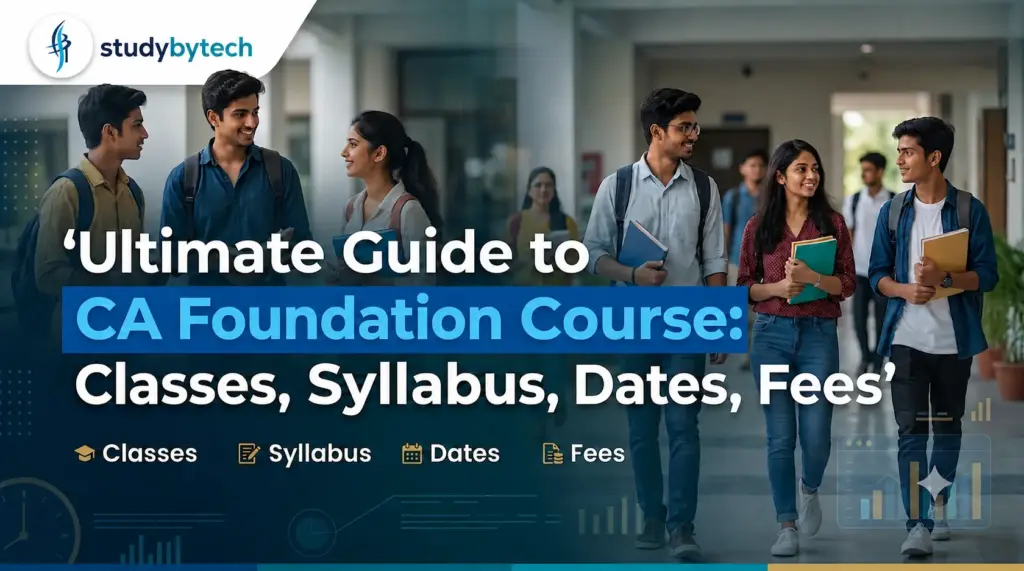
Ultimate Guide to CA Foundation Course Classes · Syllabus · Important Dates · Fees — Everything you need to know CA Foundation Course Introduction Becoming a Chartered Accountant is a dream. The CA Foundation course is the step to get there. This is the exam that the Institute of Chartered Accountants of India gives. The CA Foundation course checks if you really understand the basics of accounting, business law, math and economics. If you pass this exam you can move on to the CA Intermediate and CA Final exams. The Institute of Chartered Accountants of India has some rules. They want to make sure the exam is up to date with what’s happening in business around the world. So they have changed the way the exam is given. Now you can take the exam three times a year — in January, June and September. The CA Foundation course is still the starting point for people who want to become a Chartered Accountant. Why Choose Our CA Foundation Coaching Classes? Choosing the coaching is a very important decision. At Parag Gupta Classes our motto is “Small Batch, Big Result”. We think that giving each student attention and making sure they really understand the concepts is the key to their success. Expert Faculty CA Parag Gupta & team Small Batches Personal attention Updated Material Aligned with ICAI Affordable Fees Quality at fair cost Small Batch Size — Every student gets attention. Ask questions, get answers right away. Comprehensive Study Material — Updated and easy to understand, matching the exam pattern. Interactive Teaching — Fun sessions that help you learn in the best way for you. Affordable Fees — Good education should not cost much. Ready to start your journey with StudyByTech? Click here to attend a free demo class and see what makes us special. Our Expert Faculties CA. Sonika Jain Ma’am(Expert in Accounting) CA. Sunila Kapoor Ma’am(Expert in Business Law) Nitesh Kumar sir(Expert in Quantitative Aptitude) Rahul Singh Sir(Expert in Business Economics) CA Foundation Exam Eligibility Criteria Before filling out forms, ensure you fulfill the eligibility conditions laid down by ICAI: Category Eligibility Criteria Details Provisional Registration Students can provisionally register with the ICAI Board of Studies (BOS) after passing their Class 10th board examinations. Regular Registration Students must have passed or appeared in the Class 12th examination (10+2) from a recognized Central or State Board of Education. Direct Entry Route Graduates, Post-Graduates, or candidates with equivalent qualifications can skip the CA Foundation course entirely and directly register for the CA Intermediate level. ICAI CA Foundation Registration Procedure, Dates & Fees Registration with ICAI is always open — it does not have a deadline. You need to do it at least 4 months before the ICAI exam you want to take. Plan and register early! 1. Registration Deadlines (2026 Attempts) Targeted Exam Attempt Registration Cut-off Date Status January 2027 September 1, 2026 Open – Apply Now May / June 2027 January 1, 2027 Closed September 2027 May 1, 2027 Closed 2. ICAI Official Fees Structure Fee Component Indian Students (INR) International Students (USD) Cost of Prospectus ₹200 $20 Foundation Registration Fee ₹9,000 $700 Subscription for Student’s Journal (Optional) ₹200 $20 Subscription for Member’s Journal (Optional) ₹400 $40 Total Mandatory Fee ₹9,200 $720 Step-by-Step Registration Procedure Go to the ICAI Self-Service Portal: https://eservices.icai.org Click on “New Students Registration” to make your ICAI profile. Use your Email ID and Mobile Number for this. Fill in your details — make sure they match your Class 12th certificates exactly. Upload documents: Class 10 or 12 marksheets, scanned passport photo, signature, category certificate (if applicable). Pay the online fee via the integrated payment gateway. Within 2-3 days, you will receive a confirmation email and a coupon code to order your free official study material via CDS. CA Foundation Syllabus & Exam Structure The CA Foundation course features four papers. Papers 1 & 2 are subjective, while Papers 3 & 4 are objective (MCQ-based). Paper Subject Name Marks Type of Exam Duration Negative Marking Paper 1 Principles and Practice of Accounting 100 Subjective 3 Hours No Paper 2 Business Laws 100 Subjective 3 Hours No Paper 3 Quantitative Aptitude (Maths, Logical Reasoning & Statistics) 100 Objective (MCQ) 2 Hours Yes (-0.25) Paper 4 Business Economics 100 Objective (MCQ) 2 Hours Yes (-0.25) CA Foundation Exam Date: September 2026 Paper Subject Official Exam Date Timing Paper 1 Principles & Practice of Accounting September 2, 2026 2:00 PM – 5:00 PM (3 Hrs) Paper 2 Business Laws September 5, 2026 2:00 PM – 5:00 PM (3 Hrs) Paper 3 Quantitative Aptitude September 7, 2026 2:00 PM – 4:00 PM (2 Hrs) Paper 4 Business Economics September 9, 2026 2:00 PM – 4:00 PM (2 Hrs) Important Dates for CA Foundation Registration (September 2026) Event Date (Expected) CA Foundation Registration Starts 6th July 2026 Exam Form Last Date (Without Late Fee) 19th July 2026 Exam Form Last Date (With Late Fee) 22nd July 2026 Correction Window 23rd – 25th July 2026 CA Foundation Exam Dates (Sept 2026) 2nd, 5th, 7th, 9th September 2026 CA Foundation Syllabus (Paper-wise) for 2026 Paper 1: Principles and Practice of Accounting Module Chapters Module 1 1. Theoretical Framework, 2. Accounting Process, 3. Bank Reconciliation Statement, 4. Inventories, 5. Depreciation and Amortisation, 6. Bills of Exchange and Promissory Notes Module 2 7. Preparation of Final Accounts of Sole Proprietors, 8. Financial Statements of Not-for-Profit Organisations, 9. Accounts from Incomplete Records, 10. Partnership and LLP Accounts, 11. Company Accounts Paper 2: Business Laws Chapter Key Acts 1. Indian Regulatory Framework Basic understanding of the regulatory environment. 2. The Indian Contract Act, 1872 Nature of contracts, Consideration, Performance, Breach and remedies, Agency, Indemnity & Guarantee, Bailment & Pledge. 3. The Sale of Goods Act, 1930 Formation of contract, Conditions & Warranties, Transfer of ownership, Unpaid seller. 4. The Indian Partnership Act, 1932 Nature of partnership, Relations of partners, Registration and dissolution. 5. The Limited Liability Partnership Act, 2008 Key features and provisions. 6. The Companies Act, 2013

CA Foundation Maths- Tips to study & excel, 10 Quick Tips for Successful CA Foundation Exam Preparation in exam
Blog, CA Foundation

CA Foundation Maths- Tips to study & excel in exams

CA Foundation Maths The third paper of the CA Foundation course is maths. The mathematics section of the CA Foundation examinations is more challenging than the other sections. Regular practice of all the topics of the CA Foundation Maths paper is necessary if you want to perform well on the CA Foundation maths examinations. The main goal is to gain the ability to comprehend the use of essential statistical and mathematical methods in business, economics, and finance. because it helps with the growth of logical reasoning abilities. CA Foundation Business Mathematics, Logical Reasoning, and Statistics make up the three sections of CA Foundation Paper 3, but the following table shows how the CA Foundation Maths paper is scored: Tips for CA Foundation Maths syllabus Cover & for the CA Foundation Maths Paper The CA Foundation exam is the first one, and passing it is a requirement for enrolling in the next level. This course consists of four papers. CA Foundation Maths paper is the most difficult paper but it becomes very important to cover the CA Foundation Maths syllabus at the earliest. To clear out your worries in mathematics, you must constantly practice new questions. CA foundation maths practice tests and exam papers. Students can study and stay up to date on the exam format by using the previous year’s questions. 10 Quick Tips for Successful CA Foundation Exam Preparation 1. Give yourself adequate study time – Create a study plan that works for you and don’t leave everything till the last minute. While some individuals may appear to excel in last-minute preparation, it’s frequently not the best strategy for getting ready for exams. List the courses you have coming up, the pages you need to study to complete the CA Foundation Maths syllabus, and the number of days left. After that, plan the study habits appropriately. 2. Use previous tests as practice – Exam practice using older versions of a previous exam is one of the best strategies to get ready for tests only after completing the CA Foundation Maths syllabus. A previous test will also enable students to see how the questions are organized and constructed. It will be useful for preparing students for the test and serve as a practice run for estimating how much time one will need. 3. Start immediately – The first step in getting ready for a CA Foundation Maths exam is to take the classes seriously. Students shouldn’t skip any lectures or classes. Being in the classroom is beneficial, but only if you pay attention. Ask the teacher questions if there are any concepts you don’t understand. Students should study a little bit each day and use the textbook of the CA Foundation Maths syllabus as a reference. Here comes the role of good coaching classes. One of the most reputed coaching classes for the CA foundation is Parag Gupta Classes. The best educators at Parag Gupta Classes offer the greatest CA Foundation Classes, and they have a staff that is always available to mentor and inspire students till they pass their exams. To learn more about the CA Foundation classes offered by Parag Gupta Classes Click Here Here teachers provide good focus on student’s focus resulting in a very good scoring of students. Amongst students, it is considered as 1 of the best coaching classes for the CA Foundation. Parag Sir is considered 1 of the best teacher for Maths as he focuses on the CA Foundation Maths syllabus and gives 1-1 discussion time with students making the subject more interesting & fun-loving. 4. Prepare your homework – To help students review and retain the lesson’s ideas, homework is given. Do not skip it or copy others. You study when you complete your homework. You may quickly build to continue studying by grasping fundamental mathematical ideas. Your knowledge of reoccurring issues or ideas will probably be put to the test.  5. Implement a planning strategy – Plan ahead as much as you can rather than cramming your studying until the last minute. To form good study habits, work on your methods and talents. Set time restrictions for yourself so that CA Foundation Maths syllabus can be covered and begin studying three days before the test. 6. Use practice exams and tests – Many lecturers will provide students with previous tests to study with. Online test archives are occasionally available. Revisit these problems, and then look through your notes and homework. Students can practice all the different types of questions to get ready for the test by making their practice tests. 7. Take periodic pauses – The brain needs regular breaks to recover its attention. Studying over long periods of time is not the greatest strategy because it is nearly hard to retain knowledge over the long term. Students should make a plan that works for the learning type is the most crucial aspect of studying. 8. Learn from Previous Mistakes – Examine the mistakes and learn how to correct them after receiving a graded test. Since math topics are known to build upon one another, it’s critical that students recognize what went wrong so that they can avoid it the next time. To Know more about CA Foundation Registration Click Here FAQs

Exam stress
Blog, Exams tips

Are you suffering from EXAM STRESS? Know how to tackle it here

Exam stress is very common nowadays. It is a perennial problem that should be taken seriously by the parents, teachers and also the students. The hard work that you do regularly can increase the amount of exams stress and anxiety. It is normal but too much stress can be harmful. The exams stress symptoms can be such as it can deteriorate your sleep and even worsen your health condition which can reflect in your studies. Some solutions will reduce the level of stress from your life to achieve full freedom. Get all the negativity out from your life and glance through the blog to overcome and manage stress. Now is the time to know the tips for exams stress management. There are many ways through which the stress and anxiety can be reduced. Mentioned below are the ways on how to overcome stress. Few Ways to Reduce Exams Stress 1. Practicing Yoga 2. Eliminate Caffeine Studying throughout the day makes you stressed. Too much stress makes you feel bored and lazy, so stress becomes a real problem. Start with meditation, yoga, freehand exercises, morning walk, and listen to soft music or Bhajans to start the day. Avoid caffeine too much, drinking coffee, energy drinks, espresso, sodas, green tea, black tea in a day as it leads to headache, anxiety, agitation, and chest pain. It grows into bad habits, stopping it at once will be painful at first. 3. Reorganize Things to do Today Reduce your mental clutter by reorganizing your things to do for the day. Prioritize your urgent work and focus on those specifically for the day. Never stress your mind and physique with the overloaded list. Just declutter your worklist to make it successful for the day. This will overcome stress and reduce your mental confusion. 4. Set Mind with a Vision To reduce and manage stress, you must set your goal and follow your priorities taking firm decisions in implementing your plan of action. Set v mind with a clear vision for a successful mission at the end of the day. Think twice, and a thoughtful decision will never deprive you anywhere, anytime. 5. Spend Time with Loved ones To get pure freedom from stress, do not spend unnecessary swiping of reels on social media and give rest to your mobile for a full charge. Try to spend at least 20-30 minutes a day with your loved ones like your pet or your life partner, children, friends, or fur kids. Involve evoking joy in your life for a certain time that will bring an attitude of gratitude. State of gratitude always overcomes stressed life. Make a proper study plan Keep a proper check on your progress. Make a study plan which shall have a proper time for revision, study breaks and it make sure that you are not overwhelmed with the studies. Overwhelming always makes you anxious. So, using POMODORO method you can avoid this stress + make revision schedules in between. Frequent revisions of topics keeps the topic in brain for a longer time period. SO make sure to revise anything you learned once in a week, then in 15 days and then in 30 days. Be true to yourself Be authentic yourself. Always be practical and never pretend to be anything that you are not. Never indulge in any nuisance and make yourself true in every respect. This signifies you will lead a stress-free life to live. Strict to rich values with set goals to inherit yourself. Conclusion Although examination stress is something almost every student experiences, it does not have to dominate your well-being. By breaking tasks into manageable steps, practicing healthy habits, and reminding yourself that progress matters more than perfection, you can approach exams with confidence rather than fear. Remember that stress is a natural response to challenge—and with the right strategies, you can channel that energy into focus and resilience. Be kind to yourself, reach out for support when you need it, and trust that your hard work will pay off. You’ve got this.

Scroll to Top