
CA Inter Costing: Tips and Tricks for Exam Success
Blog, CA Inter, Costing, Exams tips

CA Inter Costing Tips and Tricks for Exam Success

CA Inter Classes ICAI Registration Process, Fees, & Syllabus Admit Card Exam Dates Study Guides & Tips CA Inter faculties FAQ Cracking the CA Inter Costing exam can be a challenging endeavor, but with the right guidance and strategies, success is within reach. One of the most reliable sources for mastering this subject is StudyBytech, a premier institute dedicated to CA education. Founded by the esteemed CA Parag Gupta, StudyBytech stands out for its commitment to excellence and innovative teaching methodologies. Here’s why Parag Gupta Sir’s approach can make a significant difference in your preparation, along with some invaluable tips and tricks to help you excel. CA Inter Costing Tips and Tricks for Exam Success 1. Understand the Basics Before diving into advanced topics, make sure you have a solid grasp of the fundamental concepts. A clear understanding of basics like cost behavior, cost allocation, and costing methods is crucial for solving complex problems. 2. Practice Regularly Costing is a subject that requires consistent practice. Work through as many problems as you can, focusing on different types of questions. This will help you become comfortable with the various formats and increase your problem-solving speed. 3. Take Regular Tests Regular assessments are key to tracking your progress and identifying areas of improvement. Take the tests seriously and analyze your performance to understand your strengths and weaknesses. StudyBytech regular class tests are an excellent way to keep your preparation on track. 4. Attend Doubt Sessions Never hesitate to ask questions. Use the separate doubt sessions conducted by Parag Sir to clarify your doubts. These sessions are designed to provide personalized support and ensure that you are not left struggling with any concept. 5. Revise Thoroughly Revision is essential to retaining what you have learned. Make a revision schedule and stick to it. Regularly revisiting topics will help reinforce your knowledge and keep it fresh in your mind. 6. Time Management During the exam, time management is crucial. Practice solving papers within the stipulated time to develop a strategy for answering questions efficiently. This will help you manage your time better during the actual exam. 7. Stay Positive and Confident Lastly, maintain a positive attitude. Believe in your preparation and stay confident. Stress and anxiety can hinder your performance, so practice relaxation techniques and stay focused on your goals. Why StudyByTech is the Best Choice 1. Expert Guidance by CA Parag Gupta With over 20 years of experience in teaching Costing to CA students, CA Parag Gupta is a name synonymous with excellence. His deep understanding of the subject and ability to simplify complex concepts have helped countless students achieve top scores and ranks in their exams. 2. Comprehensive Curriculum The courses at StudyBytech are meticulously designed to cover the entire syllabus thoroughly. Parag Sir ensures that students are well-versed in both theoretical concepts and practical applications, which is crucial for the CA Inter Costing exam. 3. Regular Tests and Individualized Attention One of the unique aspects of StudyBytech is the emphasis on regular class tests. These tests not only help students gauge their understanding but also build their confidence. Parag Sir conducts separate doubt sessions to provide individualized attention, ensuring that every student’s queries are addressed promptly and effectively. Conclusion Mastering CA Inter Costing requires dedication, practice, and the right guidance. With CA Parag Gupta and StudyBytech, you are equipped with the best tools and support system to achieve your goals. Follow these tips and make the most of the resources available at StudyBytech to excel in your exams. Remember, success is not just about hard work but also about working smartly and strategically. Good luck! FAQ’s

CA Final SCPM: Value Chain Analysis
Blog, Self paced online module

CA Final Costing: Mastering Value Chain Analysis

CA Final classes CA Final IBS classes(SPOM-set B portion) StudyByTech Offers Contact us Understanding Value Chain Analysis in CA Final Costing At Parag Gupta Classes, we recognize the critical importance of Value Chain Analysis in the CA Final Costing curriculum. This powerful strategic tool, developed by Michael Porter, enables organizations to identify and optimize their core competencies, ultimately leading to enhanced competitive advantage and improved profitability. The Fundamentals of Value Chain Analysis By separating a company’s activities into primary and support activities, Value Chain Analysis makes it possible to thoroughly examine how each step contributes to the process of creating value as a whole. By understanding these interconnected exercises, trying Sanctioned Bookkeepers can form bits of knowledge into cost drivers and likely regions for separation. Primary Activities Support Activities Applying Value Chain Analysis in Real-World Scenarios We at Parag Gupta Classes believe in putting theory into practice. Our CA Last Costing course incorporates contextual investigations and genuine models that exhibit how Worth Chain Examination can be utilized to: Advanced Techniques in Value Chain Analysis Benchmarking and Competitive Analysis We teach students how to identify best practices and areas for improvement by comparing their organization’s value chain activities to those of industry leaders. Future Chartered Accountants can develop strategies that outperform rivals thanks to this comparative analysis. Value Chain Mapping Advanced mapping techniques that visually depict the flow of activities, information, and resources throughout the value chain are introduced in our course. This amazing asset helps with distinguishing bottlenecks, redundancies, and open doors for process enhancement. Activity-Based Costing Integration By combining Value Chain Analysis with Activity-Based Costing (ABC), we show how costs can be more precisely allocated to specific activities. This definite expense data empowers better independent direction and key preparation. Leveraging Technology in Value Chain Analysis We emphasize the significance of utilizing technology to improve Value Chain Analysis in the digital age of today. Our educational plan covers: Sustainability and Value Chain Analysis In light of the growing significance of sustainability in business, our course investigates the applications of Value Chain Analysis for: Preparing for the CA Final Exam At Parag Gupta Classes, we provide comprehensive exam preparation, including: Conclusion: Empowering Future Chartered Accountants Aspiring Chartered Accountants gain a powerful tool for strategic decision-making and organizational improvement by mastering Value Chain Analysis in our CA Final Costing course. We at Parag Gupta Classes are dedicated to providing the upcoming generation of financial professionals with the knowledge and abilities they need to succeed professionally and in business. FAQ’s

BEST FACULTIES FOR CA INTER AT StudyByTech
Blog, CA Inter

The Best Faculties for CA Inter at StudyByTech

CA Inter Classes ICAI Registration Process, Fees, & Syllabus Admit Card Exam Dates Study Guides & Tips CA Inter faculties FAQ Are you preparing for the CA Intermediate exams and seeking the best coaching platform with top faculty? Look no further! StudyByTech is your go-to platform for quality CA education, with experienced and dedicated mentors who will assist you every step of the way.At StudyByTech, each subject of CA Inter is taught by expert faculty who simplify concepts, clear doubts, and help you build exam-level confidence. Whether you prefer online, offline, or recorded classes, StudyByTech caters to all learning styles. Let’s take a look at the best CA Inter faculty at StudyByTech: Every CA Inter subject is taught at StudyByTech by knowledgeable instructors who break down concepts, answer questions, and boost your confidence for the test. StudyByTech fits all learning styles, whether you prefer recorded, online, or offline education. Let’s take a peek at the top CA Inter teachers at StudyByTech: ACCOUNTS – CA. Akash Malhotra sir Known for his concept clarity and practical approach, CA. Akash Malhotra sir makes accounting easy to understand. His approach to teaching is exam-focused and student-friendly. Business Laws – CA. Dharmendra Madaan sir Students can easily understand Company Law and Other Laws thanks to CA. Dharmendra Madaan sir vast legal expertise and exceptional presentation skills. Taxation – CA. Sachin Gupta sir CA. Sachin Gupta sir makes both Income Tax and GST interesting with real-life examples, charts, and logical explanations. His regular test series and revisions keep students on track. Cost and Management Accounting – CA Parag Gupta CA Parag Gupta Sir brings 20+ years of teaching experience. He is one of the most trusted names in Costing. His practical insights and smart solving methods are unmatched Auditing – CA Palki Lamba With a strong command over standards and ICAI material, CA Palki Lamba ensures students understand concepts and case studies to score high in auditing.  Financial Management –CA. Sachin Gupta sir CA. Nipurn Modi sir teaching style is highly appreciated for making complex formulas and finance theory simple. She explains complex economics ideas in an interesting manner. Strategic Management – CA. Sachin Gupta sir CA. Nipurn Modi sir uses flowcharts, memory strategies, and exam-focused explanations to make EIS and SM incredibly simple. Students all around India adore his lectures that have been videotaped. Demo Lectures Of Both Groups Click here Why Choose StudyByTech for Your CA Inter exam preparation? Join the StudyByTech Community Picking the right establishment for your CA process is a pivotal choice. At StudyByTech, we offer something other than training – we give a strong local area that supports your goals and guides you towards progress. Come join us to see how a commitment to excellence, expert guidance, and high-quality education can transform your CA journey.With StudyByTech, you can start your journey toward becoming a well-known Chartered Accountant. Together, we’ll transform your desires into accomplishments.Here are our social media platform links, where we keep adding many of the valuable tips & tricks to keep helping CA students. Telegram https://t.me/CAFinalGroup Facebook https://www.facebook.com/StudyByTech/ Instagram https://www.instagram.com/studybytech/ WhatsApp: https://whatsapp.com/channel/0029VaALt4684Om9Nynyhk2U Twitter: https://twitter.com/StudyByTech Linkedin: https://www.linkedin.com/company/studybytech/ Pinterest: https://in.pinterest.com/studybytech/ Whatsapp catalogue link https://wa.me/c/919968875529 Youtube https://www.youtube.com/@ca_paraggupta_studybytech Final Thoughts It is straightforward to pass the CA Inter if you follow the appropriate instructions. StudyByTech’s skilled professors serve as mentors to assist you reach your goals. If you wish to become a certified public accountant, join StudyByTech and learn from India’s top CA Inter lecturers. Sign up for StudyByTech’s CA Inter courses today and begin your journey to achievement. Follow us on WhatsApp for regular updates, guidance, and freebies. FAQ’s Want to subscribe to latest lectures?

ca inter coaching vs self study
Blog, CA Inter

CA Inter Coaching vs Self-Study: Making the Right Choice for Your Success

CA Inter Classes ICAI Registration Process, Fees, & Syllabus Admit Card Exam Dates Study Guides & Tips CA Inter faculties FAQ Selecting the most appropriate preparation plan for your CA Intermediate exams can be a decisive point in your success. The most common issue which the students are facing is CA Inter coaching vs self-study. Since coaching provides professional advice, pre-decided timing to study and regular tests, self-study provides freedom and independence. In this article, we will bring out the pros and cons of both options to help you make the correct decision that is most suitable to your learning style, time table, and career goals. Here’s what Parag Gupta sir, one of the renowned faculty for Costing has to say about SELF STUDY: The Benefits of CA Inter Coaching Expert Guidance and Structured Learning Access to expert guidance is one of the primary benefits of enrolling in CA Inter Coaching. Experienced employees at Parag Gupta Classes bring long periods of industry information and test bits of knowledge to the study hall. This mastery converts into an organized learning climate where complex ideas are separated into edible fragments, guaranteeing thorough comprehension. Time-Saving Preparedness According to the coaching classes, whole exam syllabus will be covered by the students systematically. The students have a well-structured in-depth syllabus with the help of the timetable provided by the teachers. The time-sensitive method is especially good for people who are also working through their CA studies, a situation which is common to many. Doubt Resolution and Peer Interaction Quality coaching programs are built on the foundation of regular sessions to clear up any doubts. We place a strong emphasis on interactive learning at Parag Gupta Classes, allowing students to quickly ask questions and get answers. The classroom with the practice area in it further brings students to make amends for their weaknesses by engaging them in group work. Furthermore, this environment of the traditional classroom is a great ground for students to share experiences and diverse opinions. Mock Exams and Performance Analysis Normally, the intermediate foundational organization organizes traditional mock tests to resemble the exact pattern used in the CA Intermediate Exam. These exams are not only a means of poor students from knowing how they are prepared for the exams but are also a great way of giving the exam a good piece of advice on exam strategies and time management. A detailed performance assessment that highlights strengths and areas for growth. The Merits of Self-Study Flexibility and Personalized Pace Self-study provides absolute time flexibility which allows students to read at their individual pace and according to their lifestyle. This approach is especially appropriate for the individuals who like to dig profound into points at their own speed. Cost-Effective Learning Because self-study eliminates coaching fees and other costs, it may be more cost-effective. However, for comprehensive preparation, it is essential to make an investment in high-quality study materials and online resources. Development of Self-Discipline A strong sense of self-discipline and self-motivation are developed through self-study. Not only are these qualities essential for passing the CA Inter exams, but they also make for long-term professional success in accounting and finance. Tailored Focus on Weak Areas Students can devote more time to difficult subjects when they study on their own. Individual learning needs and comprehension gaps can be addressed with great success using this targeted approach. Striking the Right Balance At Parag Gupta Classes, we accept that the best methodology frequently lies in joining the advantages of training with self-review. Through expert-led classes, our programs aim to provide a solid foundation while encouraging independent learning and critical thinking. Blended Learning Approach We provide a model of blended learning that combines instruction in the classroom with self-paced online resources. Students can use independent study to reinforce what they’ve learned while still receiving structured guidance thanks to this strategy. Personalized Mentoring Our employees go about as tutors, giving customized guidance on concentrate on methods, test techniques, and profession arranging. Students can develop a study strategy that is compatible with their learning style and objectives thanks to this individualized support. Comprehensive Study Materials We give fastidiously created concentrate on materials that act as magnificent assets for both directed learning and self-study. In order to keep up with the most recent exam patterns and industry trends, these materials are regularly updated. Making Your Decision The decision you make between CA Inter coaching and self-study ultimately comes down to your personal learning preferences, available time, and circumstances. Before making a decision, we recommend evaluating your study habits, strengths, and weaknesses. Consider signing up for a preliminary class at StudyByTech to encounter our showing strategy firsthand. The new fitness plan suggestion you require will only be complete when the planned coaching program aligns with your learning preferences. Realize that being strategic during your learning, becoming dedicated, and practicing constantly are pre-conditions to getting through the Inter CA exams. Nonetheless, whether you go for training, individual study, or a hybrid of both, be resolute and remain committed to the outlined examination plan. We, at StudyByTech, are committed to partnering you in the journey for CA by giving you the necessary help and the tools for passing your exams. This in turn helps you to create the right base for the profession of chartered accountancy. FAQ’S Want to subscribe to latest lectures?

Mastering the McKinsey 7S Framework: Insights from Parag Gupta Sir
CA, CA Final, SCPM

Mastering the McKinsey 7S Framework: Insights from Parag Gupta Sir

In the ever-evolving landscape of business management, understanding and optimizing organizational performance is crucial. One of the most effective tools for this purpose is the McKinsey 7S Framework, a model that has stood the test of time in helping organizations achieve strategic alignment and operational excellence. In this blog, we will explore the McKinsey 7S Framework, guided by the expertise of Parag Gupta Sir, a renowned faculty for SPOM- Strategic Cost & Performance management (SCPM). What is the McKinsey 7S Framework? The McKinsey 7S Framework is a management model developed by consultants at McKinsey & Company in the 1980s. It is designed to assess and align seven critical elements within an organization to ensure they work harmoniously towards achieving strategic goals. These seven elements are: Check out Parag sir’s video on Mckinsey 7S: The 7S Model: An Integrated Approach Parag Gupta Sir emphasizes that the power of the 7S Framework lies in its holistic approach. Unlike other models that focus on individual components in isolation, the 7S Framework interlinks all seven elements, ensuring that any change in one area is harmonized with the others. This interconnectedness is vital for achieving strategic coherence and operational efficiency. 1. Strategy Strategy is the cornerstone of the 7S Framework. It involves setting long-term goals and determining the best course of action to achieve them. Parag Gupta Sir highlights that a well-defined strategy provides direction and sets the stage for aligning the other six elements. 2. Structure The structure of an organization refers to its hierarchical setup. It defines roles, responsibilities, and the flow of information. An optimal structure supports efficient decision-making and enhances communication across various levels of the organization. 3. Systems Systems encompass the daily processes and procedures that govern organizational activities. Effective systems streamline operations, reduce redundancies, and ensure that tasks are performed consistently and efficiently. 4. Shared Values At the heart of the 7S Framework are the shared values. These are the fundamental beliefs and guiding principles that shape the organization’s culture. Shared values influence employee behavior, organizational ethos, and the overall work environment. 5. Style Style refers to the leadership approach adopted by management. Leadership style affects organizational morale, employee engagement, and the overall effectiveness of management. Parag Gupta Sir emphasizes that adaptive leadership styles that resonate with the organization’s values and culture are crucial for success. 6. Staff The staff element focuses on the organization’s human resources. It involves recruiting, training, and developing employees to ensure they possess the necessary skills and competencies. A talented and motivated workforce is key to executing the organization’s strategy effectively. 7. Skills Skills refer to the specific capabilities and expertise of the organization’s employees. Identifying and nurturing these skills ensures that the organization can meet its strategic objectives and adapt to changing market demands. Applying the McKinsey 7S Framework Parag Gupta Sir provides practical insights into applying the McKinsey 7S Framework in real-world scenarios. Here’s a step-by-step approach: Real-World Examples Parag Gupta Sir enriches his teachings with real-world examples that illustrate the practical application of the 7S Framework. For instance, he discusses how a leading tech company restructured its organization to foster innovation, aligning its strategy, structure, and systems to support a culture of creativity and rapid development. Conclusion The McKinsey 7S Framework is a timeless tool that provides a comprehensive approach to organizational analysis and improvement. By understanding and aligning the seven elements—Strategy, Structure, Systems, Shared Values, Style, Staff, and Skills—organizations can achieve greater coherence, efficiency, and success. Under the guidance of Parag Gupta Sir, mastering the 7S Framework becomes an invaluable asset for students, professionals, and business leaders alike. His expert insights and practical applications make this complex model accessible and actionable, empowering organizations to navigate the challenges of today’s dynamic business environment. For more in-depth learning, insights, and practical strategies, stay tuned to Parag Gupta Sir’s sessions on Strategic Planning and Operations Management. Want to enroll to SPOM-SCPM classes?

ca foundation books
CA Foundation

Best CA Foundation Books 2026

CA Foundation Classes ICAI Registration Process Subjects, Syllabus & Exam Pattern Admit Card Exam Dates Exam Tips About the faculties FAQ Preparing for the CA Foundation exam can be daunting, but choosing the right study material can simplify the journey significantly. The best approach is to focus on the ICAI study material and past year question papers. Let’s check what CA Parag Gupta sir, who have 20 years of experience in teaching CA students, have to say about this topic: Here’s why these resources are more than enough: ICAI Study Material The Institute of Chartered Accountants of India (ICAI) provides comprehensive study material tailored to the CA Foundation syllabus. This material is meticulously designed to cover every aspect of the exam, ensuring that you grasp the fundamental concepts and applications required. By sticking to the ICAI study material, you align your preparation with the exact expectations of the examiners, reducing the risk of studying irrelevant topics. Past Year Question Papers Analyzing past year question papers is crucial for understanding the exam pattern, frequently asked questions, and the marking scheme. Practicing these papers helps in time management, enhances problem-solving skills, and builds confidence. They also provide insights into important topics and the examiner’s mindset. Avoid Overloading with Additional Books While it might be tempting to refer to supplementary books, this can lead to confusion and neglect of the primary materials. The ICAI study mat and past papers are designed to be comprehensive. Adding more books might overwhelm you and divert your focus from these essential resources. StudyByTech: Enhancing Your CA Foundation Preparation At StudyByTech, we offer CA Foundation classes with exceptional quality through our experienced faculties. We focus on small batches to ensure that each student gets a clear understanding of the concepts. Our commitment is to discuss every small example available in the ICAI study material during our classes, providing thorough and detailed explanations. In conclusion, trust the ICAI study material and past year question papers for your CA Foundation preparation. They are sufficient to help you succeed, ensuring a focused and effective study plan. And for those seeking additional support, StudyByTech is here to guide you every step of the way. FAQ’s

Kano Model
CA Final, CA Final IBS, Self paced online module

The Kano Model of Customer Satisfaction and its Importance

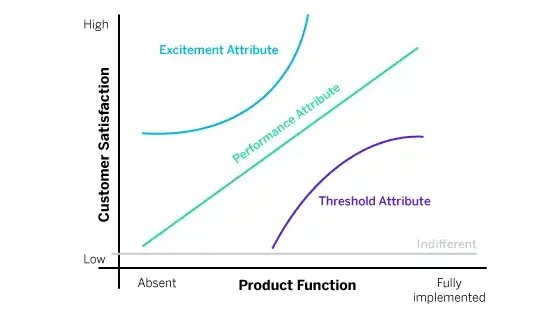
CA Final classes CA Final IBS classes(SPOM-set B portion) StudyByTech Offers Contact us Introduction Customer satisfaction is a cornerstone of successful business strategy. Understanding and addressing the diverse needs and expectations of customers can set a business apart from its competitors. The Kano Model, developed by Dr. Noriaki Kano, provides a valuable framework for categorizing and prioritizing these needs. This blog delves into the intricacies of the Kano Model, exploring its key components—Threshold Attributes, Performance Attributes, Excitement Attributes, and Indifferent Attributes—and highlighting its practical applications in enhancing customer satisfaction. In today’s highly competitive market, businesses strive to understand and meet customer expectations effectively. The Kano Model of Customer Satisfaction, introduced by Japanese quality management guru Dr. Noriaki Kano in the 1980s, offers a systematic approach to achieve this goal. By categorizing product or service attributes based on how they influence customer satisfaction, the Kano Model helps businesses prioritize their development efforts to maximize customer delight and loyalty. Parag Sir’s insight on Kano’s Model Parag Gupta Sir breaks down the intricacies of the Kano Model, explaining its core principles and illustrating its importance in the realm of customer satisfaction and quality management. Watch this video to get a great insight on this topic: https://youtu.be/fyk1KpZ6nwA Product attributes based on Kano’s model Threshold Attributes Threshold Attributes, also known as Basic Attributes or Must-Be Attributes, are the fundamental features that customers expect in a product or service. These attributes are not typically vocalized by customers because their presence is assumed. However, their absence leads to significant dissatisfaction. Performance Attributes Performance Attributes, or One-Dimensional Attributes, are those features that directly correlate with customer satisfaction. The better these attributes perform, the more satisfied the customers will be. Conversely, poor performance in these areas leads to dissatisfaction. Using the smartphone example again, performance attributes might include camera quality, processing speed, and screen resolution. Enhancing these attributes generally leads to higher customer satisfaction because customers can clearly see the benefits and improvements. Businesses should focus on continuously improving these attributes to stay competitive. Excitement Attributes Excitement Attributes, also known as Attractive Attributes, are the features that surprise and delight customers. These are unexpected and not typically demanded by customers, but their presence generates significant satisfaction. Conversely, their absence does not cause dissatisfaction because customers do not expect them. For instance, an innovative facial recognition feature in a smartphone can be considered an Excitement Attribute. When first introduced, it wasn’t an expected feature, but it created a “wow” factor and set the product apart from its competitors. Investing in these attributes can turn customers into enthusiastic promoters of the product or service. Indifferent Attributes Indifferent Attributes are features that neither contribute to customer satisfaction nor cause dissatisfaction. These attributes have little to no impact on how customers perceive the product or service. An example might be the color of the internal components of a smartphone. Most customers are indifferent to such aspects as they do not affect the user experience. Identifying and minimizing resources spent on Indifferent Attributes can help businesses allocate their efforts more effectively towards attributes that enhance customer satisfaction. Uses The Kano Model serves multiple purposes in the realm of customer satisfaction and product development: Conclusion The Kano Model of Customer Satisfaction is a powerful tool for understanding and prioritizing customer needs. By categorizing features into Threshold, Performance, Excitement, and Indifferent Attributes, businesses can strategically enhance their offerings to maximize customer satisfaction and loyalty. Utilizing the Kano Model can lead to more effective resource allocation, better strategic planning, and ultimately, a stronger competitive advantage in the market. In an era where customer expectations are constantly evolving, the Kano Model provides a structured approach to staying ahead and continuously delighting customers. FAQ’s

CA Foundation Law Syllabus Sept 2026
Blog, CA Foundation, ca foundation law

CA Foundation Law Syllabus 2026 (Latest ICAI Update) – Complete Guide for Sept 2026

CA Foundation Classes ICAI Registration Process Subjects, Syllabus & Exam Pattern Admit Card Exam Dates Exam Tips About the faculties FAQ’s 📌 Key Takeaways – CA Foundation Law Syllabus (Sept 2026) What every CA Foundation aspirant must know 1 Complete Syllabus for Sept 2026Paper 2: Business Laws (100 marks, subjective). Covers 7 key acts – Indian Contract Act (highest weightage: 25-30 marks), Sale of Goods, Partnership, LLP, Companies Act 2013, Negotiable Instruments, and Indian Regulatory Framework. 2 Exam Pattern & Passing Criteria40% marks required in Law (40 out of 100) and 50% aggregate across all Foundation papers. Important Update: BCR (Business Communication) is removed. Law is now a full 100-mark paper. 3 Smart Study Strategy to Score 70+Focus on Contract Act, Companies Act & Partnership Act (cover 65-70% of paper). Practice case studies daily using Provision-Analysis-Conclusion format. Use legal keywords like “Consensus-ad-idem” for step-marking. Don’t skip the ICAI module. 📖 Paper Name: Business Laws 🎯 Total Marks: 100 (Subjective) 📅 Target Exam: Sept 2026 ⭐ Highest Weightage: Indian Contract Act (25-30 marks) 📘 Download Syllabus PDF: Click here for future reference Introduction If you’re preparing for CA Foundation Sept 2026, one mistake most students make is starting preparation without fully understanding the syllabus. And trust me — in Law, that’s dangerous. Because this subject is not about mugging up sections… It’s about understanding concepts + applying them in case studies. So in this blog, let’s break down the latest CA Foundation Law syllabus (2026) in the simplest way possible. CA Foundation Law Paper Overview 👉 Important update: Earlier BCR (Business Communication) was included, but now Law is a full 100-mark paper, making conceptual clarity even more important. CA Foundation Law Syllabus 2026 (Chapter-wise) 1. Indian Regulatory Framework 👉 This is introductory but important for building base. 2. The Indian Contract Act, 1872 (MOST IMPORTANT 🔥) This is the heart of your syllabus. Key topics: 👉 Exam Reality: This chapter alone can carry 40–50% weightage. 3. Sale of Goods Act, 1930 👉 Case-study based questions are very common here. 4. Indian Partnership Act, 1932 5. Limited Liability Partnership (LLP) Act, 2008 6. Companies Act, 2013 👉 Students usually ignore this — but ICAI doesn’t. 7. Negotiable Instruments Act, 1881 Topic-Wise Weightage Strategy Chapter Name Topics Covered Expected Weightage 1. Indian Regulatory Framework Regulatory Bodies (MCA, SEBI, RBI, IBBI) 0 – 5 Marks 2. The Indian Contract Act, 1872 Nature of Contract, Consideration, Indemnity, Guarantee, Bailment 25 – 30 Marks 3. The Sale of Goods Act, 1930 Formation, Conditions & Warranties, Unpaid Seller 15 – 20 Marks 4. The Indian Partnership Act, 1932 Nature of Partnership, Relations, Dissolution 15 – 20 Marks 5. The LLP Act, 2008 Incorporation, Characteristics of LLP 5 – 10 Marks 6. The Companies Act, 2013 Incorporation, MOA, AOA, Corporate Veil 15 – 20 Marks 7. Negotiable Instruments Act, 1881 Meaning, Classification, Dishonour of Cheques 10 – 15 Marks High Priority (Focus 60% of your time): Medium Priority (30% time): Lower Priority (10% time): To Download PDF for future reference, click here Study Strategy: How to Score 70+ in Law Smart Study Strategy for Law (2026) 1. Don’t skip ICAI module Most tricky questions come directly from module examples. 2. Focus on keyword ICAI gives marks for: 3. Practice case studies daily Law is not reading — it’s application. 4. Revise multiple times CA Foundation is more about revision than intelligence Common mistakes students makes- Final Words CA Foundation Law is not difficult — but it is tricky. If you: 👉 You can easily score 60+ marks. FAQ’s

CA Inter Costing
Blogs, CA Inter, Costing

Process Costing: CA Inter Costing | May 24 Suggested Answers

Introduction to CA Inter Costing Classes by Parag Gupta Sir Parag Gupta Sir is renowned for his exceptional CA Inter Costing classes. With a focus on comprehensive understanding and practical application, his teachings ensure students excel in their exams. One of the critical components of the CA Inter May 24 Costing paper is Process Costing, specifically Question 4A. This blog delves into the suggested answer for this question, providing insights that align with Parag Gupta Sir’s teaching methodology. Understanding Q-4a Process Costing in CA Inter May 24 Costing Process Costing is a method used in industries where production is continuous, and the products pass through multiple stages or processes. It accumulates costs for each process and assigns them to units produced. This method is crucial for industries like chemicals, textiles, and oil refining. Key Components of Process Costing Step-by-Step Solution Example Problem Breakdown Given Data: Calculation: By applying these calculations, students can accurately allocate costs and understand the intricacies of Process Costing. Click here to see the all suggested answer for CA Inter Sept 25 Benefits of Parag Gupta Sir’s Classes Comprehensive Coverage Parag Gupta Sir’s classes provide in-depth coverage of all CA Inter Costing topics, including Process Costing. His structured approach ensures students grasp each concept thoroughly. Practical Examples His teaching includes numerous practical examples, mirroring the type of questions found in the CA Inter exams. This prepares students to tackle similar problems with confidence. Detailed Solutions Every problem is broken down step-by-step, as seen in the suggested answer for Q 4A. This methodical approach helps students follow along easily and understand the logic behind each step. Interactive Learning Classes are interactive, encouraging students to ask questions and engage with the material. This active participation enhances understanding and retention of complex concepts. Conclusion Mastering Process Costing is essential for success in the CA Inter Costing exam. Parag Gupta Sir’s classes offer the ideal preparation, providing detailed explanations, practical examples, and interactive learning opportunities. By following his guidance, students can confidently approach their exams and excel in their CA journey. FAQs

Avoid These 5 Mistakes in Process Costing by Parag Gupta
CA classes

Avoid these 5 Mistakes in CA Inter Process Costing I By Parag Gupta sir

CA Inter Classes ICAI Registration Process, Fees, & Syllabus Admit Card Exam Dates Study Guides & Tips CA Inter faculties FAQ Introduction Process costing is a vital aspect of cost accounting, enabling businesses to allocate costs accurately and make informed decisions. However, mastering process costing can be challenging, and even small mistakes can lead to significant errors in financial data. In this blog post, we’ll delve into five common mistakes in process costing, drawing insights from the expertise of Parag Gupta, a renowned authority in the field of accounting and finance. Want to understand more about Process Costing in depth, read this. 5 mistakes to avoid in Process Costing at CA Inter level are: https://youtu.be/aApMURGSlNA 5 tips to avoid mistakes in Process Costing by Parag Gupta sir: Tips Description 1. Detailed Documentation Maintain thorough records of production costs incurred at each stage to ensure accurate cost allocations and financial reporting. 2. Consider Variable Costs Identify and account for fluctuating costs associated with production processes to avoid skewed cost calculations and inaccurate profitability assessments. 3. Address Process Variability Recognize variations in production processes and adjust cost allocation methods accordingly to ensure accurate cost estimations. 4. Accurate Overhead Allocation Allocate overhead costs correctly to prevent distorted product costs and ensure reliable profitability analysis. 5. Regular Process Review Periodically review and update process costing methods to adapt to changing business dynamics and optimize cost allocation for improved performance. These tips provide actionable advice to help businesses avoid common mistakes and enhance the accuracy of process costing. Conclusion Process costing is a critical tool for businesses to determine product costs and make informed decisions. By avoiding these five mistakes outlined by Parag Gupta, organizations can enhance the accuracy of their process costing data and improve overall financial performance. Remember to prioritize detailed documentation, account for variable costs, address process variability, allocate overhead costs accurately, and regularly review and refine costing processes for optimal results. FAQ’S Want to Enroll to our classes?

Scroll to Top