CA Final Costing by parag gupta sir
Blog, CA Final, Self paced online module

Parag Gupta Porter’s 5 Forces Strategic Positioning Opportunity Cost

CA Final classes CA Final IBS classes(SPOM-set B portion) StudyByTech Offers Contact us In the realm of Chartered Accountancy, mastering strategic concepts is crucial for success in the CA Final Costing examination. At Parag Gupta Classes, we recognize the importance of providing our students with comprehensive insights into complex topics such as Porter’s Five Forces, Strategic Positioning, and Opportunity Cost. This blog post delves into these critical concepts, offering CA aspirants a deep understanding of their application in real-world scenarios. Understanding Porter’s Five Forces Porter’s Five Forces framework, developed by Michael Porter, is a fundamental tool for analyzing industry competition and profitability. We at Parag Gupta Classes emphasize its significance in strategic decision-making. The five forces include: Strategic Positioning: Crafting a Competitive Edge Strategic positioning is pivotal in establishing a sustainable competitive advantage. At Parag Gupta Classes, we guide our students through various positioning strategies: Cost Leadership We demonstrate how firms can achieve lower costs than competitors, enabling them to offer competitive prices while maintaining profitability. Differentiation Our course material illustrates methods to create unique product features or services that command premium prices. Focus Strategies We explore niche market targeting, showing how specialized offerings can lead to market dominance in specific segments. Opportunity Cost: The Hidden Factor in Decision Making Opportunity cost is a critical concept in economics and business strategy. Our CA Final Costing program emphasizes its importance: Integrating Concepts for CA Final Success At Parag Gupta Classes, we believe in a holistic approach to learning. Our curriculum integrates these concepts to provide a comprehensive understanding: Advanced Applications for CA Professionals Beyond exam preparation, we equip our students with skills applicable in their future careers: The Parag Gupta Classes Advantage Choosing Parag Gupta Classes for CA Final Costing preparation offers numerous benefits: Conclusion At Parag Gupta Classes, we are committed to nurturing the next generation of Chartered Accountants. By mastering Porter’s Five Forces, strategic positioning, and opportunity cost analysis, our students gain a competitive edge in both their CA Final examinations and their future careers. We invite aspiring CAs to join our program and experience the transformative power of expert guidance and comprehensive learning. FAQ’s

CA Inter Costing Tips and Tricks for Exam Success
Blog, CA Inter, Costing, Exams tips

CA Inter Costing Tips and Tricks for Exam Success

CA Inter • Paper 4 CA Inter Costing Tips: 7 Proven Ways to Crack the Exam These CA Inter costing tips are for students who find Costing scary. You’ll get seven practical steps: master the basics, practise daily, take tests, clear doubts, revise on a schedule, manage exam time and stay calm. Pair them with ICAI’s material and past papers, and you’ll build speed, accuracy and confidence. Written by the StudyByTech team, founded by CA Parag Gupta. Table of Contents 7 CA Inter costing tips Your costing roadmap Exam-day time plan Why StudyByTech FAQs Key Takeaways Master basics like cost behaviour before advanced problems. Practise a little every day, and mix question types. Test yourself often and study every mistake. Revise on a fixed schedule, not on impulse. Practise timed papers so exam day feels familiar. Stay calm. Confidence comes from preparation. 7 CA Inter Costing Tips That Actually Work Here are our best CA Inter costing exam tips. They’re simple, but they only work if you use them together. 1. Understand the basics first Before you touch tough problems, get cost behaviour, cost allocation and costing methods clear. Skip this and every big question feels like a maze. Start with the ICAI study material once, then move to practice. 2. Practise regularly Costing rewards hands-on work. Solve a mix of question types every day, even if it’s just five. You’ll get faster, and formats will stop surprising you. Our 59 must-do questions PDF is a great place to begin. 3. Take regular tests Tests show you what you actually know. Treat them like the real thing, then go through every mistake. Practise ICAI’s RTPs, MTPs and past papers on ICAI BoS Live, since patterns repeat. 4. Clear your doubts fast Don’t let one confusing concept snowball. Ask early, whether it’s a teacher, a doubt session or a friend. Small gaps turn into big ones if you wait. 5. Revise thoroughly Make a revision schedule and stick to it. Come back to each topic a few times instead of reading it once. Solve questions from memory. It works far better than re-reading. 6. Manage your exam time Practise full papers against the clock. Know which questions you’ll start with and when you’ll move on. Time is a marks-winner in Costing. 7. Stay positive and confident Anxiety costs marks. Sleep well, take short breaks and trust the work you’ve done. You’re better prepared than you think. Watch and Try Before You Commit Prefer to learn by watching? Start with the video, then sample the lectures. ▶ Watch the CA Inter Costing tips video   🎓 CA Inter Costing demo lectures Your CA Inter Costing Roadmap Think of it as a loop. Learn, practise, test, revise, then repeat until it feels easy. 1. Learnthe basics2. Practiseevery day3. Testyourself4. Reviseon schedule5. Exam-readystay calm Exam-Day Time Plan for the 3-Hour Paper Costing carries 100 marks. That’s under two minutes per mark, so plan your time like this. Phase Time What to do Read and plan 10 min Skim every question and tick your strongest ones. Attempt 150 min About 1.5 minutes per mark. Start with sure-shot questions. Review 20 min Recheck formulas, workings and totals. ⬇ Download this PDF for exam days Why StudyByTech Is a Great Fit for CA Inter Costing Expert guidance CA Parag Gupta has 20+ years of experience teaching Costing. See all CA Inter faculties. Complete syllabus Every topic is covered, theory and practical. Check the ICAI syllabus and see how we map to it. Tests and doubt sessions Regular class tests plus separate doubt sessions mean nobody gets left behind. Book + 20 hours of classes Every Costing book from Parag Sir comes with 20 hours of latest batch class access. Ready for guided prep? Explore our CA Inter Costing classes or grab the 8th edition Costing book, which comes with 20 hours of latest batch classes access. Need more? Browse the CA Inter course guide, your exam dates and registration and fees. See CA Inter Classes CA Inter Costing FAQs Which is the toughest subject in CA Inter? Auditing is widely considered the toughest CA Inter subject. Many students find it competitive and hard to self-study. Accounting and Corporate and Other Laws build the foundation that makes Auditing easier to understand. How much time does CA Intermediate take? It takes about 10 months overall. After you enrol, you get roughly eight months of study time before the exams, and ICAI usually releases results within two months of the last paper. How many hours should you study for CA Inter? It depends on when you start and where you’re strong. Instead of chasing a big number, fix daily slots for each subject, give Costing regular practice time, and build your plan around the ICAI exam date. Which group is harder in CA Intermediate? It depends on your strengths. Group I covers Accounting, Corporate and Other Laws, and Taxation. Group II covers Costing, Auditing, and Financial Management and Strategic Management. Pick the group that matches your comfort with numbers, law or theory. What are CA Inter costing tips? CA Inter costing tips are practical study habits for Paper 4, Cost and Management Accounting. They include mastering basics, daily practice, regular tests, quick doubt clearing, scheduled revision, timed papers and staying calm. Together they build the speed and accuracy Costing demands. How do CA Inter costing exam tips work? They turn a big subject into small, repeatable habits. You learn a concept, solve questions, test yourself, fix mistakes and revise on a schedule. Each loop builds accuracy and speed, so question formats feel familiar on exam day and you waste less time. Are CA Inter costing tips worth it? Yes. Costing questions follow set formats, so steady practice pays off quickly. Tips won’t replace hard work, but they make every study hour count by showing you what to practise, how to test yourself and when to revise. Who are CA Inter costing tips best for? They’re best for first-attempt CA

CA Final SCPM: Value Chain Analysis
Blog, Self paced online module

CA Final Costing: Mastering Value Chain Analysis

CA Final classes CA Final IBS classes(SPOM-set B portion) StudyByTech Offers Contact us Understanding Value Chain Analysis in CA Final Costing At Parag Gupta Classes, we recognize the critical importance of Value Chain Analysis in the CA Final Costing curriculum. This powerful strategic tool, developed by Michael Porter, enables organizations to identify and optimize their core competencies, ultimately leading to enhanced competitive advantage and improved profitability. The Fundamentals of Value Chain Analysis By separating a company’s activities into primary and support activities, Value Chain Analysis makes it possible to thoroughly examine how each step contributes to the process of creating value as a whole. By understanding these interconnected exercises, trying Sanctioned Bookkeepers can form bits of knowledge into cost drivers and likely regions for separation. Primary Activities Support Activities Applying Value Chain Analysis in Real-World Scenarios We at Parag Gupta Classes believe in putting theory into practice. Our CA Last Costing course incorporates contextual investigations and genuine models that exhibit how Worth Chain Examination can be utilized to: Advanced Techniques in Value Chain Analysis Benchmarking and Competitive Analysis We teach students how to identify best practices and areas for improvement by comparing their organization’s value chain activities to those of industry leaders. Future Chartered Accountants can develop strategies that outperform rivals thanks to this comparative analysis. Value Chain Mapping Advanced mapping techniques that visually depict the flow of activities, information, and resources throughout the value chain are introduced in our course. This amazing asset helps with distinguishing bottlenecks, redundancies, and open doors for process enhancement. Activity-Based Costing Integration By combining Value Chain Analysis with Activity-Based Costing (ABC), we show how costs can be more precisely allocated to specific activities. This definite expense data empowers better independent direction and key preparation. Leveraging Technology in Value Chain Analysis We emphasize the significance of utilizing technology to improve Value Chain Analysis in the digital age of today. Our educational plan covers: Sustainability and Value Chain Analysis In light of the growing significance of sustainability in business, our course investigates the applications of Value Chain Analysis for: Preparing for the CA Final Exam At Parag Gupta Classes, we provide comprehensive exam preparation, including: Conclusion: Empowering Future Chartered Accountants Aspiring Chartered Accountants gain a powerful tool for strategic decision-making and organizational improvement by mastering Value Chain Analysis in our CA Final Costing course. We at Parag Gupta Classes are dedicated to providing the upcoming generation of financial professionals with the knowledge and abilities they need to succeed professionally and in business. FAQ’s

Mastering the McKinsey 7S Framework: Insights from Parag Gupta Sir
CA, CA Final, SCPM

Mastering the McKinsey 7S Framework: Insights from Parag Gupta Sir

In the ever-evolving landscape of business management, understanding and optimizing organizational performance is crucial. One of the most effective tools for this purpose is the McKinsey 7S Framework, a model that has stood the test of time in helping organizations achieve strategic alignment and operational excellence. In this blog, we will explore the McKinsey 7S Framework, guided by the expertise of Parag Gupta Sir, a renowned faculty for SPOM- Strategic Cost & Performance management (SCPM). What is the McKinsey 7S Framework? The McKinsey 7S Framework is a management model developed by consultants at McKinsey & Company in the 1980s. It is designed to assess and align seven critical elements within an organization to ensure they work harmoniously towards achieving strategic goals. These seven elements are: Check out Parag sir’s video on Mckinsey 7S: The 7S Model: An Integrated Approach Parag Gupta Sir emphasizes that the power of the 7S Framework lies in its holistic approach. Unlike other models that focus on individual components in isolation, the 7S Framework interlinks all seven elements, ensuring that any change in one area is harmonized with the others. This interconnectedness is vital for achieving strategic coherence and operational efficiency. 1. Strategy Strategy is the cornerstone of the 7S Framework. It involves setting long-term goals and determining the best course of action to achieve them. Parag Gupta Sir highlights that a well-defined strategy provides direction and sets the stage for aligning the other six elements. 2. Structure The structure of an organization refers to its hierarchical setup. It defines roles, responsibilities, and the flow of information. An optimal structure supports efficient decision-making and enhances communication across various levels of the organization. 3. Systems Systems encompass the daily processes and procedures that govern organizational activities. Effective systems streamline operations, reduce redundancies, and ensure that tasks are performed consistently and efficiently. 4. Shared Values At the heart of the 7S Framework are the shared values. These are the fundamental beliefs and guiding principles that shape the organization’s culture. Shared values influence employee behavior, organizational ethos, and the overall work environment. 5. Style Style refers to the leadership approach adopted by management. Leadership style affects organizational morale, employee engagement, and the overall effectiveness of management. Parag Gupta Sir emphasizes that adaptive leadership styles that resonate with the organization’s values and culture are crucial for success. 6. Staff The staff element focuses on the organization’s human resources. It involves recruiting, training, and developing employees to ensure they possess the necessary skills and competencies. A talented and motivated workforce is key to executing the organization’s strategy effectively. 7. Skills Skills refer to the specific capabilities and expertise of the organization’s employees. Identifying and nurturing these skills ensures that the organization can meet its strategic objectives and adapt to changing market demands. Applying the McKinsey 7S Framework Parag Gupta Sir provides practical insights into applying the McKinsey 7S Framework in real-world scenarios. Here’s a step-by-step approach: Real-World Examples Parag Gupta Sir enriches his teachings with real-world examples that illustrate the practical application of the 7S Framework. For instance, he discusses how a leading tech company restructured its organization to foster innovation, aligning its strategy, structure, and systems to support a culture of creativity and rapid development. Conclusion The McKinsey 7S Framework is a timeless tool that provides a comprehensive approach to organizational analysis and improvement. By understanding and aligning the seven elements—Strategy, Structure, Systems, Shared Values, Style, Staff, and Skills—organizations can achieve greater coherence, efficiency, and success. Under the guidance of Parag Gupta Sir, mastering the 7S Framework becomes an invaluable asset for students, professionals, and business leaders alike. His expert insights and practical applications make this complex model accessible and actionable, empowering organizations to navigate the challenges of today’s dynamic business environment. For more in-depth learning, insights, and practical strategies, stay tuned to Parag Gupta Sir’s sessions on Strategic Planning and Operations Management. Want to enroll to SPOM-SCPM classes?

Kano Model
CA Final, CA Final IBS, Self paced online module

The Kano Model of Customer Satisfaction and its Importance

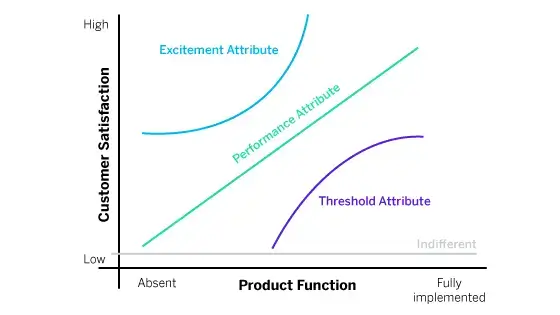
CA Final classes CA Final IBS classes(SPOM-set B portion) StudyByTech Offers Contact us Introduction Customer satisfaction is a cornerstone of successful business strategy. Understanding and addressing the diverse needs and expectations of customers can set a business apart from its competitors. The Kano Model, developed by Dr. Noriaki Kano, provides a valuable framework for categorizing and prioritizing these needs. This blog delves into the intricacies of the Kano Model, exploring its key components—Threshold Attributes, Performance Attributes, Excitement Attributes, and Indifferent Attributes—and highlighting its practical applications in enhancing customer satisfaction. In today’s highly competitive market, businesses strive to understand and meet customer expectations effectively. The Kano Model of Customer Satisfaction, introduced by Japanese quality management guru Dr. Noriaki Kano in the 1980s, offers a systematic approach to achieve this goal. By categorizing product or service attributes based on how they influence customer satisfaction, the Kano Model helps businesses prioritize their development efforts to maximize customer delight and loyalty. Parag Sir’s insight on Kano’s Model Parag Gupta Sir breaks down the intricacies of the Kano Model, explaining its core principles and illustrating its importance in the realm of customer satisfaction and quality management. Watch this video to get a great insight on this topic: https://youtu.be/fyk1KpZ6nwA Product attributes based on Kano’s model Threshold Attributes Threshold Attributes, also known as Basic Attributes or Must-Be Attributes, are the fundamental features that customers expect in a product or service. These attributes are not typically vocalized by customers because their presence is assumed. However, their absence leads to significant dissatisfaction. Performance Attributes Performance Attributes, or One-Dimensional Attributes, are those features that directly correlate with customer satisfaction. The better these attributes perform, the more satisfied the customers will be. Conversely, poor performance in these areas leads to dissatisfaction. Using the smartphone example again, performance attributes might include camera quality, processing speed, and screen resolution. Enhancing these attributes generally leads to higher customer satisfaction because customers can clearly see the benefits and improvements. Businesses should focus on continuously improving these attributes to stay competitive. Excitement Attributes Excitement Attributes, also known as Attractive Attributes, are the features that surprise and delight customers. These are unexpected and not typically demanded by customers, but their presence generates significant satisfaction. Conversely, their absence does not cause dissatisfaction because customers do not expect them. For instance, an innovative facial recognition feature in a smartphone can be considered an Excitement Attribute. When first introduced, it wasn’t an expected feature, but it created a “wow” factor and set the product apart from its competitors. Investing in these attributes can turn customers into enthusiastic promoters of the product or service. Indifferent Attributes Indifferent Attributes are features that neither contribute to customer satisfaction nor cause dissatisfaction. These attributes have little to no impact on how customers perceive the product or service. An example might be the color of the internal components of a smartphone. Most customers are indifferent to such aspects as they do not affect the user experience. Identifying and minimizing resources spent on Indifferent Attributes can help businesses allocate their efforts more effectively towards attributes that enhance customer satisfaction. Uses The Kano Model serves multiple purposes in the realm of customer satisfaction and product development: Conclusion The Kano Model of Customer Satisfaction is a powerful tool for understanding and prioritizing customer needs. By categorizing features into Threshold, Performance, Excitement, and Indifferent Attributes, businesses can strategically enhance their offerings to maximize customer satisfaction and loyalty. Utilizing the Kano Model can lead to more effective resource allocation, better strategic planning, and ultimately, a stronger competitive advantage in the market. In an era where customer expectations are constantly evolving, the Kano Model provides a structured approach to staying ahead and continuously delighting customers. FAQ’s

CA Inter Costing
Blogs, CA Inter, Costing

Process Costing: CA Inter Costing | May 24 Suggested Answers

Introduction to CA Inter Costing Classes by Parag Gupta Sir Parag Gupta Sir is renowned for his exceptional CA Inter Costing classes. With a focus on comprehensive understanding and practical application, his teachings ensure students excel in their exams. One of the critical components of the CA Inter May 24 Costing paper is Process Costing, specifically Question 4A. This blog delves into the suggested answer for this question, providing insights that align with Parag Gupta Sir’s teaching methodology. Understanding Q-4a Process Costing in CA Inter May 24 Costing Process Costing is a method used in industries where production is continuous, and the products pass through multiple stages or processes. It accumulates costs for each process and assigns them to units produced. This method is crucial for industries like chemicals, textiles, and oil refining. Key Components of Process Costing Step-by-Step Solution Example Problem Breakdown Given Data: Calculation: By applying these calculations, students can accurately allocate costs and understand the intricacies of Process Costing. Click here to see the all suggested answer for CA Inter Sept 25 Benefits of Parag Gupta Sir’s Classes Comprehensive Coverage Parag Gupta Sir’s classes provide in-depth coverage of all CA Inter Costing topics, including Process Costing. His structured approach ensures students grasp each concept thoroughly. Practical Examples His teaching includes numerous practical examples, mirroring the type of questions found in the CA Inter exams. This prepares students to tackle similar problems with confidence. Detailed Solutions Every problem is broken down step-by-step, as seen in the suggested answer for Q 4A. This methodical approach helps students follow along easily and understand the logic behind each step. Interactive Learning Classes are interactive, encouraging students to ask questions and engage with the material. This active participation enhances understanding and retention of complex concepts. Conclusion Mastering Process Costing is essential for success in the CA Inter Costing exam. Parag Gupta Sir’s classes offer the ideal preparation, providing detailed explanations, practical examples, and interactive learning opportunities. By following his guidance, students can confidently approach their exams and excel in their CA journey. FAQs

Avoid These 5 Mistakes in Process Costing by Parag Gupta
CA classes

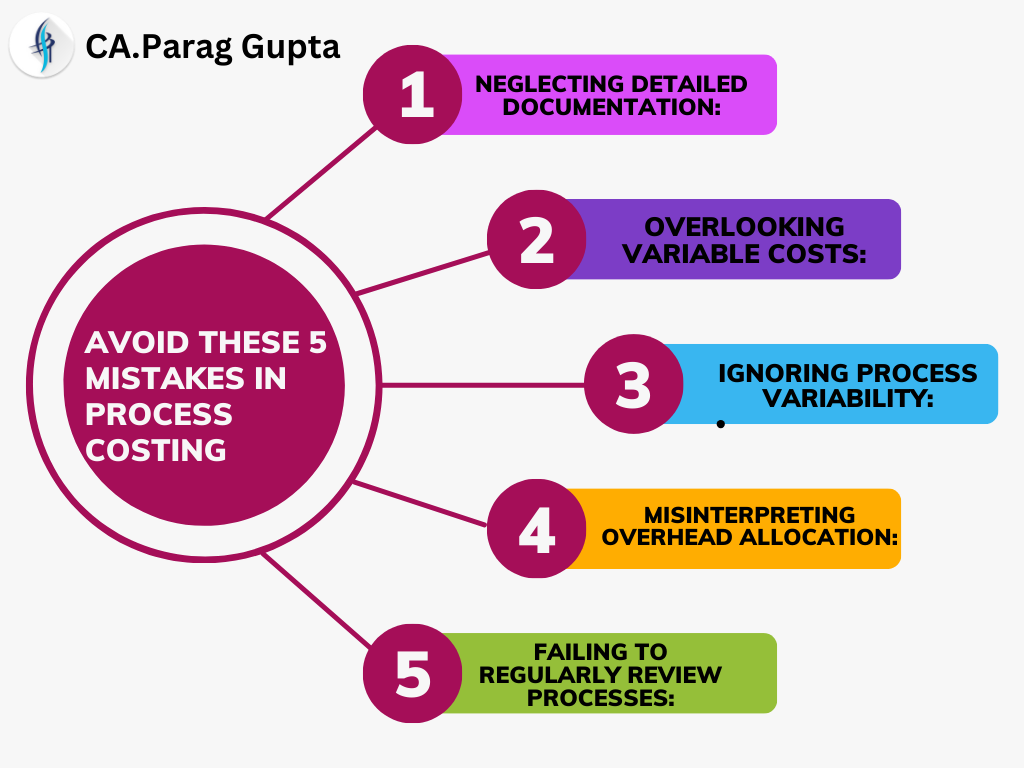
Avoid these 5 Mistakes in CA Inter Process Costing I By Parag Gupta sir

CA Inter Classes ICAI Registration Process, Fees, & Syllabus Admit Card Exam Dates Study Guides & Tips CA Inter faculties FAQ Introduction Process costing is a vital aspect of cost accounting, enabling businesses to allocate costs accurately and make informed decisions. However, mastering process costing can be challenging, and even small mistakes can lead to significant errors in financial data. In this blog post, we’ll delve into five common mistakes in process costing, drawing insights from the expertise of Parag Gupta, a renowned authority in the field of accounting and finance. Want to understand more about Process Costing in depth, read this. 5 mistakes to avoid in Process Costing at CA Inter level are: https://youtu.be/aApMURGSlNA 5 tips to avoid mistakes in Process Costing by Parag Gupta sir: Tips Description 1. Detailed Documentation Maintain thorough records of production costs incurred at each stage to ensure accurate cost allocations and financial reporting. 2. Consider Variable Costs Identify and account for fluctuating costs associated with production processes to avoid skewed cost calculations and inaccurate profitability assessments. 3. Address Process Variability Recognize variations in production processes and adjust cost allocation methods accordingly to ensure accurate cost estimations. 4. Accurate Overhead Allocation Allocate overhead costs correctly to prevent distorted product costs and ensure reliable profitability analysis. 5. Regular Process Review Periodically review and update process costing methods to adapt to changing business dynamics and optimize cost allocation for improved performance. These tips provide actionable advice to help businesses avoid common mistakes and enhance the accuracy of process costing. Conclusion Process costing is a critical tool for businesses to determine product costs and make informed decisions. By avoiding these five mistakes outlined by Parag Gupta, organizations can enhance the accuracy of their process costing data and improve overall financial performance. Remember to prioritize detailed documentation, account for variable costs, address process variability, allocate overhead costs accurately, and regularly review and refine costing processes for optimal results. FAQ’S Want to Enroll to our classes?

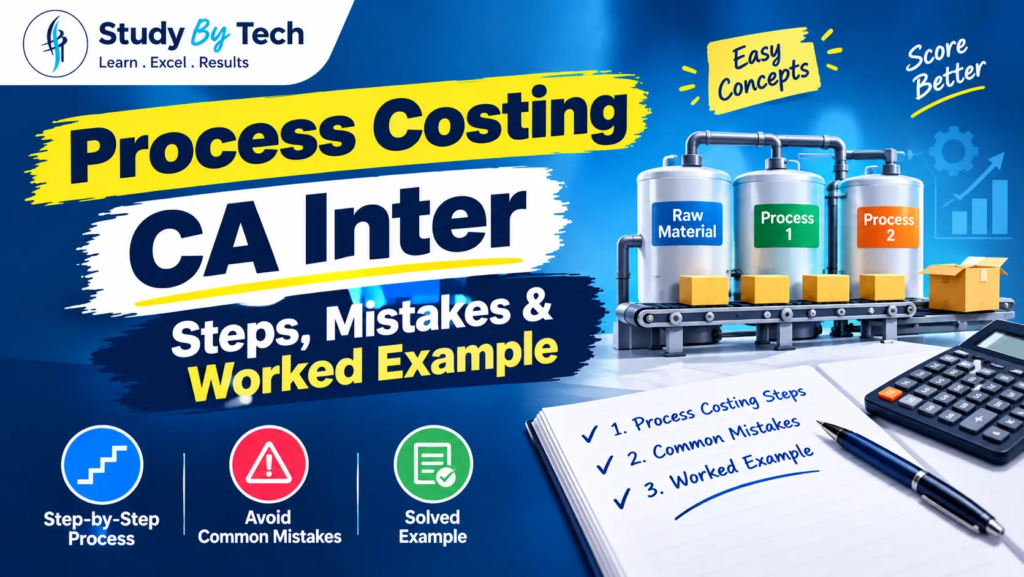
Process Costing CA Inter: Steps, Mistakes & a Worked Example
CA Inter, Costing

CA Inter : Basic of Process Costing by CA Parag Gupta

Process Costing CA Inter: Steps, Mistakes & Answers Parag Gupta Classes📞 +91 99688 75529 Process Costing CA Inter: Steps, Mistakes & a Worked Example By CA Parag Gupta · Parag Gupta Classes · Updated September 2026 Process costing CA Inter is the method you use to find the cost of products made in a continuous, multi-stage process, like chemicals, textiles or oil refining. This guide by CA Parag Gupta is for CA Inter students preparing Cost & Management Accounting. You’ll learn equivalent units, normal and abnormal loss, five common exam mistakes and a worked example. The key takeaway: divide each process’s total cost by equivalent units, then split it between finished and unfinished units. Table of Contents What Is Process Costing in CA Inter? How CA Inter Process Costing Works Process Costing Worked Example 5 Process Costing Mistakes to Avoid Why Learn with Parag Gupta Sir Process Costing CA Inter FAQs Key Takeaways Process costing fits continuous, multi-stage production, not one-off jobs. Equivalent units turn partly finished units into full-unit terms. Cost per equivalent unit = total process cost ÷ equivalent units. Normal loss is absorbed by good units. Abnormal loss is costed separately. Most marks are lost through weak records, wrong overhead allocation and skipped reviews. Always reconcile costs at the end of each process. What Is Process Costing in CA Inter? The simple definition Process costing finds the cost of a product by assigning costs to each stage of production. It works when goods flow continuously through the same steps, so every unit is basically identical. Where you’ll see it Think food and beverages, chemicals, textiles and oil refining. Your exam questions use the same logic. Why use it? Benefit What it means for you Simple and efficient It tracks the process, not every single job. Less paperwork than job costing. Accurate cost estimates You know what production really costs, so pricing and budgeting get easier. Cost control Tracking each stage shows where you can cut waste. Performance checks Compare actual with standard costs to spot inefficiency early. How CA Inter Process Costing Works The 5-step flow 1Collect costsDirect materials, labour and overheads for the process. 2Find equivalent unitsUnits completed + (units in process × % completion). 3Cost per equivalent unitTotal cost ÷ equivalent units. 4Allocate costsSplit between completed units and closing WIP. 5ReconcileCheck totals so nothing is left unexplained. Key elements of CA Inter process costing Element What you do Cost accumulation Collect direct materials, direct labour and overheads in each process or department. Cost allocation Assign the accumulated cost to units produced in the period. Equivalent units Convert partly finished units into the equivalent amount of completed work. Cost per equivalent unit Divide total department cost by equivalent units. Use it for finished units and WIP. Cost reconciliation Match costs across processes and fix any differences. Normal vs abnormal loss Process loss is the gap between input and output. It comes in two types. Type What it is Usual treatment Normal loss Expected, unavoidable wastage. Also called normal process loss. Its cost is absorbed by good units. Any scrap value reduces process cost. Abnormal loss Unexpected, non-recurring loss. Valued at cost per unit and costed separately from good output. Want the full syllabus coverage? Read the ICAI CA Inter costing syllabus and the official ICAI study material. Watch: process costing basics ▶ Watch on YouTube: Process Costing Basics Process Costing Worked Example (May 24 Practice) This is a practice example in the style of CA Inter May 24 Costing Q4A. It isn’t the ICAI question. For the official answer, see ICAI’s suggested answers. Given data (Process 1) Item Amount Raw materials ₹50,000 Labour ₹20,000 Overheads ₹10,000 Normal loss 5% of input The calculations 1. Total cost: 50,000 + 20,000 + 10,000 = ₹80,000 2. Normal loss: 5% × input units 3. Equivalent units: Units completed + (units in process × % completion) 4. Cost per equivalent unit: Total cost ÷ equivalent units Follow these steps and you’ll allocate cost to finished units and work-in-progress cleanly. Want more? ▶ Watch all suggested answers on YouTube 5 Process Costing Mistakes to Avoid Parag Sir has seen these again and again. Even one small slip can throw off your whole answer. Mistake Why it hurts Do this instead 1. Sloppy documentation You can’t allocate costs correctly without clear records. Note every cost for every stage, every time. 2. Overlooking variable costs Costs get skewed and profitability looks wrong. Spot and account for variable costs in each process. 3. Ignoring process variability Variations change how costs should be allocated. Adjust your allocation method to match the process. 4. Misreading overhead allocation Product costs get distorted. Use an appropriate allocation basis. 5. Never reviewing methods Inefficiencies stay hidden. Review and update your costing approach regularly. Watch: 5 mistakes explained ▶ Watch on YouTube: 5 Mistakes Explained Why Learn Process Costing with Parag Gupta Sir Full coverageEvery CA Inter Costing topic, including process costing, in a clear structure. Practical examplesQuestions that mirror what you’ll see in the exam. Step-by-step solutionsYou see the logic behind every line. Interactive classesAsk questions. Stay involved. Remember more. Join CA Inter Costing classes Get the 8th-edition book 59 questions for 60+ marks (PDF) Group 2 combo New here? See the CA Inter registration, fees, syllabus and study tips, compare CA Inter faculties, or browse the best CA coaching classes in Delhi. Process Costing CA Inter FAQs What is process costing in CA Inter? Process costing is a method for finding the cost of products made through continuous, multi-stage production. You collect materials, labour and overheads for each process, divide by equivalent units, and assign cost to finished and unfinished units. In CA Inter Cost & Management Accounting, it’s a chapter you can’t skip. How does process costing work? You accumulate costs for each process first. Then you convert partly finished units into equivalent units, work out cost per equivalent unit, and split the total between completed units and closing work-in-progress. Normal loss is absorbed by good

CA INTER COSTING BEST FACULTY - CA Parag Gupta Sir
Blog, CA Inter

CA Inter Cost & Management Accounting Best Faculty – CA Parag Gupta Sir

Introduction One of the critical factors that can dramatically affect your exam preparation and success is the correct selection of the Cost & Management Accounting Best Faculty. Besides, the rivalries are stiff. Are you going through a hard time in search of the best guide to simplify them? Do not be perplexed. There are many options out there, each of them bearing the curse of choice. But the best decision you can make is to enroll with the best faculty, who can be both intelligible and give you the graces of success. This blog provides step-by-step assistance on how to choose the right educator for your CA Inter Costing requirements. Why Choosing the Cost & Management Accounting Best Faculty? With CA Inter in mind, the faculty that is not only acquainted with the syllabus but, most importantly, understands what specifically you need when studying for the exam is of supreme importance. Opting for an expert faculty ensures you maximize your study efforts, preparing more efficiently and boosting your confidence. Key Qualities of the Cost & Management Accounting Best Faculty 1. Experience in Teaching CA Inter Costing Teachers with a lot of teaching experience who are ICAI syllabus experts have a clear advantage. They keep themselves updated on the syllabus and the new types of exams they should do, so they can use different kinds of methods for their students. 2. Strong Educational Background Choose educators who have passed their CA exams with the highest marks or who have a major in Cost and Management Accounting. This way they are able to have an in-depth understanding of the subject. 3. Availability of Multiple Learning Modes Expert professors frequently provide students with flexible learning opportunities such as the alternative of live online classes, video recorded lectures or even discussing privately their doubts. According to the priority list, which includes the scheduled time of the teaching point, students are controlled by the class instructors. 4. Consistently Positive Student Reviews One of the best indications of how good a teacher is the students’ feedback. See the students’ comments that reflect this style: 5. 1 to 1 doubt sessions Parag sir’s usual saying in class: “There is No silly doubt” 6. Regular Tests during classes Regular tests with different difficulty levels has always helped students to understand the performance and understanding level of the students, with a proper analysis of test performance guide them to improve their scores. 7. Test series included with Class subscription Parag sir’s test series is one of the thing which can never be replaced by anyone. His especially selected questions has helped millions of students to score good marks in exams. 8. Regular new variety of questions added to students portal This helps in regular practice of questions and further improvement in scores. 9. Regular 1-1 sessions for Recorded batch students For those who enrolled to recorded sessions, Parag sir keeps talking to students to take the track of how they are studying. This is one of the best thing which you never get from any faculty. How to Maximize Your Learning with Top Faculty 1. Make the Most of Study Materials The best faculties typically provide detailed study materials, including: Use these resources effectively by following a study schedule that aligns with your syllabus progress. 2. Practice with Mock Exams Demo exams that are offered by the best academy are meant to replicate the real CA Inter Costing test thus helping students cope with the time issue and better understand the exam patterns 3. Engage in Doubt-Solving Sessions Extract as much as is possible out of doubt-solving sessions. Get into these courses consistently, make a point to ask well-defined questions, and ascertain you grasp the crux of the concepts. Who is the most Recommended CA Inter Cost & Management Accounting Best Faculty for 2025? CA Parag Gupta With 20 years of experience in teaching CA Inter Cost & Management Accounting, Parag Gupta sir is considered as India’s most recommended faculty amongst students. Here’s why? Conclusion Popular for his thorough explanations and interactive teaching style, CA Parag Gupta classes with many exercises, assisting CA Inter students. He presents the learners with lectures where the main themes are covered, test papers are done, and with personal advice, he can help them finally understand the subjects they do not know very well through other exercises. FAQ’s

ICAI self-paced Module details,registration & process
Blog, CA Final, Self paced online module

ICAI self-paced Module details, Registration process

The Institute of Chartered Accountants of India (ICAI) recognizes this need and offers Self-Paced Modules tailored to meet the evolving demands of finance and accountancy professionals. These modules provide a convenient and flexible way to enhance expertise without compromising on existing commitments. In this guide, we will simplify the registration process and provide an overview of what individuals can expect from ICAI’s Self-Paced Modules, making the path to continuous learning accessible to all. Understanding ICAI Self-Paced Modules ICAI’s Self-Paced Modules, in partnership with Studybytech, are meticulously crafted to cater to the diverse needs of finance and accountancy professionals. These modules cover a wide range of subjects, including financial accounting, taxation, auditing, and more, ensuring that learners have access to comprehensive and up-to-date content. With Studybytech’s innovative learning platform, participants can delve into interactive lectures, engage in practical exercises, and access a wealth of resources to deepen their understanding of the subject matter. Registration Process At the time of registration of Final Course, students would also be registering for Self-Paced Online Modules. The form for Final Course registration will have the option for selecting the subjects under Self-Paced Online Modules SET C and SET D. No separate fee is payable for registration of Self-Paced Online Modules. Step 1: Visit the ICAI Website To register for Self-Paced Modules, visit the official website of the Institute of Chartered Accountants of India (ICAI) at www.icai.org. Step 2: Navigate to the Self-Paced Modules Section On the website, navigate to the section dedicated to Self-Paced Modules. This section typically provides comprehensive information about the available modules, including course details, fees, and registration guidelines. Step 3: Select the Desired Module Browse through the list of available modules and select the one that aligns with your learning objectives and career goals. Each module covers specific topics, so choose wisely based on your interests and professional requirements. Step 4: Register Online Once you’ve selected the module, proceed with the online registration process. This usually involves filling out a registration form with your personal details, contact information, and payment details. Ensure that all information provided is accurate to avoid any issues later on. Step 5: Pay the Course Fee There is no extra fees additionally added for SPOM. FAQ’s

Scroll to Top