CA FINAL IBS

CA Final IBS September 2025: Complete Exam Review & Future Strategy
Blogs, CA Final, SCPM

CA Final IBS September 2025: Complete Exam Review & Future Strategy

Let’s dive into a comprehensive analysis of the CA Final IBS September 2025 examination. After all, it’s essential to understand exactly what the examiner asked from each subject and how the paper’s structure has evolved. This analysis will help both current students and future aspirants strategize effectively. Take a look on Parag sir’s review on CA Final IBS Sept 2025 exam: CA Parag Gupta Major Shift:  CA Final May 2025 CA Final Sept 2025 Group 1 weightage was 40 marks FR was of 12 marks Group 1 weightage was of 53 marksFR was of 22 marks Group 2 weightage was 43 marks Group 2 weightage was of 37 marks SPOM- 42 marksOut of which SPOM-set B was of 24 marks & SPOM-set A was of 18 marks SPOM- 35 marksOut of which SPOM-set B was of 22 marks & SPOM-set A was of 13 marks Group 1 Takes Center Stage The most significant observation from September 2025 is the substantial increase in Group 1 weightage. Group 1 weightage increased from 40 marks to 53 marks, a staggering 32.5% increase which shows evidence of a purposeful change on the part of the examiner, signaling an increase in the emphasis placed on foundational subjects. Financial Reporting (FR) has seen the most substantial level of change, from 12 marks to 22 marks. This is significant enough that students will no longer be able to treat FR as an afterthought.  Group 2 Sees Strategic Reduction In contrast, Group 2 has seen a substantial reduction in its weightage. The weightage has decreased from 43 to 37 marks. This adjustment validates the examiner’s rebalancing approach. While this group, made up of Direct Tax (DT) and Indirect Tax (IDT), holds a smaller mark weightage as part of the total than before, it is still a notable part to achieve overall success. The SPOM Reality Check: Your Make-or-Break Subject Now, let’s discuss the elephant in the room – Self Paced Online Module(SPOM). Many students ask, “Which subjects of SPOM are most important for CA Final IBS exam?” Here is the full story: Current Attempt (September 2025): Total SPOM: 35 marks SPOM-set A(SCPM): 22 marks Law: 13 marks Previous Attempt: Total SPM: 42 marks SCPM: 24 marks Law: 18 marks While SPOM has slightly decreased from 42 to 35 marks, here’s the critical insight: if you want to clear IBS, you must give maximum attention on SCPM. Why? Because SCPM has emerged as the most important subject for CA Final IBS exam. Why SCPM is Your Gateway to Success Look at the pattern: while other subjects’ figures keep fluctuating up and down, SCPM’s figures are almost consistent. This consistency makes one thing absolutely clear – you cannot ignore SCPM, and you certainly cannot take it lightly. If you approach it casually, your entire paper will suffer. For future aspirants, juniors, or those who haven’t appeared this time, here’s what you need to focus on: treat SCPM preparation exactly like you prepared for Group 1 and Group 2. Don’t fall into the trap thinking that “SCPM can be managed with a limited set of MCQs.” This mindset is fundamentally wrong. The Study Strategy That Actually Works You need to study systematically and wholeheartedly.  Check which topics are located where. As students face problem in exam despite having an open-book examination lasting 4 hours, students fail to locate which topic is where and what has been asked from which section. They get stuck and waste precious time. Revise the gist of the concepts, to make it possible to complete th exam. Conclusion: Your Path Forward At the September 2025 CA Final IBS exam, it has been clearly demonstrated that consistency beats erraticism. While the weightages of either Group 1 or Group 2 may change, SCPM remains your constant stable parameter that can facilitate or hamper your IBS results.  Do not take a chance with your CA Final journey. Respect the importance of SCPM and prepare for it accordingly, and SCPM will become your greatest asset in giving you the ability to pass the IBS paper. Consistency with preparation leads to consistent results in CA Final. Parag Gupta sir’s SCPM classes have special emphasis on IBS portion of SCPM syllabus, helping CA final students to study & revise the course as per IBS(Paper 6) exam. Want to enroll to CA Final SPOM-set B + IBS(SCPM portion) classes? FAQ’s Which subject to choose for SPOM? SPOM comprises four sets – Set A (Corporate and Economic Laws) and Set B (Strategic Cost & Performance Management) are compulsory for all students. Set C provides 10 elective subjects such as Risk Management, Sustainable Development, International Taxation. Set D comprises 4 multidisciplinary courses such as Constitution of India, Entrepreneurship, Psychology, and Digital Ecosystem. Parag sir’s lectures of Set B (Strategic Cost & Performance Management) are thorough in nature, explaining difficult costing & Strategic management principles simple manner. What is IBS in CA final? IBS is Paper 6: Integrated Business Solutions – a mandatory multidisciplinary case study paper for CA Final Group 2. It integrates all seven subjects of the earlier CA syllabus into integrated business situations. The paper tests students’ skills in analyzing intricate business situations and offering complete solutions. Is the spom exam easy? SPOM papers are relatively simpler than CA Final exams. These comprise MCQs with no negative marking and unlimited attempts. Yet, recent trends indicate Set B(Costing) becoming tough for most students, so adequate preparation is required. Is IBS an open book exam? Yes, IBS Paper 6 is an open book exam. As per ICAI’s official notification, Final Paper 6: Integrated Business Solutions is an open book and case study-based examination. You are allowed to bring all your subject materials, ICAI modules, concept notes, and question banks to the exam. CA Final preparation demands advanced understanding. Parag Gupta mentors students through mock tests and doubt-clearing at StudyByTech.
CA Final IBS – Expert Strategy & Case Study Tips by Parag Sir
CA, Blogs, CA Final

CA Final IBS – Expert Strategy & Case Study Tips by Parag Sir

What is CA Final IBS? CA Final IBS (Integrated Business Solutions), is quite difficult in nature with its long case studies that do not only need the technical knowledge but the strategic thinking too. The powerful part of the curriculum is the application of knowledge through case studies of all CA Final subjects, be it from self-paced online modules, or CA Final Group 1 subjects or CA Final Group 2 subjects. So this exam actually tests your applicability of all subjects in 1 exam. This blog is by CA Parag Gupta who is a well-known faculty in the CA Final SCPM(SPOM-set B). He has come up with a couple of ideas that can help you manage the long case studies in the CA Final IBS paper. The Council has decided that the duration of the examination of this paper would continue to be four hours and the manner of assessment of this paper would also be 40% by way of MCQs and 60% in the form of Descriptive Questions in each case study of 25 marks. Accordingly, there will be five case studies of 25 marks each out of which students will be required to attempt any four. Quick Tips for Long Case Studies | CA Final IBS | CA Parag Gupta: Why CA Parag Gupta is the Best Mentor for CA Final IBS? Parag Gupta sir is considered the most experienced and most recommended faculties amongst CA students. With his 2 decades of teaching experience as CA Inter Costing SM and CA Final SCPM(SPOM-set B) & IBS(SCPM portion), he has always helped & guided lakhs of students to achieve their goal of becoming CA. After every few years, ICAI make changes in syllabus and pattern of exams, which always confused CA students. Everytime, CA Parag Gupta sir’s guidelines has being the most helpful guide. His years of analysis and experience has helped him to understand how the course is evolving and how ICAI is actually thinking to take the examination and evaluation process. CA Final IBS May 25 Exam review: Break Down the Questions The initial stage in solving any long case study is to correctly comprehend the scenario. Frequently, scholars question their understanding of the case itself, which eventually leads to errors and confusion further in. Here are the ten essential steps to follow when working on the case: One important step that should not be missed is to comprehend the whole case before moving on to the set of questions. In the in IBS paper, a large number of questions are composed of different parts and involve detailed analysis. Follow these steps: CA Final IBS | How to Solve Case Studies (70+ Strategy) by Parag Sir: IBS Case Study Strategy The IBS paper deliberated over the management of strategic cost where cost management and decision making, performance measurement, and cost control are examined. By applying a framework, it is possible to follow a schedule to approach a case study. Several such concepts might be useful: Applying the use of these frameworks demonstrates to the examiner the fact that you are strategic in your mindset and you are not just working with numbers. Also, these frameworks help you in the way that they enable you to break the masses of information down into smaller parts which you can easier manage. Common Mistakes in IBS Exam & How to Avoid Them One can be tempted to retell the case study’s information, but instead, examiners are looking for original independent analysis. Utilise information provided to: Structure Your Answer Well Understanding is what plays a major role in lengthy case studies. Even with a perfect analysis, an improperly structured answer can lead the examiner to question your thoughts. The answers have always had to be structured as follows: Time Management Long case studies can be time-consuming, yet make sure they don’t take up all your exam time. Set a specific amount of time for each question, and if time is running down you should go to the next one. You are still able to revisit the question later if necessary. Conclusion To deal with these types of scenarios with the CA Final IBS paper, one must have a structured approach, logical analysis and good time management skills. This way, you can handle the exam even if there is a really difficult question, confidently and increase your marks also. FAQ’s

Kano Model
CA Final, CA Final IBS, Self paced online module

The Kano Model of Customer Satisfaction and its Importance

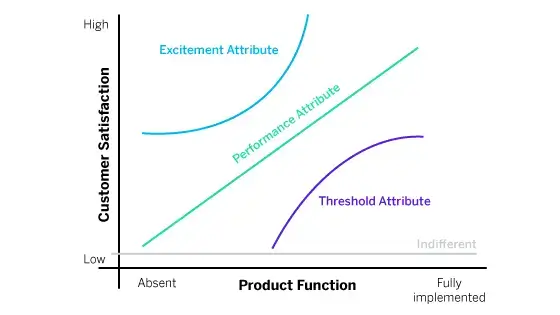
CA Final classes CA Final IBS classes(SPOM-set B portion) StudyByTech Offers Contact us Introduction Customer satisfaction is a cornerstone of successful business strategy. Understanding and addressing the diverse needs and expectations of customers can set a business apart from its competitors. The Kano Model, developed by Dr. Noriaki Kano, provides a valuable framework for categorizing and prioritizing these needs. This blog delves into the intricacies of the Kano Model, exploring its key components—Threshold Attributes, Performance Attributes, Excitement Attributes, and Indifferent Attributes—and highlighting its practical applications in enhancing customer satisfaction. In today’s highly competitive market, businesses strive to understand and meet customer expectations effectively. The Kano Model of Customer Satisfaction, introduced by Japanese quality management guru Dr. Noriaki Kano in the 1980s, offers a systematic approach to achieve this goal. By categorizing product or service attributes based on how they influence customer satisfaction, the Kano Model helps businesses prioritize their development efforts to maximize customer delight and loyalty. Parag Sir’s insight on Kano’s Model Parag Gupta Sir breaks down the intricacies of the Kano Model, explaining its core principles and illustrating its importance in the realm of customer satisfaction and quality management. Watch this video to get a great insight on this topic: https://youtu.be/fyk1KpZ6nwA Product attributes based on Kano’s model Threshold Attributes Threshold Attributes, also known as Basic Attributes or Must-Be Attributes, are the fundamental features that customers expect in a product or service. These attributes are not typically vocalized by customers because their presence is assumed. However, their absence leads to significant dissatisfaction. Performance Attributes Performance Attributes, or One-Dimensional Attributes, are those features that directly correlate with customer satisfaction. The better these attributes perform, the more satisfied the customers will be. Conversely, poor performance in these areas leads to dissatisfaction. Using the smartphone example again, performance attributes might include camera quality, processing speed, and screen resolution. Enhancing these attributes generally leads to higher customer satisfaction because customers can clearly see the benefits and improvements. Businesses should focus on continuously improving these attributes to stay competitive. Excitement Attributes Excitement Attributes, also known as Attractive Attributes, are the features that surprise and delight customers. These are unexpected and not typically demanded by customers, but their presence generates significant satisfaction. Conversely, their absence does not cause dissatisfaction because customers do not expect them. For instance, an innovative facial recognition feature in a smartphone can be considered an Excitement Attribute. When first introduced, it wasn’t an expected feature, but it created a “wow” factor and set the product apart from its competitors. Investing in these attributes can turn customers into enthusiastic promoters of the product or service. Indifferent Attributes Indifferent Attributes are features that neither contribute to customer satisfaction nor cause dissatisfaction. These attributes have little to no impact on how customers perceive the product or service. An example might be the color of the internal components of a smartphone. Most customers are indifferent to such aspects as they do not affect the user experience. Identifying and minimizing resources spent on Indifferent Attributes can help businesses allocate their efforts more effectively towards attributes that enhance customer satisfaction. Uses The Kano Model serves multiple purposes in the realm of customer satisfaction and product development: Conclusion The Kano Model of Customer Satisfaction is a powerful tool for understanding and prioritizing customer needs. By categorizing features into Threshold, Performance, Excitement, and Indifferent Attributes, businesses can strategically enhance their offerings to maximize customer satisfaction and loyalty. Utilizing the Kano Model can lead to more effective resource allocation, better strategic planning, and ultimately, a stronger competitive advantage in the market. In an era where customer expectations are constantly evolving, the Kano Model provides a structured approach to staying ahead and continuously delighting customers. FAQ’s

ICAI self-paced Module details,registration & process
Blog, CA Final, Self paced online module

ICAI self-paced Module details, Registration process

The Institute of Chartered Accountants of India (ICAI) recognizes this need and offers Self-Paced Modules tailored to meet the evolving demands of finance and accountancy professionals. These modules provide a convenient and flexible way to enhance expertise without compromising on existing commitments. In this guide, we will simplify the registration process and provide an overview of what individuals can expect from ICAI’s Self-Paced Modules, making the path to continuous learning accessible to all. Understanding ICAI Self-Paced Modules ICAI’s Self-Paced Modules, in partnership with Studybytech, are meticulously crafted to cater to the diverse needs of finance and accountancy professionals. These modules cover a wide range of subjects, including financial accounting, taxation, auditing, and more, ensuring that learners have access to comprehensive and up-to-date content. With Studybytech’s innovative learning platform, participants can delve into interactive lectures, engage in practical exercises, and access a wealth of resources to deepen their understanding of the subject matter. Registration Process At the time of registration of Final Course, students would also be registering for Self-Paced Online Modules. The form for Final Course registration will have the option for selecting the subjects under Self-Paced Online Modules SET C and SET D. No separate fee is payable for registration of Self-Paced Online Modules. Step 1: Visit the ICAI Website To register for Self-Paced Modules, visit the official website of the Institute of Chartered Accountants of India (ICAI) at www.icai.org. Step 2: Navigate to the Self-Paced Modules Section On the website, navigate to the section dedicated to Self-Paced Modules. This section typically provides comprehensive information about the available modules, including course details, fees, and registration guidelines. Step 3: Select the Desired Module Browse through the list of available modules and select the one that aligns with your learning objectives and career goals. Each module covers specific topics, so choose wisely based on your interests and professional requirements. Step 4: Register Online Once you’ve selected the module, proceed with the online registration process. This usually involves filling out a registration form with your personal details, contact information, and payment details. Ensure that all information provided is accurate to avoid any issues later on. Step 5: Pay the Course Fee There is no extra fees additionally added for SPOM. FAQ’s

Scroll to Top