CA Final

Kano Model
CA Final, CA Final IBS, Self paced online module

The Kano Model of Customer Satisfaction and its Importance

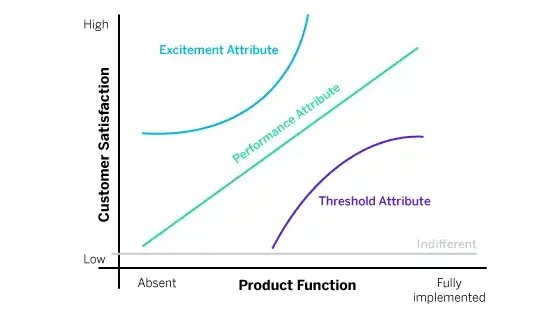
CA Final classes CA Final IBS classes(SPOM-set B portion) StudyByTech Offers Contact us Introduction Customer satisfaction is a cornerstone of successful business strategy. Understanding and addressing the diverse needs and expectations of customers can set a business apart from its competitors. The Kano Model, developed by Dr. Noriaki Kano, provides a valuable framework for categorizing and prioritizing these needs. This blog delves into the intricacies of the Kano Model, exploring its key components—Threshold Attributes, Performance Attributes, Excitement Attributes, and Indifferent Attributes—and highlighting its practical applications in enhancing customer satisfaction. In today’s highly competitive market, businesses strive to understand and meet customer expectations effectively. The Kano Model of Customer Satisfaction, introduced by Japanese quality management guru Dr. Noriaki Kano in the 1980s, offers a systematic approach to achieve this goal. By categorizing product or service attributes based on how they influence customer satisfaction, the Kano Model helps businesses prioritize their development efforts to maximize customer delight and loyalty. Parag Sir’s insight on Kano’s Model Parag Gupta Sir breaks down the intricacies of the Kano Model, explaining its core principles and illustrating its importance in the realm of customer satisfaction and quality management. Watch this video to get a great insight on this topic: https://youtu.be/fyk1KpZ6nwA Product attributes based on Kano’s model Threshold Attributes Threshold Attributes, also known as Basic Attributes or Must-Be Attributes, are the fundamental features that customers expect in a product or service. These attributes are not typically vocalized by customers because their presence is assumed. However, their absence leads to significant dissatisfaction. Performance Attributes Performance Attributes, or One-Dimensional Attributes, are those features that directly correlate with customer satisfaction. The better these attributes perform, the more satisfied the customers will be. Conversely, poor performance in these areas leads to dissatisfaction. Using the smartphone example again, performance attributes might include camera quality, processing speed, and screen resolution. Enhancing these attributes generally leads to higher customer satisfaction because customers can clearly see the benefits and improvements. Businesses should focus on continuously improving these attributes to stay competitive. Excitement Attributes Excitement Attributes, also known as Attractive Attributes, are the features that surprise and delight customers. These are unexpected and not typically demanded by customers, but their presence generates significant satisfaction. Conversely, their absence does not cause dissatisfaction because customers do not expect them. For instance, an innovative facial recognition feature in a smartphone can be considered an Excitement Attribute. When first introduced, it wasn’t an expected feature, but it created a “wow” factor and set the product apart from its competitors. Investing in these attributes can turn customers into enthusiastic promoters of the product or service. Indifferent Attributes Indifferent Attributes are features that neither contribute to customer satisfaction nor cause dissatisfaction. These attributes have little to no impact on how customers perceive the product or service. An example might be the color of the internal components of a smartphone. Most customers are indifferent to such aspects as they do not affect the user experience. Identifying and minimizing resources spent on Indifferent Attributes can help businesses allocate their efforts more effectively towards attributes that enhance customer satisfaction. Uses The Kano Model serves multiple purposes in the realm of customer satisfaction and product development: Conclusion The Kano Model of Customer Satisfaction is a powerful tool for understanding and prioritizing customer needs. By categorizing features into Threshold, Performance, Excitement, and Indifferent Attributes, businesses can strategically enhance their offerings to maximize customer satisfaction and loyalty. Utilizing the Kano Model can lead to more effective resource allocation, better strategic planning, and ultimately, a stronger competitive advantage in the market. In an era where customer expectations are constantly evolving, the Kano Model provides a structured approach to staying ahead and continuously delighting customers. FAQ’s
ICAI self-paced Module details,registration & process
Blog, CA Final, Self paced online module

ICAI self-paced Module details, Registration process

The Institute of Chartered Accountants of India (ICAI) recognizes this need and offers Self-Paced Modules tailored to meet the evolving demands of finance and accountancy professionals. These modules provide a convenient and flexible way to enhance expertise without compromising on existing commitments. In this guide, we will simplify the registration process and provide an overview of what individuals can expect from ICAI’s Self-Paced Modules, making the path to continuous learning accessible to all. Understanding ICAI Self-Paced Modules ICAI’s Self-Paced Modules, in partnership with Studybytech, are meticulously crafted to cater to the diverse needs of finance and accountancy professionals. These modules cover a wide range of subjects, including financial accounting, taxation, auditing, and more, ensuring that learners have access to comprehensive and up-to-date content. With Studybytech’s innovative learning platform, participants can delve into interactive lectures, engage in practical exercises, and access a wealth of resources to deepen their understanding of the subject matter. Registration Process At the time of registration of Final Course, students would also be registering for Self-Paced Online Modules. The form for Final Course registration will have the option for selecting the subjects under Self-Paced Online Modules SET C and SET D. No separate fee is payable for registration of Self-Paced Online Modules. Step 1: Visit the ICAI Website To register for Self-Paced Modules, visit the official website of the Institute of Chartered Accountants of India (ICAI) at www.icai.org. Step 2: Navigate to the Self-Paced Modules Section On the website, navigate to the section dedicated to Self-Paced Modules. This section typically provides comprehensive information about the available modules, including course details, fees, and registration guidelines. Step 3: Select the Desired Module Browse through the list of available modules and select the one that aligns with your learning objectives and career goals. Each module covers specific topics, so choose wisely based on your interests and professional requirements. Step 4: Register Online Once you’ve selected the module, proceed with the online registration process. This usually involves filling out a registration form with your personal details, contact information, and payment details. Ensure that all information provided is accurate to avoid any issues later on. Step 5: Pay the Course Fee There is no extra fees additionally added for SPOM. FAQ’s

How & When to Study CA Final SPOM? Let's dive more in this!
CA Final

How & When to Study CA Final SPOM? Let’s dive more in this!

Attention, future CAs! The Institute of Chartered Accountants of India (ICAI) has rolled out a significant update to the CA Final SPOM course curriculum, introducing Self-Paced Online Module (SPOM) for May 2024 exams onwards. Feeling bewildered? This blog is your compass, guiding you through the essential details of this crucial change. What are Self-Paced Online Modules (SPOM)? Self-Paced Online Modules (SPOM) are interactive online learning modules designed to enhance your understanding of specific subject areas. These modules cover Set A: Corporate and Economic Laws and Set B: Strategic Cost & Performance Management. Why the change? The ICAI aims to provide students with greater flexibility and self-directed learning opportunities. SPOM allow you to tailor your learning pace and schedule, catering to your individual needs and preferences. Key Features of SPOM: Preparing for the New Exam Format: The Takeaway: The introduction of Self-Paced Online Modules (SPOM) presents both challenges and opportunities for CA Final aspirants. Don’t view it as a burden, but rather as a chance to take ownership of your learning and gain a deeper understanding of crucial subject areas. Adapt your study strategies, embrace flexibility, and conquer the New CA Final with confidence! Bonus Tips: Telegram: https://t.me/CAFinalGroup Instagram: https://www.instagram.com/studybytech/ Twitter: https://twitter.com/StudyByTech Linkedin: https://www.linkedin.com/company/studybytech/ Pinterest: https://in.pinterest.com/studybytech/ Facebook: https://www.facebook.com/StudyByTech/ Instagram: https://www.instagram.com/studybytech/ WhatsApp: https://whatsapp.com/channel/0029VaALt4684Om9Nynyhk2U Remember, while the syllabus may evolve, the essence of the CA journey remains the same – dedication, perseverance, and the relentless pursuit of knowledge. So, buckle up, future chartered accountants, and embark on this new chapter of your professional journey with an agile learning spirit! FAQS Want to enroll to the classes?

CA Final SCPM By Parag Gupta Sir
CA Final

Master CA Final SCPM: Unlock Success with Parag Gupta’s Expertise & StudyByTech’s Comprehensive Self-Paced Module

Facebook Twitter Youtube Whatsapp Telegram Linkedin Instagram Pinterest Introduction Aspiring to excel in the CA Final SCPM examination? Look no further than StudyByTech, your gateway to success in the world of Chartered Accountancy. In this blog, we will delve into the intricacies of StudyByTech’s CA Final SCPM Self-Paced Module classes, meticulously crafted and delivered by Parag Gupta Sir – India’s eminent faculty for CA Final SCPM. Let’s explore how this program, renowned for its excellence, can help you prepare effectively for the upcoming exam. The Essence of CA Final SCPM The CA Final Strategic Cost and Performance Management (SCPM) paper is a crucial stepping stone in the journey to becoming a Chartered Accountant. It demands a profound understanding of strategic cost management, performance measurement, and business valuation. Given its complexity, aspirants often seek guidance from the best in the field, and Parag Gupta Sir stands tall as a beacon of knowledge and expertise. Parag Gupta Sir: India’s Best Faculty for CA Final SCPM When it comes to preparing for the CA Final SCPM, having the right mentor can make all the difference. Parag Gupta Sir, with his extensive experience and deep understanding of the subject matter, has earned the reputation of being India’s best faculty for CA Final SCPM. His teaching methodology blends theoretical concepts with practical insights, making the learning process not only comprehensive but also engaging. StudyByTech: Your Learning Companion StudyByTech, a renowned educational platform, has collaborated with Parag Gupta Sir to offer classes for CA Final SCPM. This module is designed to cater to the diverse learning needs of aspirants, providing them with the flexibility to study at their own pace while ensuring comprehensive coverage of the syllabus as per ICAI. Key Features of StudyByTech’s CA Final SCPM Self-Paced Module 1.Comprehensive Study Material: The self-paced module includes a well-structured study material provided by ICAI that covers the entire CA Final SCPM syllabus. The content is not only comprehensive but also aligned with the latest examination trends, ensuring that aspirants are well-prepared for any curveballs that may come their way. Parag sir will be teaching the course from this ICAi study material only and add important notes to the study material itself. 2. Recorded Lectures by Parag Gupta Sir: The self-paced module provides recorded lectures by Parag Gupta Sir himself. This feature allows aspirants to revisit complex topics, grasp difficult concepts, and learn at their own pace. The ability to pause, rewind, and replay lectures ensures that no doubt remains unresolved. 3. Strategic Exam Preparation: Parag Gupta Sir, known for his strategic approach to teaching, guides aspirants not just in understanding the subject matter but also in developing an effective exam strategy. Tips, tricks, and insights into the examination pattern are invaluable assets that set StudyByTech apart. 4. Doubt Resolution Sessions: A unique feature of StudyByTech’s module is the provision for doubt resolution sessions. Aspirants can clarify their doubts directly with Parag Gupta Sir, ensuring that no query goes unanswered. This personalized touch adds immense value to the learning experience. Preparing for CA Final SCPM exam: A Roadmap Now that we’ve explored the features of StudyByTech’s CA Final SCPM Self-Paced Module, let’s outline a roadmap to help you make the most of this comprehensive program. 1. Familiarize Yourself with the Study Material: Begin by acquainting yourself with the well-structured study material provided. Take note of the key concepts, formulas, and case studies to be covered. This initial overview will help you understand the scope of the syllabus. 2. Attend Online : Leverage the flexibility offered by StudyByTech’s module. Attend online or offline classes as per your convenience. Parag Gupta Sir’s engaging teaching style ensures that even complex topics become comprehensible. 3. Revisit Recorded Lectures: Use the recorded lectures to revisit challenging topics. The ability to pause, rewind, and replay ensures that you grasp every concept thoroughly. This feature is particularly beneficial when dealing with intricate subjects within SCPM. 4. Attend Doubt Resolution Sessions: Take advantage of doubt resolution sessions to seek clarification on any lingering questions. Parag Gupta Sir’s expertise ensures that you receive accurate and insightful responses, enhancing your overall preparation. 5. Review and Revise: In the final weeks leading up to the exam, allocate time for comprehensive review and revision. Focus on key concepts, formulae, and case studies. The goal is to reinforce your understanding and solidify your grasp on the subject.  6. Practice: Check previous year question papers, Mock tests and Revision test papers released by ICAI of atleast 5 years and with time bound scenario, practice questions by writing their answers. Conclusion In conclusion, StudyByTech’s CA Final SCPM Self-Paced Module, curated and delivered by Parag Gupta Sir, emerges as a beacon of excellence for aspirants preparing for the CA Final SCPM examination. With its comprehensive study material, flexible learning options, and the guidance of India’s best faculty for CA Final SCPM, this module equips you with the tools needed to navigate the complexities of strategic cost and performance management. Embark on your journey to success with StudyByTech, where preparation meets excellence. Join for more daily information on the WhatsApp channel. Read more: ICAI FAQ’s Is IBS an open book exam? Yes, IBS Paper 6 is an open book exam. As per ICAI’s official notification, Final Paper 6: Integrated Business Solutions is an open book and case study-based examination. You are allowed to bring all your subject materials, ICAI modules, concept notes, and question banks to the exam. What is IBS in CA final? IBS is Paper 6: Integrated Business Solutions – a mandatory multidisciplinary case study paper for CA Final Group 2. It integrates all seven subjects of the earlier CA syllabus into integrated business situations. The paper tests students’ skills in analyzing intricate business situations and offering complete solutions. Can I pass the CA final without coaching? Though self-study is feasible, CA Final has an extremely low pass percentage of 8-10%. With such a huge syllabus and complexity, studying with expert faculties like Parag Gupta sir really augments your prospects. The methodical

subjects in ca final
CA Final, Blogs, SCPM

CA FINAL SCPM SYLLABUS

CA Final SCPM is actually SPOM set B subject which students have to pass before actually appearing for CA Final exams. These exams are MCQ based and are to be given in exam centres. ICAI Syllabus Portal Link MODULE 1(CA Final SCPM): STRATEGIC COST MANAGEMENT  ObjectiveA. To acquire the ability to apply various cost management techniques for planning and controllingperformance in order to set, monitor and control strategic objectives. B. To develop skills of analysis, synthesis and evaluation in cost management to address challenges andissues that might affect or influence the management of performance within organisations. PART A 1. STRATEGIC COST MANAGEMENT i An Introduction to Strategic Cost ManagementManaging Cost Strategically: Strategic Cost Management, Limitations of Traditional CostManagement: Traditional vs. Strategic Cost Management ii Organizational Context: Gaining Competitive Advantage, Value Proposition, Osterwalder’sBusiness Model Canvasiii External Environment Context: Industry Profitability, Basis of Competition, Industry Key SuccessFactors, Understanding Customers and Marketsiv Information Technology: Strategic Context- (IS/IT) and Porter’s Five Forces (IT/IS) and the ValueChainThe Role of Management Accountant as a Leader: Communication, Decision Making, and BusinessEthics Modern Business Environment i Introduction and Characteristics of the Modern Business Environmentii Quality to Business Excellence: Cost of Quality, Total Quality Managementiii Supply Chain Management (SCM)IV. Gain Sharing ArrangementsDownsizing, Outsourcing and Offshoring 3 Lean Systems and Innovation Introduction to Lean SystemJust-in-Time (JIT)Kaizen Costingc 5STotal Productive Maintenance (TPM)Cellular Manufacturing/One-Piece Flow Production SystemsSix Sigma (SS) 4 Specialist Cost Management Techniques: i Cost Control/ Waste Control, Cost Reductionii Target Costingiii Throughput Accounting and Theory of Constraintsiv Life Cycle CostingEnvironment Management Accounting 5: Management of Cost Strategically for Emerging Business Models: Changing Business Environment: Digital Technologies, Business Ecosystems, and HypercompetitionTransformation and Disruption, Advanced Manufacturing, Lean Start-up, Agile Organisations,Start-ups vs Incumbents, Intrapreneurship, Innovation Hubs and Incubators, Supply ChainPartnerships ii. Business Models hyper-disruptive Business Modelsb Models relevant to SustainabilityModels relevant to Emerging National Markets iii. Strategic Responses to New Business Models 6 Strategic Revenue Management: Decision-Making Techniquesa CVP AnalysisRelevant Cost Concept ii. Pricing Decisions: a. Theory & Principles of Product Pricing b . Pricing: New Product, Finished Products, Pricing of Services, Emerging Business Models c. Sensitivity Analysis in Pricing Decisions Pricing Decision under Special CircumstancesEthical and Non-financial Considerations iii. Pricing Strategies: Pricing StrategiesKano’s performance attributes 7 Strategic Profit Management: Operating Profit Analysisii. Activity-Based Profitability Analysis, Activity-Based Management (ABM), Activity-Based Budgeting(ABB)iii Pareto Analysis MODULE 2(CA Final SCPM): STRATEGIC PERFORMANCE MANAGEMENT An Introduction to Strategic Performance Management; i Performance Management and Its link to Strategyii Role of Performance Management in Business Integration using Models such as Value Chain andMcKinsey’s 7Siii Influence of an Organization’s Structure, Culture and Strategy on Performance Measurementiv. Strategic Performance Issues in Complex Business Structuresv Behavioural AspectsPredicting and Preventing Corporate Failure 2 Strategic Performance Measures in the Private Sector: i Critical Success Factors and Link to Performance Measurement, Key Performance Indicators (KPI)ii Financial Measures: Gross Profit, ROCE, ROI, EPS, RI, NPV, EVA, etc.iii Non-Financial Performance Measures: Linkage between performance measures (BalancedScorecard); Link Strategy, Operations and Performance (Performance Pyramid); Link betweenachievement of the corporate strategy and the management of human resources (The BuildingBlock Model); Triple Bottom Lineiv. The role of quality in management information and performance measurement systems 3 Strategic Performance Measures in Not-for-Profit Organizations: i Diversity in objectives, difficulties in measuring outputsii. ‘value for money’ service provision as a measure of performance in not-for-profit organisationsand the public sectoriii Adapted Balanced Scorecard 4: Preparation of Performance Reports 5 Divisional Transfer Pricing: I Meaning, Purpose & Principles of Transfer Pricingii Methods of Transfer Pricingiii. The behavioral Consequences arising from Divisional Structuresiv. International Transfer Pricing 6 Standard Costing: i Variance Investigation Techniques, Interpretation of Variances, Possible InterdependenceBetween Variances and Reportingii Behavioural Aspects of Standard Costing, Limitation of Standard Costing (including its use in thecontemporary business environment Part C: CASE STUDY Covering Course Concepts ii Combination of MCQs and extended response questions General Note-The Strategic Cost & Performance Management exam builds upon the skills and knowledgeexamined in the “Strategic Management” and “Cost and Management Accounting” exams. At thisstage, candidates will be expected to demonstrate an integrated knowledge of the subject andan ability to relate their technical understanding of the subject to issues of strategic andoperational importance to the organisation. ii. Basic Applications of the following Quantitative Techniques are required to be studied for linkageprogramming to the course concept: (a) linear programming; (b) learning curve/experience curve. To enroll to the most updated classes for CA Final SCPM by Parag Gupta sir.Click here SPOM set B is also called CA Final SCPM and this course includes CA Final IBS(SCPM portion) too. The best part is it’s validity which is for 3 years. Enroll now ! FAQS

CA Final SCPM
Blogs, CA Final, SCPM

Mastering CA Final SPOM-set B exam (2025 onwards): A Guide by Parag Gupta Sir

Introduction There are many obstacles to overcome on the path to becoming a Chartered Accountant, and the CA Final test is one of the most important checkpoints along the way. Among the various subjects you’ll encounter in the CA Final course, CA Final SPOM-set B exam holds a prominent place. Formerly known as CA Final Costing(SCMPE), this subject has evolved and now comes with a new name and a modern twist—it’s now offered as a self-paced online module. One name that sticks out in the CA community to assist you in successfully navigating this subject of SPOM-set B is Parag Gupta Sir. Parag Gupta Sir: A Trusted Mentor Parag Gupta Sir is a renowned educator in the field of Chartered Accountancy. To help you effectively navigate this subject, one name that stands out in the CA world is Parag Gupta Sir. His expertise in SCPM makes him an invaluable resource for those preparing for the CA Final examination. So, if you’re wondering how to prepare for in the CA Final SPOM-set B exam effectively, here are some insights and tips inspired by the teachings and guidance of Parag Gupta Sir: Conclusion Preparing for in the CA Final SPOM-set B exam, now offered as a self-paced online module, may seem challenging, but with the right guidance from educators like Parag Gupta Sir, it becomes an achievable goal. By following the tips and strategies mentioned above and leveraging the resources provided by Parag Gupta Sir, you can navigate this subject with confidence and emerge victorious in your CA Final examination. Remember that passing the exam is only one component of SCPM success. You must also have the information and abilities necessary to function effectively as a Chartered Accountant in the real world. FAQ’s

Worried About CA Final MCQs for the New Syllabus
CA Final

Worried About CA Final MCQs for the New Syllabus

Are you preparing for the CA final exams? It can be a daunting task, especially when it comes to tackling the MCQs. As the final hurdle in becoming a Chartered Accountant, the CA Final Exams demand thorough preparation and a comprehensive understanding of the subject matter. Fortunately, there are reliable resources available to guide you through this challenging phase.  Recently, an MCQ page was introduced to match the new CA scheme. The passing standards for the CA Intermediate and CA Final exams have changed by the revised syllabus. Each subject now has 30% of MCQs with no negative marking. For all students in the foundation, intermediate, or final stages, the MCQ page is a user-friendly part of ICAI website. The dashboard can track questions, whether they are paper or chapter-based, as well as a student’s performance. Under the new syllabus, there has been an alteration to the exemption requirements. Exempt papers with 60 or more marks are now considered permanently passed. Each student must receive 50% of the remaining papers in aggregate. StudyByTech, a leading CA coaching institute, provides comprehensive study materials and video lectures specifically designed to cover the new syllabus. This interactive platform provides an array of features that make learning engaging and effective. Comprehensive Question Bank: StudyByTech offers a vast collection of MCQs, covering every topic in the CA Final syllabus. With a wide range of difficulty levels, these questions enable you to practice and strengthen your conceptual understanding. Adaptive Learning: The platform incorporates an adaptive learning algorithm that tailors the learning experience to your individual needs. It identifies your strengths and weaknesses, providing customized practice sessions to enhance your performance in weaker areas. Our faculties help you to correlate CA Final concepts with well known case studies so that you can practically understand the concepts. Once your conceptual clarity is good, your approach in MCQs will also improve. Performance Analysis: StudyByTech’s analytics dashboard allows you to track your progress and performance. It provides insights into your strong and weak areas, enabling you to focus your efforts where they are most needed. Detailed Explanations: Each MCQ is accompanied by detailed explanations, ensuring that you comprehend the underlying concepts. This helps you build a strong foundation and tackle similar questions effectively in the exam. Conclusion: Preparing for the CA Final MCQs under the new syllabus can be challenging, but with the right resources, you can overcome this. StudyByTech offers a comprehensive platform that simplifies learning and enables you to practice MCQs effectively. Like what you’ve read? Tell us your thoughts on what topics you want to be covered in the blogs so we can help you achieve your dream fulfillment with StudyByTech. Subscribe To Our Parag Gupta Sir Lectures Enquiry Form FAQ’s

CA Final New Syllabus
Blog, CA Final

CA Final New Syllabus vs Old Syllabus: A Comprehensive Guide

The Chartered Accountancy (CA) Final examination is a prestigious milestone for aspiring accountants. It serves as the last hurdle before becoming a certified Chartered Accountant. The Institute of Chartered Accountants of India (ICAI) periodically updates the CA syllabus to align with the changing needs of the accounting profession. In this blog, we will explore the differences between the CA Final New Syllabus 2024 and the old syllabus, highlighting the key changes and their implications. Structure and Subjects: The CA Final New Syllabus 2024 brings significant changes to the structure and subjects of the examination. The old syllabus had eight papers divided into two groups, while the new syllabus has nine papers divided into three groups. This restructuring aims to provide a more holistic and comprehensive approach to accounting education. Incorporation of Advanced Technology: With the advent of advanced technology, the new syllabus emphasizes the integration of technology into the accounting profession. It includes subjects such as Advanced Management Accounting, Strategic Cost Management and Performance Evaluation, and Information Systems Control and Audit. These subjects equip students with knowledge and skills to navigate the digital transformation in the accounting industry. Emphasis on Integrated Reporting and Sustainability: Recognizing the importance of sustainability and integrated reporting in today’s business landscape, the new syllabus introduces the subject of ‘Strategic Financial Management and Economic Environment.’ This subject delves into the concepts of integrated reporting, sustainable development, environmental accounting, and corporate social responsibility. It equips students with the knowledge to address contemporary challenges faced by businesses. Updated Taxation Syllabus: The tax laws undergo frequent changes, and it is crucial for future accountants to stay updated with the latest regulations. The new syllabus incorporates changes in the tax laws and includes subjects such as Direct Tax Laws and International Taxation. These subjects provide students with a comprehensive understanding of tax planning, compliance, and international tax regulations. Practical Orientation: The new syllabus places increased emphasis on practical training and application-oriented learning. It introduces the subject of ‘Advanced Auditing and Professional Ethics,’ which equips students with practical skills required for auditing, assurance services, and professional ethics. Additionally, the ‘Advanced Management Accounting’ subject focuses on case studies, enabling students to apply theoretical concepts to real-life scenarios. Communication Skills and Professional Development: Apart from technical knowledge, effective communication skills and professional development are essential for a successful accounting career. The new syllabus includes a subject called ‘Advanced Enterprise Information Systems and Strategic Management.’ It helps students enhance their communication skills, understand business strategies, and develop a holistic approach to problem-solving. Exam Pattern Changes: The CA Final New Syllabus 2024 introduces changes in the exam pattern. Previously, the examination consisted of descriptive questions, but the new syllabus incorporates a mix of descriptive and objective questions. This change aims to test students’ understanding of concepts and their ability to apply them in real-life scenarios effectively. Study Material and Resources: With the implementation of the new syllabus, ICAI provides updated study material and resources to help students prepare for the examination. These resources include textbooks, practice manuals, revision test papers, and online platforms offering mock tests and interactive learning modules. Students are encouraged to make use of these resources to enhance their understanding and performance. Conclusion: The CA Final New Syllabus 2024 introduces significant changes to align accounting education with the evolving needs of the industry. It emphasizes technology integration, sustainability, practical training, communication skills, and professional development. FAQs Q: Why was there a need for the CA Final New Syllabus in 2024? The CA Final New Syllabus 2024 was introduced to align with the changing needs of the accounting profession. It incorporates advancements in technology, emphasizes sustainability and integrated reporting, and provides a more holistic approach to accounting education. Q: What are the key changes in the structure of the CA Final examination? The old syllabus had eight papers divided into two groups, while the new syllabus has nine papers divided into three groups. This restructuring aims to provide a more comprehensive and integrated approach to accounting education. Q: How does the new syllabus address the impact of technology on the accounting profession? The new syllabus includes subjects such as Advanced Management Accounting, Strategic Cost Management and Performance Evaluation, and Information Systems Control and Audit. These subjects equip students with knowledge and skills to navigate the digital transformation in the accounting industry. Q: What is the significance of the inclusion of sustainability and integrated reporting in the new syllabus? The subject of ‘Strategic Financial Management and Economic Environment’ introduces concepts of integrated reporting, sustainable development, environmental accounting, and corporate social responsibility. This equips students with the knowledge to address contemporary challenges faced by businesses and promotes responsible accounting practices. Want to enroll to CA Inter classes?

HOW TO OVERCOME FEAR OF FAILURE IN CA EXAM
Blog, CA Course, CA Final, CA Foundation, CA Inter

How to Overcome fear of failing in CA Exam 2024

What is fear of failing? Fear is not about what is happening in present but Is all about what will happen in the future. We all know the future is Unexpected but still, people fear when they imagine the Worst & dangerous scenarios for any situation, without noticing the positive expect of the event. The main point here is that our fears are just our imagination of the worst possible scenarios, not reality. When we start believing our imagination as reality then we will have fear of failure. WHAT IS EXAM ANXIETY? It’s ok to be anxious before an exam, We all are. But for some people, the experience can be afflicting. Lack of focus, fast heart rate, headache, shallow breathing – all these are symptoms of exam anxiety. But, as we said before, Why do some people fear exams? why does this happen? CAUSES OF FEAR OF FAILURE There are many reasons due to which people can be afraid to fail the CA exams or have fear of failing. Before you know how to Conquer your fear of failure in exams, but first you need to know how deep the fear is in you and why you feel it. The reason for fear of failing can be due to a shocking event or poor experience. For example, you have performed poorly in a class test, and you are afraid that same will happen in the next test also, That possible scenario causes fear in you. students are afraid mostly because of How society thinks about them, how low their friends think if they score low or fail in exams. fear could be rooted Deep because students are afraid of how disappointed their parents and family members will be with them if they fail in exams. Another reason for failure in exams could be wrong decisions taken by students. For example, a common reason CA students fail in exams is because they make wrong decisions related to their future. Like selecting both groups when they could only do one, selecting the wrong study material, for Example- Selecting AMA over SCMPE, etc. As compared to other situations, students’ fear is justified if they are nervous because they have not learned anything or learned just a few topics for the exam, but you still shouldn’t let it control you HOW DOES FEAR OF FAILING AFFECT STUDENTS? If we let this fear of failing exams control us, it can affect us deeply. and Due to this fear. Our mind and body will take unwanted and unnecessary stress. Whenever we try to study, we will be uneasy, and our time which should be spent studying with concentration will be wasted on negative thoughts. We will waste time and delay our studies besides studying hard for exams. we will waste our time procrastinating. Even if we could have achieved our goals and passed the exams, this fear leads you to waste more precious time. This fear will take us away from the chance to perform and we will give up before trying and the result would be different than what we imagined. If we feel this fear because of peer pressure this fear will also become the reason for low self-esteem. The fear of failing can also affect students who have done enough preparation for exams and can score well. If students have read all the chapters and prepared a full syllabus but before the exam student let fear take over their minds, this will make their thinking process block. Regardless of their preparation, students will still perform very poorly in exams. THINGS TO DO TO REMAIN CALM Preparation is The Key This is the main factor for fear of failing in exams. Number One Reason for exam stress is weak preparation. So, prepare good and go through all of the study material with full understanding, Review all the important Concepts thoroughly.If you prepare well then you will walk out in the classroom with a cool mind and with full of confidence. Get Good Rest Students must take Good rest, That means no last-minute studying. Also, you must be aware that the institutes conduct the CA, CS, and CMA exams over several days. In some cases, more than three days. This means that students should take complete rest over the entire examination period. And have finished their main preparation well before the exam. It’s OK or even recommended If you are doing a revision of concepts. But don’t learn new concepts right before the exam. That will only give you stress and make you confused. *If you want to know How to Revise For CA Final Exams in 2 weeks then CLICK HERE * Eat Good Food During the examination make sure you eat healthy food. You must concentrate on food that has high nutritional value rather than eating food that will give you a high amount of sugar. Have to Avoid junk food and sugary snacks. Remember to drink plenty of water and always stay hydrated. Don’t get dehydrated because mild dehydration can lead to poor concentration. Think Positive Thoughts If you will think good, you will do good. meditation, yoga, and exercise are some ways to encourage positive feelings. Get rid of negative feelings and things that give you stress. cut all the negative people from your life and hang out with positive people. Forget About Past Failures you might have failed in exams Before or some of your previous exams may not have gone well. forget all the things that were happened in the past. Concentrate on the present. And do well with a free mind and without stress. This will accomplish your goal without even thinking about the fear of failing. HOW TO OVERCOME THE FEAR OF FAILING IN EXAMS? Fear of failing is only in the mind, not in reality, and most of the time far away from turning into a reality. Instead of giving up your life and you’re precious time due to fear, but you have to

CA Final SPOM-Set A & Set B Exams preparation for May
CA, Blogs, SCPM

When should you start studying for CA Final SPOM-Set A & Set B for Jan 26 exams?

A new syllabus for Chartered Accountant students is proposed for CA Final level, especially for SPOM-Set A & Set B by the Institute of Chartered Accountants of India (ICAI). The proposal is sent to Ministry of Corporate Affairs for approval. It is expected that the exams may become harder, as a result, making it more difficult for candidates to pass them. ICAI proposed changes in CA Final Syllabus  A new program of online modules in the CA final syllabus that can be finished at one’s own pace has been introduced by the ICAI. The syllabus and subjects are published by ICAI on its official website. When one registers for practical training, also known as articleship, before the Final, the modules must be completed following Inter. In the SPOM-Set A & Set B syllabus two papers here supposed to be shifted from the Final to the self-paced online module: To Know more about CA Syllabus, Click Here When to start studying SPOM-Set A & Set B for the Jan’26 CA final exams? Many students confuse about when to start studying for SPOM-Set A & Set B for Jan 26 exams. So here, we would like to answer this question through Parag sir’s reply. As many questions prevail around this confusion, like, Well, as the ministry thinks in 50 different ways, so we cannot say anything. But definitely, any of the 3 above suggestions can be possible. Eg. If the ministry will feel that these papers are important and shall not be taken as self-paced, then they may be back as normal papers as well. So it is suggested that in all the above scenarios, you all shall keep studying hard for exams. Watch out Parag sir’s suggestion for students who are studying for CA final Jan 26 exams: To know more about CA Final costing latest batch, Click Here Conclusion: The Ministry of Corporate Affairs thinks in all different manners to make the CA Final course a better course in both practical & theoretical knowledge for students. The changes in course are always welcome. But take care that students shall not stop studying and keep focused on their studies in order to get his/her dream true. FAQ‘s

Scroll to Top
CA Inter new batch starting
80+ club in last 3 attempts