CA Inter

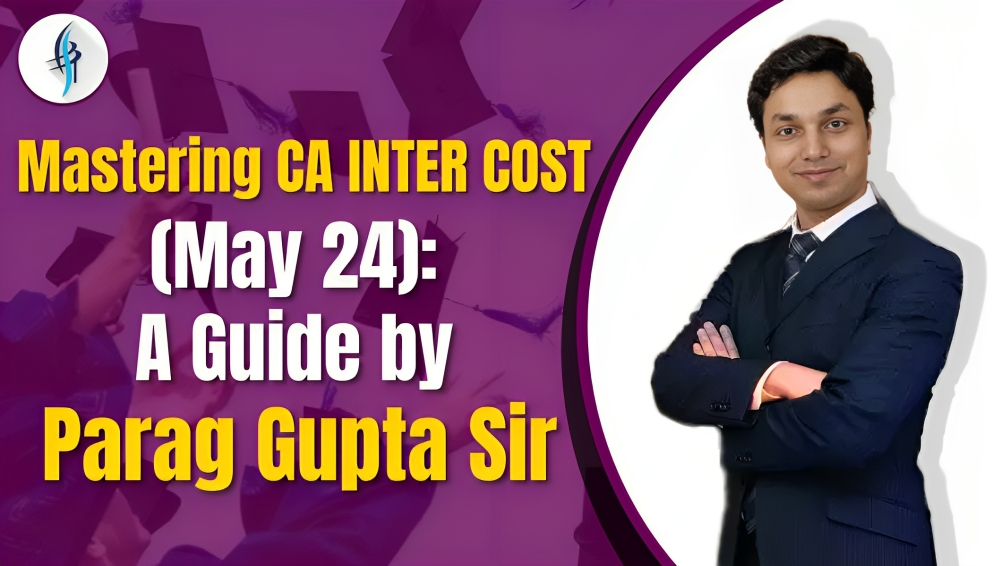
CA Parag Gupta is one of the pioneers in the Teaching industry for CA Inter and is considered the best faculty in the world of CA Inter Course Costing and SM.

Mastering-CA-INTER-COST-1-Made-with-PosterMyWall
Blog, CA Inter

Mastering CA Inter-Costing Classes with StudybyTech

If you’re a CA Inter student, you must be well-aware of how important the Cost and Management Accounting (Paper 4) is in Group 2. Most of students are unable to deal with this kind of issues. But what if you could actually leverage this challenge as a point of scoring with the correct faculty and platform? That’s precisely what StudyByTech provides with CA Parag Gupta Sir being one of the best faculty for CA Inter Costing in India. Let me walk you through why mastering CA Inter Costing with StudyByTech and Parag Gupta Sir is a smart move. Why Costing Is a Game-Changer COSTING IS NOT YET ANOTHER PAPER. It lays the ground for what you will read in CA Final and even what you will do practically in articleship. But the problem is: And without the guidance, you may get lost in the formulas or not know how to go about the decision making chapters like Marginal Costing, Standard Costing and Budgetary Control. Enter CA Parag Gupta Sir – Your Costing Mentor Parag Gupta Sir, founder of StudyByTech, is not just a senior faculty but also an Ex-Examiner at ICAI. This gives him a deep insight into how papers are actually checked, common mistakes students make, and how to score 60+ in Costing. Here’s what makes his classes stand out: Key Features of Costing Classes at StudyByTech 1. Conceptual Clarity First Parag Sir is a strong believer in hard work and building strong fundamentals. His explanations make sense and he links theory with examples that happen in real life which makes you to have a deeper understanding and not just “read to pass”. 2. Regular Weekly Tests The best thing about the course is the weekly test series rolled into it. These tests enable students to monitor their performance, revise in a timely manner and become familiar with exam-style questions. 3. 1-on-1 Doubt Solving Parag Sir is also a strong believer in Strong Basics. What he explains are also very logical and he links theory with real cases carefully and tends to explain for your deep understanding not just for remember when see exam words. 4. 59 Questions for Last-Day Revision To make your last round (revision) strong, StudyByTech brings to you 59 select questions that you can revise all concepts in quick time BEFORE your exam. 5. 20-Hour Bonus Access With the main course, you also receive 20 hours of additional access to the full course — so you’re free to refresh your knowledge of any topic that you may need a refresher on, even if it’s not part of your regular routine. 6. Smart Test Series Design The test papers on StudyByTech are designed to include all important topics and also replicate different complexity to help students actually gauge the level of their preparation. Flexible Learning Through the App StudyByTech learning app, that offers flexibility to the students to study. Having an Android, iOS or Windows device, you can access lectures, notes, test papers & doubt forums anytime, anywhere. Final Thoughts And learning CA Inter Costing don’t need to be scary How can I pass CA Inter Costing, without…? If you are in hands of Parag Gupta Sir and StudyByTech then it is the subject to score very highly rather than a subject to be afraid of. This unique mix of crystal clear concepts, exam-smart approach and personalized attention is certainly for any CA Inter student. If you are on serious in clearing costing and want to get ranked then StudyByTech for Parag Gupta Sir is the perfect place to start of your journey. FAQ’s “author”: { “@type”: “”, “name”: “” }, “publisher”: { “@type”: “Organization”, “name”: “”, “logo”: { “@type”: “ImageObject”, “url”: “” } }, “datePublished”: “” } Want to subscribe to latest lectures?
CA Inter 2025: Last-Minute Preparation Tips for Success
Blog, CA Inter

CA Inter SM 2025: Last-Minute Preparation Tips for Success          

Introduction Are you preparing for the CA Inter SM 2025 exams? As the exams draw near, it’s crucial to have a well-thought-out strategy and dedicated efforts to succeed. If you’re looking to maximize your exam preparation in the final moments, we’ve compiled a list of crucial tips to help you succeed. Additionally, as a bonus, we’ve included some valuable insights from StudyByTech to give you an extra edge. 1: Organize Your Study Plan 2: Prioritize Key Topics 3: Review Important Formulas and Concepts 4: Practice Previous Year Papers 5: Stay Healthy and Well-Rested 6: Seek Clarifications on Doubts 7: Utilize Exam-Revision Techniques 8: Simulate Exam Conditions 9: Stay Calm and Positive 10: Review the ICAI Guidelines 11: Plan Your Exam Day 12: Meditation, Exercise and Morning walk to stay motivated & fresh Always remember to stay motivated & fresh at mind level to stay motivated & energetic the whole day. SO instead of just getting up in morning & start studying, it is always suggested to give some time to your mind to feel fresh before starting your studies. Guidelines for CA Inter SM 2025 Exam Day Preparations To have a successful CA exam day, it is essential to follow these instructions carefully for a seamless experience: To sum up, by utilizing the tips provided and taking advantage of StudyByTech’s resources, you can greatly enhance your preparation for the CA Inter SM 2025 exam. In other words, diligent effort and a strategic approach are your keys to success. I wish you the best of luck on your journey to becoming a Chartered Accountant! FAQs Want to subscribe to latest lectures?
Cost Sheet for CA Inter Costing: Format, Steps and Common Mistakes
Blog, CA Inter

Cost Sheet I CA Inter Costing with Parag Gupta sir

Cost Sheet for CA Inter Costing: Format, Steps and Common Mistakes By Parag Gupta sir, Parag Gupta Classes · Updated October 2026 Join CA Inter Costing classes Watch demo lectures PrimeFactorySales costPrice In short: A cost sheet is a statement that shows the total cost of making a product, built up in stages: prime cost, factory cost, cost of production, cost of goods sold, cost of sales and profit. This guide is for CA Inter students learning the cost sheet in Cost & Management Accounting. You’ll get the format, the step-by-step method, common mistakes and FAQs from Parag Gupta sir. The key takeaway: build it stage by stage and never skip a layer. Table of contents What is a cost sheet? Cost sheet format and flow How to prepare a cost sheet Common mistakes to avoid Resources for CA Inter Cost sheet Why StudyByTech FAQs Key takeaways A cost sheet shows total cost and cost per unit, stage by stage. Prime cost = direct material + direct labour + direct expenses. Each stage adds one type of overhead to the one before it. Stock adjustments (WIP and finished goods) decide the final numbers. Add profit to cost of sales to reach the selling price. Practise with ICAI material, RTPs and MTPs for the CA Inter exam. What is a cost sheet? Think of the cost sheet as a ladder. You start at the bottom with the cheapest, most direct costs. Every step up adds another layer of overheads. At the top, you’ve got the full cost of sales, and profit takes you to the selling price. It’s a core part of CA Inter Costing, and it’s covered in the ICAI Cost & Management Accounting syllabus. Get this one right and the later chapters feel much easier. Why does the CA Inter cost sheet matter? Companies use it to price products, control costs and compare periods. In the exam, it tests whether you can classify costs correctly and keep calm with adjustments. Cost sheet format and flow Here’s the whole cost sheet at a glance. Read it left to right (or top to bottom on your phone). Prime costDirect material + labour + expenses Factory cost+ Factory overheads Cost of production+ Administration overheads Cost of goods sold+ Opening, − closing finished goods Cost of sales+ Selling & distribution overheads SalesCost of sales + profit Stage What you add What you get 1 Direct material, direct labour, direct expenses Prime cost 2 Factory overheads (adjust for opening and closing WIP) Factory cost / works cost 3 Administration overheads Cost of production 4 Opening finished goods less closing finished goods Cost of goods sold 5 Selling and distribution overheads Cost of sales 6 Profit margin Selling price Pro tip: Always show two columns: total cost and cost per unit. Dividing by units at each stage is where easy marks live. How to prepare a cost sheet, step by step Here’s the checklist we follow in class. Tick these off and you won’t miss a thing. Understand cost concepts first Know direct vs indirect, fixed vs variable, semi-variable and opportunity costs. Everything else depends on this. Pick the right format Choose a clear, columnar layout that fits what the question asks. Keep headings and sub-headings neat. Classify every cost Tag each item: direct or indirect, variable or fixed, manufacturing or non-manufacturing. Do this before you calculate. Work out direct costs Direct material: adjust for opening and closing stock. Direct labour: use wage rates, hours and any extra labour costs. Allocate overheads Split factory overheads into variable and fixed. Then spread them fairly across the units you produced. Get cost per unit and price Divide total cost by units. Add your profit margin to reach the selling price, keeping market conditions in mind. Reconcile and document Match the cost sheet with the financial statements. Keep records for every figure so you can explain it. Comply and review Follow the relevant accounting standards. Update the sheet whenever costs or production methods change. Remember, requirements vary by industry and purpose. The stages stay the same, though. Common cost sheet mistakes to avoid Skipping stock adjustments Forget opening or closing WIP and finished goods, and every later figure goes off. Mixing up overheads Factory, administration and selling overheads belong in different stages. Put each one where it should go. Ignoring cost per unit Many questions ask for it directly. Calculate it as you go, not at the end. Resources to master the CA Inter cost sheet Use these together: learn the concept, then practise, then revise. Learn Start with our CA Inter guide, then watch the demo lectures. Watch demos Practise Solve questions from ICAI study material and the latest RTPs and MTPs. Short on time? Start with Parag sir’s hand-picked 59 questions to score 60+ marks. 59 questions PDF for 60+ marksICAI study materialRTP & MTP Revise Short on time? Our last-day costing tips keep the key points in one place. Last-day revision Why StudyByTech for CA Inter Cost? StudyByTech has been a well-known name in CA classes since 2003. Our faculty are experienced professionals. One of the founders is Parag Gupta sir, a well-known faculty for CA Inter Costing and SM, and CA Final Costing. You’ll get organised plans, clear direction and plenty of resources for your CA journey. Ready to start? Pick your batch below. CA Inter Cost & MA classes CA Inter Group 2 classes CA Inter Costing book Cost sheet FAQs for CA Inter What is a cost sheet? A cost sheet is a statement that shows the total cost of a product or job, broken into stages. It starts with prime cost and builds up through factory cost, cost of production and cost of sales. Add profit at the end and you get the selling price. It also shows cost per unit. How does a cost sheet work? You list costs in the order they’re incurred. First add direct material, direct labour and direct expenses to get prime cost. Then add

CA Inter Costing Syllabus
CA Inter, Blogs, Costing

CA Inter Costing Syllabus

CA Inter Costing Syllabus 2027: Chapters & Marks Parag Gupta Classes📞 +91 99688 75529 CA Inter Costing Syllabus: All 15 Chapters, Marks & Study Order By Parag Gupta Sir · Updated September 30, 2026 · 4 min read Top chapters by marks Cost Sheet12 Cost Accounting Systems12 Standard Costing12 Marginal Costing10 The CA Inter costing syllabus covers 15 chapters across two modules, from material and employee cost to standard costing, marginal costing and budgets. This page is for CA Inter students who want to know what to study, which chapters carry the most marks, and where to start. The big takeaway: Cost Sheet, Cost Accounting Systems and Standard Costing carry 12 marks each, so master them first. What’s inside CA Inter costing syllabus: chapters Study roadmap flowchart Chapter-wise marks weightage Cost & Management new syllabus 2027 How to use this syllabus FAQs Key takeaways There are 15 chapters in two modules. Cost Sheet, Cost Accounting Systems and Standard Costing carry 12 marks each. Marginal Costing is next at 10 marks. ICAI gives step marks, so show your workings. Always cross-check with the official ICAI syllabus. CA Inter costing syllabus: what’s covered The CA Inter cost syllabus is the Cost & Management Accounting paper. It builds your basics first, then teaches you the methods, then the control tools. Tap any chapter to open ICAI’s official study material, or get the complete ICAI study material module in one place. Chapter Topic Module 1: cost basics 1 Introduction to Cost and Management Accounting 2 Material Cost 3 Employee Cost & Direct Expenses 4 Overheads: Absorption Costing Method 5 Activity Based Costing 6 Cost Sheet 7 Cost Accounting Systems Module 2: costing methods & control tools 8 Unit & Batch Costing 9 Job Costing (and Contract Costing) 10 Process & Operation Costing 11 Joint Products & By Products 12 Service Costing 13 Standard Costing 14 Marginal Costing 15 Budgets and Budgetary Control Your study roadmap Don’t jump around. Follow this flow and each chapter will feel easier than the last. 1. Cost basicsChapters 1 to 3: terms, material, employee cost ➜ 2. Overheads & ABCChapters 4 and 5: absorb costs the right way ➜ 3. Cost sheet & systemsChapters 6 and 7: high-scoring chapters, 12 marks each ➜ 4. Costing methodsChapters 8 to 12: batch, job, process, joint, service ➜ 5. Control toolsChapters 13 to 15: standard, marginal, budgets Chapter-wise marks weightage in the CA Inter cost syllabus Start with the red chapters. They give you the most marks for your time. Then move to the blue ones. Ch. Chapter Marks Weight Priority 1 Introduction to Cost and Management Accounting 4 Lower 2 Material Cost 6 Lower 3 Employee Costs and Direct Expenses 8 Medium 4 Overheads: Absorption Costing Method 6 Lower 5 Activity Based Costing 8 Medium 6 Cost Sheet 12 High 7 Cost Accounting Systems 12 High 8 Unit & Batch Costing 8 Medium 9 Job Costing and Contract Costing 8 Medium 10 Process & Operation Costing 6 Lower 11 Joint Products & By Products 8 Medium 12 Service Costing 8 Medium 13 Standard Costing 12 High 14 Marginal Costing 10 High 15 Budget and Budgetary Control 8 Medium CA Inter cost & management new syllabus 2027: what to know If you’re preparing for the new syllabus, the 15-chapter structure above is your base. ICAI can tweak chapters or scope between attempts, so check its notifications before you finalise your plan. Where to find the official syllabus Want to see exactly what ICAI has published? Here’s the official ICAI CA Inter costing syllabus (PDF). You can also download the full ICAI study material for Cost & Management Accounting. For scheme updates, visit ICAI’s official website. How to use this syllabus without feeling overwhelmed Step 1: Get your basics right Finish Module 1 first. Every later chapter builds on cost classification, materials and overheads. Step 2: Practise numericals daily Costing is a doing paper. Solve questions after each chapter. Short on time? Try Parag Sir’s 59 must-do questions. Step 3: Follow a plan Not sure how to pace yourself? Read these CA Inter costing tips and tricks. Step 4: Get the right support Want a teacher who simplifies all 15 chapters? Check out our CA Inter Costing classes by Parag Sir or grab the CA Inter Costing book. Studying other papers too? See all CA Inter courses. CA Inter costing syllabus: FAQs What is the CA Inter costing syllabus? The CA Inter costing syllabus is ICAI’s list of 15 chapters for Cost and Management Accounting, split into two modules. It starts with material, employee cost and overheads, then moves to costing methods, standard costing, marginal costing and budgets. It teaches you how businesses measure, control and reduce costs. What is costing in CA Intermediate? Costing in CA Intermediate is the paper on Cost and Management Accounting. You learn to calculate the cost of products and services, prepare cost sheets, apply methods like job and process costing, and use variances and budgets to control costs and support decisions. How does the CA Inter costing syllabus work? Start with Module 1 to learn cost basics: materials, employee cost, overheads, ABC, cost sheets and systems. Then move to Module 2, where you apply methods like batch, job, process and service costing, before finishing with standard costing, marginal costing and budgets. Practise numericals after each chapter. Is CA Inter costing worth studying properly? Yes. Costing is a scoring paper if you practise regularly, because most questions are numerical with clear steps. It also builds skills you’ll use in CA Final SCPM and in roles like cost control, pricing and budgeting. Strong basics here make later papers easier. Who is the CA Inter costing syllabus best for? It’s for CA Intermediate students preparing for their next attempt, including first-timers and repeaters. It also helps CA Foundation students planning ahead, and mentors or teachers who want a clear chapter-wise view of Cost and Management Accounting. Is there step marking in CA Inter costing? Yes. ICAI gives step marks

Blog, CA Inter

Excited for CA Inter MCQs in the new syllabus?

The journey to becoming a Chartered Accountant (CA) in India is undoubtedly a challenging one. Among the various stages of this rigorous journey, the CA Inter exams are a significant milestone. With the recent changes in the syllabus, students are understandably anxious, especially when it comes to the Multiple Choice Questions (MCQs) section. But fear not, for StudyByTech is here to provide you with the best resources and guidance to tackle the CA Inter-MCQs confidently. In this blog, we will explore the importance of MCQs in the new syllabus, the challenges they pose, and how StudyByTech, under the guidance of Parag Gupta sir, can help you ace this section. Recently, an MCQ portal was introduced to match with the recently released CA curriculum by ICAI. This portal places a strong emphasis on learning and evaluation via technology. The passing standards for the CA Intermediate and CA Final exams have changed in accordance with the revised syllabus. In six exams at each level, students will be asked to attempt 30 percent of MCQ-based questions. Each subject is now having 30% of MCQs with no negative marking. For all students in the foundational, intermediate, or foundational stages, the MCQ dashboard is a user-friendly site and mobile. The dashboard has the ability to track questions, whether they are paper- or chapter-based, as well as a student’s performance. The platform will display a 20-question MCQ exam, and the students will be able to choose questions. The Significance of MCQs in CA Inter Multiple Choice Questions have always played a pivotal role in the CA Inter exams. However, with the new syllabus, their importance has grown significantly. The Institute of Chartered Accountants of India (ICAI) introduced MCQs in CA exams to assess not only a candidate’s knowledge but also their analytical and decision-making abilities. This shift aims to produce well-rounded professionals capable of handling real-world challenges. Challenges in the New Syllabus As the importance of MCQs increases, so do the challenges faced by CA Inter students in the new syllabus: StudyByTech: Your Solution to MCQ Anxiety StudyByTech has a keen understanding of the concerns faced by CA Inter students and has adeptly customized its offerings to effectively address these challenges. Helmed by Parag Gupta sir, widely acknowledged as India’s top faculty for CA Inter SM & Costing, StudyByTech adopts a comprehensive approach to MCQ preparation. Study materials: Firstly, StudyByTech furnishes top-notch study materials, painstakingly designed to encompass the entire CA Inter syllabus. These materials serve to facilitate a deep comprehension of intricate concepts and equip you to navigate the complexities of challenging MCQs. Personalized Coaching: Secondly, whether your inclination leans towards the flexibility of online classes or the personalized touch of offline sessions, StudyByTech caters to both preferences. Parag Gupta sir’s expert guidance ensures a thorough understanding of each subject. Practice: Additionally, an extensive reservoir of MCQs for each subject is available for rigorous practice on the StudyByTech platform. These questions are meticulously curated to closely match the complexity level of the actual CA Inter exams, ensuring a high level of preparedness. Support System: Furthermore, StudyByTech places a significant emphasis on doubt resolution, recognizing that CA Inter students often grapple with doubts and queries. Parag Gupta sir and our dedicated support team stand ready to promptly address your doubts and provide insightful guidance. Performance analysis: Moreover, performance analysis tools are offered by StudyByTech to enable you to monitor and evaluate your progress effectively. These tools prove instrumental in identifying your strengths and weaknesses, allowing for targeted efforts in the areas that demand the most attention. Real-world Scenarios: Lastly, leveraging his extensive experience, Parag Gupta sir underscores the importance of the real-world application of acquired knowledge. This approach ensures not only success in passing the exams but also the development of critical skills essential for the CA profession. In the end, StudyByTech’s holistic approach, combined with Parag Gupta sir’s expert guidance, equips you comprehensively for the CA Inter exams, steering you towards a successful and fulfilling journey in the realm of Chartered Accountancy. Conclusion: The heightened importance and complexity of CA Inter-MCQs in the new syllabus understandably generate anxiety. Nonetheless, armed with appropriate guidance and resources, you can surmount these challenges and truly thrive in your examinations. StudyByTech, under the expert mentorship of Parag Gupta sir, presents a comprehensive solution to assist you in preparing effectively for CA Inter. By providing exceptional study materials, granting access to both online and offline classes, facilitating extensive MCQ practice, offering doubt resolution, conducting performance analysis, and emphasizing the practical application of knowledge in the real world, we establish ourselves as the ideal partner in your pursuit of becoming a Chartered Accountant. Therefore, do not permit anxiety to impede your progress. Seize the opportunity to shine in the CA Inter exams through StudyByTech. Your journey towards success commences right here! Check out our CA Inter course product from the below link: FAQs:

CA Inter SM: Unlocking Success in the Corporate World
Blog, CA Inter

CA Inter SM: Unlocking Success in the Corporate World

CA INTER SM The CA Inter (Chartered Accountancy Intermediate) course plays a vital role in shaping aspiring professionals’ careers in the field of finance and accounting. Among the subjects in the CA Inter curriculum, CA Inter SM (Strategic Management) holds significant importance. In this blog post, we will explore the intricacies of CA Inter SM and how it equips students with thenecessary skills to thrive in the corporate world. Understanding CA Inter SM It is a subject that focuses on strategic planning, decision-making, and corporate governance. It gives students’ in-depth understanding of various strategic management concepts and techniques. By studying this course, students gain insights into the principles and practices necessary for effective management and leadership in the business environment. Importance of CA Inter SM: Strategic Planning: Introduces students to the concept of strategic planning, which involves setting long-term goals and devising plans to achieve them. Understanding strategic planning helps individuals become proactive and think ahead, enabling them to make informed decisions that contribute to the success of organizations. Decision-Making: Effective decision-making is a critical skill in any corporate setting. CA Inter SM equips students with the tools and frameworks to analyze complex business scenarios and make sound decisions based on available information and strategic objectives. This skill is invaluable in solving business problems and navigating uncertainties. Corporate Governance: CA Inter SM emphasizes the importance of ethical practices, transparency, and accountability within organizations. By studying corporate governance principles, students develop an understanding of the legal and ethical framework that guides corporate behavior. This knowledge is crucial for maintaining trust and integrity in the corporate world. Competitive Advantage: This helps students identify and analyze the factors that contribute to a company’s competitive advantage. By understanding the strategic positioning of organizations, students can devise strategies to differentiate their own firms and gain a competitive edge in the market. Tips for Excelling in CA Inter SM Master the Concepts: This course involves a wide range of concepts and theories. To excel in this subject, dedicate time to thoroughly understand each concept and its practical application. Regular practice and revision will help reinforce your understanding. Industry news, and analyze case studies to gain a holistic perspective on strategic management. Practise Case Studies: CA Inter SM frequently consists of case studies that ask students to evaluate actual situations and make strategic recommendations. Collaborate and Discuss: Engage in group discussions and study circles with fellow CA Inter students. Collaborative learning fosters the exchange of ideas, diverse perspectives, and a deeper understanding of the subject matter. Time Management: CA Inter SM requires systematic and disciplined study. Create a study plan that allows enough time for each topic so that you may effectively cover the syllabus and yet have time for revision. Also, read here for CA Inter Mock Tests Embracing the Future with CA Inter SM CA Inter SM serves as a bridge between the theoretical knowledge gained in the CA Inter course and its practical application in real-world scenarios. It prepares students to navigate the complexities of the business landscape, equipping them with the skills and competencies necessary to succeed. Here are a few additional insights to help you embrace the future with CA Inter SM. Developing Analytics Thinking CA Inter Strategic Management encourages students to think critically and analyze various business situations. This subject sharpens your analytical thinking abilities, enabling you to evaluate the strengths, weaknesses, opportunities, and threats that organizations face. By honing your analytical skills, you become adept at identifying strategic implications and formulating effective solutions. With Parag Gupta sir’s SM classes, students starts understanding how a concept was applied to a particular problem via real life example. That’s why for CA Inter SM subject Parag Gupta sir is considered as students best faculty. Conclusion As you embark on your journey through this course, presents a world of opportunities for personal and professional growth. This subject equips you with the knowledge and skills needed to excel in the corporate world. By embracing analytical thinking, understanding competitive dynamics, embracing innovation and change, enhancing communication and leadership skills, and emphasizing ethical practices, you position yourself as a valuable asset in the realm of strategic management. Embrace the challenges, seize the opportunities, and let CA Inter SM be your guiding lighttowards a successful career in the corporate arena. ICAI Strategic management detail FAQ Want to subscribe to latest lectures by Parag Gupta sir?

Blog, CA Inter

A Comprehensive Guide to Cracking the CA Intermediate Exam

CA Inter Classes ICAI Registration Process, Fees, & Syllabus Admit Card Exam Dates Study Guides & Tips CA Inter faculties FAQ CA INTERMEDIATE EXAM: The CA Intermediate exam is a crucial milestone in your journey to becoming a Chartered Accountant. While the test is difficult, you may pass it with the appropriate strategy and perseverance. In this blog, we will provide you with valuable tips and tricks to help you prepare effectively for the CA Intermediate Exam. CA Intermediate Exam: Tips and Tricks 1-Create a Well-Structured Study Plan: To conquer the vast syllabus of the CA Intermediate exam, it is essential to create a well-structured study plan. Break down the subjects into manageable sections and allocate specific study time for each. Make sure to set realistic goals and stick to the schedule consistently. This approach will help you cover the entire syllabus efficiently and avoid last-minute cramming. 2-Stay Organized: When studying for the CA Intermediate test, being organized is critical. Maintain a separate binder or folder for each subject to keep your notes, practice exams, and study materials in one place. This organization will save you time and make it simpler for you to revise and find important data when required. 3-Practice with Mock Exams: Taking practice exams is an integral part of your preparation. Mock exams simulate the actual CA Intermediate exam environment, allowing you to familiarize yourself with the question patterns, time constraints, and exam format. Analyze your performance in mock exams, identify weak areas, and focus on improving them. This practice will boost your confidence and enhance your exam-taking skills. 4-Seek guidance from tutors or study groups: If you encounter difficulties in understanding specific subjects or topics, don’t hesitate to seek help from tutors or join study groups. Tutors can provide personalized guidance, clarify your doubts, and offer valuable insights. Study groups create a collaborative learning environment where you can exchange ideas, discuss complex concepts, and support one another. Utilizing these resources will strengthen your understanding and increase your chances of success. 5-Maintain a Positive Mindset: Maintaining a positive mindset throughout your CA Intermediate exam preparation is crucial. Acknowledge that the exam is challenging but believe in your abilities. Celebrate small achievements along the way and remind yourself of your determination to succeed. Surround yourself with positive influences and seek support from family, friends, or mentors. A positive mindset will keep you motivated, focused, and resilient in the face of challenges. CA Intermediate Exam Preparation with Studybytech: Your Comprehensive CA Intermediate Exam Preparation Partner Studybytech offers a comprehensive range of resources designed to help you excel in the CA Intermediate exam. Our online classes, practice exams, and study guides are developed by experienced professionals and experts in the field. We provide you with the following advantages: International Case Studies and Best Author References: Our study materials include case studies from prominent worldwide books, ensuring that you are exposed to the most recent accounting and auditing trends and best practices. This exposure broadens your perspective and enhances your problem-solving skills. Best-in-Class MCQs: We have curated a collection of best-in-class Multiple Choice Questions (MCQs) aligned with the latest exam pattern and trends. Practicing these MCQs will sharpen your knowledge, improve your speed, and familiarize you with the exam’s question format. Relevance to International Examinations: Our books and study materials are based on the best international content and questions. We look at question patterns and trends from prominent worldwide exams including CPA, CIMA/CGMA, ACCA, and ICAEW. This approach gives you a competitive edge and prepares you holistically for the CA Intermediate exam. Conclusion Cracking the CA Intermediate exam requires diligent preparation, determination, and a strategic approach. By following the tips outlined in this blog and leveraging the resources offered by Studybytech, you can enhance your chances of success. Remember to stay committed, believe in yourself, and maintain a positive mindset throughout your preparation journey. The CA Intermediate test can be challenging, but you can overcome any barriers with appropriate preparation, organized study habits, practice exams, and the assistance of instructors or study groups. Studybytech’s comprehensive study materials, including case studies, MCQs, and textbooks, are designed to provide you with the necessary tools to excel in the exam. Start your preparation early, create a study plan, and stay disciplined about following it. Use practice exams to familiarize yourself with the exam format and identify areas for improvement. Seek assistance when needed, whether through tutors or study groups, to clarify doubts and strengthen your understanding of complex subjects. Studybytech offers a range of resources and flexible learning options to fit your schedule. Their commitment to providing you with the best possible preparation for the CA Intermediate exam sets them apart. Their study materials are carefully curated to align with the latest exam patterns and incorporate international best practices. Stay motivated, celebrate your progress, and visualize your success as you work towards your goal of cracking the CA Intermediate exam. Remember that hard work, dedication, and the right resources are the key ingredients for achieving success in this challenging exam. Take the first step towards a successful career in accounting by exploring the programs and services offered by StudybyTech. Visit their website or reach out to them today to learn more and embark on your journey toward success in the CA Intermediate exam. FAQs Want to subscribe to latest lectures?

CA INTERMEDIATE
Blog, CA Inter

CA Intermediate Exam Fees: What You Need to Know

A necessary step towards becoming a chartered accountant is passing the CA Intermediate exam administered by the Institute of Chartered Accountants of India (ICAI). For students aiming to become CAs, understanding the test fee structure is essential. In this article, we’ll delve into the particular expenditures associated with the CA Inter exam, including registration fees, exam fees, and other necessary charges. 1. Registration Fees: Before registering for the CA Inter test, candidates must complete the ICAI registration process. A lot of factors, including the candidate’s educational background and the registration date, affect the CA Inter registration cost. As of the deadline in September 2021, the following registration fees were applicable to CA Inter under the new system: It’s essential to remember that these costs might vary, so it’s best to check the official ICAI website or get in touch with the local ICAI office for the most recent details. 2. Examination Fees: In addition to the registration fee, candidates must pay examination fees for each try.When completing the exam application form, you must pay the examination cost for the CA Inter examinations. The following costs apply to each group: It is extremely important to remember that these costs were in effect at the time this blog was written but are liable to change. Candidates should consult the official ICAI website, which has the most up-to-date and accurate fee information. 3: Other Relevant Charges: Join us to learn the steps for How to Register for CA Intermediate Exams :Click Here Conclusion: It is advised to check the official ICAI website or contact the nearby ICAI office to get the most accurate and updated fee information. Remember that understanding the cost structure will help you plan your CA Inter trip well and prevent any unpleasant surprises. FAQ’s Want to subscribe to latest lectures?
ca inter study material
Blogs, CA Inter

CA Intermediate Study Material for Success

You are aware of how difficult and demanding the intermediate stage of a Chartered Accountancy program can be if you have enrolled in it. It requires careful planning and study as well as a solid foundation in the foundations of accounting and finance. If you want to crack your CA Intermediate exam then you need suitable study resources. In this, you will go over the CA Intermediate Study Materials to help you crack the exam. 1. ICAI Study Guide The ICAI offers an extensive collection of study materials that include every subject matter needed for the CA Intermediate syllabus. The study materials for each subject on the syllabus include textbooks, study guides, and question banks. The study material is organized and simple to comprehend, which makes it a crucial tool for preparing for exams. 2. Mock Test Papers Mock test papers are simulated versions of the CA Intermediate exam which can be used as a study guide. They are a great tool for students to assess their subject matter expertise and understanding. Practice examinations also help pupils identify their areas of weakness and improve their test-taking strategies. 3. Reference Books Reference books are supplemental learning tools that students can use to further their understanding of a subject. These materials provide in-depth explanations of ideas and examples to help students grasp complex topics. Popular study guides for CA Intermediate exams include Taxmann’s Advanced Auditing and Professional Ethics, Padhuka’s Law, and Wiley Cost Accounting. 4. Online Courses For learners who prefer independent study, online courses are a great option. They provide a systematic approach to learning the material and often feature video lectures, tests, and other interactive tools. Udemy, CAclubindia, and EduPristine are some of the well-known online education companies that offer courses for CA Intermediate exams. 5. Offline Classes The institution is an excellent choice for learners who value face-to-face instruction. Coaching curricula offer a methodical and engaging way to study the material and frequently incorporate practice materials like mock exams. Several well-known instructors for the CA Intermediate. StudyByTeach is one of the best, that provides coaching classes for CA Foundation, CA Inter, and CA Final. Conclusion The study materials explained above are some of the best ones accessible to help CA Intermediate students to prepare for their exams. To be successful, you must pick the appropriate study materials depending on your abilities and shortcomings. FAQ’s

Cost Saving Secrets Of Relevant Costing: Know Everything About It
Blog, CA Inter

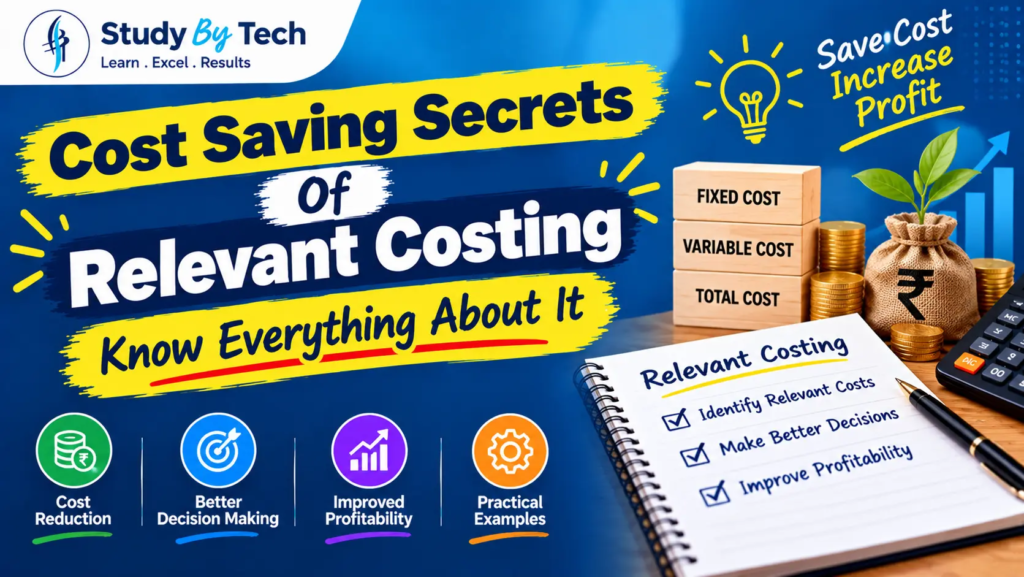
Cost Saving Secrets Of Relevant Costing: Know Everything About It

Relevant Costing: Meaning, Examples and Techniques Explained By CA Parag Gupta | Updated October 2026 | 6 min read Relevant vs irrelevant costMake or buySunk costOpportunity costCA Inter Watch the quick video Relevant costing is a way of making business decisions by looking only at the costs and revenues that change because of that decision. It ignores sunk costs and unavoidable fixed costs. This guide is for CA Inter, CA Final and commerce students who want clear, simple examples. The key takeaway: if a cost stays the same whichever option you pick, leave it out, and compare only the future cash that differs. What’s on this page What is relevant costing? Relevant vs irrelevant costs How relevant costing works Relevant costing techniques Where you’ll use it A worked make-or-buy example Limitations FAQs Key takeaways Relevant costs are future costs that differ between your options. Sunk costs and historical costs never matter for the decision. Fixed costs are irrelevant only if they’re unavoidable. Avoidable fixed costs count. Opportunity costs are relevant, even though no cash leaves your pocket. It powers make-or-buy, special order and shutdown decisions. It looks at numbers only, so weigh quality, people and strategy too. What is relevant costing? Relevant costing is a managerial accounting technique. You use it to decide between alternatives by looking at just the costs and revenues that change with your choice. Everything else is noise. Think of it as a filter. You start with every number you can find. Then you throw out whatever stays the same no matter what you decide. What’s left is what actually drives the decision. It’s used across finance, marketing, production and operations management. And if you’re preparing for CA Inter Cost and Management Accounting, it’s one of the most useful chapters you’ll learn. For a formal definition, see AccountingTools or the Wikipedia entry on relevant cost. Relevant costs vs irrelevant costs Every cost in a decision falls into one of two buckets. Here’s the quick split. Relevant costs Future costs that change with the decision. Variable costs Opportunity costs Incremental costs Avoidable fixed costs Irrelevant costs Costs that stay the same whatever you choose. Sunk costs (already spent) Historical costs Unavoidable fixed costs Allocated overheads that won’t change Cost type Relevant? Why Raw material for a new order Yes You’ll spend it only if you accept the order. Machine bought last year No It’s a sunk cost. You can’t get it back. Rent that stops if you close a unit Yes It’s avoidable, so it changes with the decision. Head-office rent that continues anyway No It’s the same under every option. Profit you give up by using a machine for one job Yes That’s the opportunity cost. How relevant costing works You can run almost any decision through the same six steps. Spot thedecision List youroptions Keep futurecash only Drop whatdoesn’t differ Comparewhat’s left Pick thebest option Relevant costing techniques Differential analysis This is the main tool. You list the relevant costs and revenues for each alternative, then compare them. The cheapest or most profitable option wins. Marginal costing Marginal costing separates fixed and variable costs. It then works out the contribution margin per unit, which is selling price minus variable cost. It’s handy when you’re deciding whether extra units are worth making. Activity-based costing (ABC) ABC assigns indirect costs to products based on the activities that cause them. It isn’t a relevant costing method by itself. But it helps you spot which overheads really change with a decision. Read more on activity-based costing. Where you’ll use relevant costing Make or buy Should you produce a part in-house or outsource it? Compare the avoidable cost of making with the vendor’s price. Special order Should you accept a one-off order at a lower price? If it covers its extra costs and your capacity is idle, it can add profit. Shutdown Should you stop a product or unit? Compare the revenue you’d lose with the costs you’d truly avoid. A real-life example: last-minute train seats Picture a train with a few empty seats just before departure. Once it leaves, those seats earn nothing. Carrying one more passenger adds almost no cost. So the relevant cost of filling a seat is tiny, and even a discounted fare adds revenue. Last-minute seat sales follow exactly this logic. A worked make-or-buy example A company needs 1,000 units of a component. Making it costs the figures below per unit. A vendor offers it at ₹90 per unit. Item (per unit) Make (₹) Buy (₹) Relevant? Direct material 40 – Yes Direct labour 30 – Yes Variable overhead 10 – Yes Allocated fixed overhead (unavoidable) 20 – No Vendor price – 90 Yes Relevant cost per unit 80 90 Make it The ₹20 fixed overhead is there whether you make or buy, so you ignore it. Making saves ₹10 per unit, or ₹10,000 on 1,000 units. If you could rent out the spare capacity for more than ₹10,000, that opportunity cost would flip the answer. Prefer to watch it explained? Watch Parag Sir’s video on YouTube. Limitations of relevant costing It’s powerful, but it isn’t perfect. It assumes everything else stays constant. In real life, prices, demand and capacity keep moving. It focuses on numbers. Quality, brand, staff morale and supplier reliability matter too. It needs good estimates. Future costs are forecasts, and wrong forecasts give wrong answers. So use it as a strong starting point, then add your own judgment on the non-financial side. Relevant costing FAQs What is relevant costing? Relevant costing is a managerial accounting technique that picks out the costs and revenues that change because of a specific decision. You compare only those figures across your options. Businesses use it in finance, marketing, production and operations to decide with confidence. What are some examples of relevant costs? Relevant costs are future costs that differ between options. Variable costs, opportunity costs, incremental costs and avoidable fixed costs are the usual examples. If a cost changes because of your choice, it

Scroll to Top