CA

CA Parag Gupta is one of the pioneers in the Teaching industry for SCMPE and is considered the best faculty in the world of Old/New Course Costing.

Mastering the McKinsey 7S Framework: Insights from Parag Gupta Sir
CA, CA Final, SCPM

Mastering the McKinsey 7S Framework: Insights from Parag Gupta Sir

In the ever-evolving landscape of business management, understanding and optimizing organizational performance is crucial. One of the most effective tools for this purpose is the McKinsey 7S Framework, a model that has stood the test of time in helping organizations achieve strategic alignment and operational excellence. In this blog, we will explore the McKinsey 7S Framework, guided by the expertise of Parag Gupta Sir, a renowned faculty for SPOM- Strategic Cost & Performance management (SCPM). What is the McKinsey 7S Framework? The McKinsey 7S Framework is a management model developed by consultants at McKinsey & Company in the 1980s. It is designed to assess and align seven critical elements within an organization to ensure they work harmoniously towards achieving strategic goals. These seven elements are: Check out Parag sir’s video on Mckinsey 7S: The 7S Model: An Integrated Approach Parag Gupta Sir emphasizes that the power of the 7S Framework lies in its holistic approach. Unlike other models that focus on individual components in isolation, the 7S Framework interlinks all seven elements, ensuring that any change in one area is harmonized with the others. This interconnectedness is vital for achieving strategic coherence and operational efficiency. 1. Strategy Strategy is the cornerstone of the 7S Framework. It involves setting long-term goals and determining the best course of action to achieve them. Parag Gupta Sir highlights that a well-defined strategy provides direction and sets the stage for aligning the other six elements. 2. Structure The structure of an organization refers to its hierarchical setup. It defines roles, responsibilities, and the flow of information. An optimal structure supports efficient decision-making and enhances communication across various levels of the organization. 3. Systems Systems encompass the daily processes and procedures that govern organizational activities. Effective systems streamline operations, reduce redundancies, and ensure that tasks are performed consistently and efficiently. 4. Shared Values At the heart of the 7S Framework are the shared values. These are the fundamental beliefs and guiding principles that shape the organization’s culture. Shared values influence employee behavior, organizational ethos, and the overall work environment. 5. Style Style refers to the leadership approach adopted by management. Leadership style affects organizational morale, employee engagement, and the overall effectiveness of management. Parag Gupta Sir emphasizes that adaptive leadership styles that resonate with the organization’s values and culture are crucial for success. 6. Staff The staff element focuses on the organization’s human resources. It involves recruiting, training, and developing employees to ensure they possess the necessary skills and competencies. A talented and motivated workforce is key to executing the organization’s strategy effectively. 7. Skills Skills refer to the specific capabilities and expertise of the organization’s employees. Identifying and nurturing these skills ensures that the organization can meet its strategic objectives and adapt to changing market demands. Applying the McKinsey 7S Framework Parag Gupta Sir provides practical insights into applying the McKinsey 7S Framework in real-world scenarios. Here’s a step-by-step approach: Real-World Examples Parag Gupta Sir enriches his teachings with real-world examples that illustrate the practical application of the 7S Framework. For instance, he discusses how a leading tech company restructured its organization to foster innovation, aligning its strategy, structure, and systems to support a culture of creativity and rapid development. Conclusion The McKinsey 7S Framework is a timeless tool that provides a comprehensive approach to organizational analysis and improvement. By understanding and aligning the seven elements—Strategy, Structure, Systems, Shared Values, Style, Staff, and Skills—organizations can achieve greater coherence, efficiency, and success. Under the guidance of Parag Gupta Sir, mastering the 7S Framework becomes an invaluable asset for students, professionals, and business leaders alike. His expert insights and practical applications make this complex model accessible and actionable, empowering organizations to navigate the challenges of today’s dynamic business environment. For more in-depth learning, insights, and practical strategies, stay tuned to Parag Gupta Sir’s sessions on Strategic Planning and Operations Management. Want to enroll to SPOM-SCPM classes?
Kano Model
CA Final, CA Final IBS, Self paced online module

The Kano Model of Customer Satisfaction and its Importance

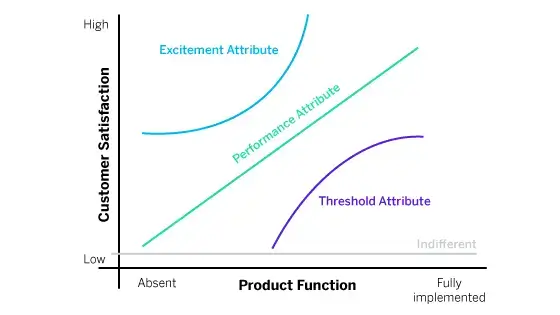
CA Final classes CA Final IBS classes(SPOM-set B portion) StudyByTech Offers Contact us Introduction Customer satisfaction is a cornerstone of successful business strategy. Understanding and addressing the diverse needs and expectations of customers can set a business apart from its competitors. The Kano Model, developed by Dr. Noriaki Kano, provides a valuable framework for categorizing and prioritizing these needs. This blog delves into the intricacies of the Kano Model, exploring its key components—Threshold Attributes, Performance Attributes, Excitement Attributes, and Indifferent Attributes—and highlighting its practical applications in enhancing customer satisfaction. In today’s highly competitive market, businesses strive to understand and meet customer expectations effectively. The Kano Model of Customer Satisfaction, introduced by Japanese quality management guru Dr. Noriaki Kano in the 1980s, offers a systematic approach to achieve this goal. By categorizing product or service attributes based on how they influence customer satisfaction, the Kano Model helps businesses prioritize their development efforts to maximize customer delight and loyalty. Parag Sir’s insight on Kano’s Model Parag Gupta Sir breaks down the intricacies of the Kano Model, explaining its core principles and illustrating its importance in the realm of customer satisfaction and quality management. Watch this video to get a great insight on this topic: https://youtu.be/fyk1KpZ6nwA Product attributes based on Kano’s model Threshold Attributes Threshold Attributes, also known as Basic Attributes or Must-Be Attributes, are the fundamental features that customers expect in a product or service. These attributes are not typically vocalized by customers because their presence is assumed. However, their absence leads to significant dissatisfaction. Performance Attributes Performance Attributes, or One-Dimensional Attributes, are those features that directly correlate with customer satisfaction. The better these attributes perform, the more satisfied the customers will be. Conversely, poor performance in these areas leads to dissatisfaction. Using the smartphone example again, performance attributes might include camera quality, processing speed, and screen resolution. Enhancing these attributes generally leads to higher customer satisfaction because customers can clearly see the benefits and improvements. Businesses should focus on continuously improving these attributes to stay competitive. Excitement Attributes Excitement Attributes, also known as Attractive Attributes, are the features that surprise and delight customers. These are unexpected and not typically demanded by customers, but their presence generates significant satisfaction. Conversely, their absence does not cause dissatisfaction because customers do not expect them. For instance, an innovative facial recognition feature in a smartphone can be considered an Excitement Attribute. When first introduced, it wasn’t an expected feature, but it created a “wow” factor and set the product apart from its competitors. Investing in these attributes can turn customers into enthusiastic promoters of the product or service. Indifferent Attributes Indifferent Attributes are features that neither contribute to customer satisfaction nor cause dissatisfaction. These attributes have little to no impact on how customers perceive the product or service. An example might be the color of the internal components of a smartphone. Most customers are indifferent to such aspects as they do not affect the user experience. Identifying and minimizing resources spent on Indifferent Attributes can help businesses allocate their efforts more effectively towards attributes that enhance customer satisfaction. Uses The Kano Model serves multiple purposes in the realm of customer satisfaction and product development: Conclusion The Kano Model of Customer Satisfaction is a powerful tool for understanding and prioritizing customer needs. By categorizing features into Threshold, Performance, Excitement, and Indifferent Attributes, businesses can strategically enhance their offerings to maximize customer satisfaction and loyalty. Utilizing the Kano Model can lead to more effective resource allocation, better strategic planning, and ultimately, a stronger competitive advantage in the market. In an era where customer expectations are constantly evolving, the Kano Model provides a structured approach to staying ahead and continuously delighting customers. FAQ’s

CA Inter Costing
Blogs, CA Inter, Costing

Process Costing: CA Inter Costing | May 24 Suggested Answers

Introduction to CA Inter Costing Classes by Parag Gupta Sir Parag Gupta Sir is renowned for his exceptional CA Inter Costing classes. With a focus on comprehensive understanding and practical application, his teachings ensure students excel in their exams. One of the critical components of the CA Inter May 24 Costing paper is Process Costing, specifically Question 4A. This blog delves into the suggested answer for this question, providing insights that align with Parag Gupta Sir’s teaching methodology. Understanding Q-4a Process Costing in CA Inter May 24 Costing Process Costing is a method used in industries where production is continuous, and the products pass through multiple stages or processes. It accumulates costs for each process and assigns them to units produced. This method is crucial for industries like chemicals, textiles, and oil refining. Key Components of Process Costing Step-by-Step Solution Example Problem Breakdown Given Data: Calculation: By applying these calculations, students can accurately allocate costs and understand the intricacies of Process Costing. Click here to see the all suggested answer for CA Inter Sept 25 Benefits of Parag Gupta Sir’s Classes Comprehensive Coverage Parag Gupta Sir’s classes provide in-depth coverage of all CA Inter Costing topics, including Process Costing. His structured approach ensures students grasp each concept thoroughly. Practical Examples His teaching includes numerous practical examples, mirroring the type of questions found in the CA Inter exams. This prepares students to tackle similar problems with confidence. Detailed Solutions Every problem is broken down step-by-step, as seen in the suggested answer for Q 4A. This methodical approach helps students follow along easily and understand the logic behind each step. Interactive Learning Classes are interactive, encouraging students to ask questions and engage with the material. This active participation enhances understanding and retention of complex concepts. Conclusion Mastering Process Costing is essential for success in the CA Inter Costing exam. Parag Gupta Sir’s classes offer the ideal preparation, providing detailed explanations, practical examples, and interactive learning opportunities. By following his guidance, students can confidently approach their exams and excel in their CA journey. FAQs

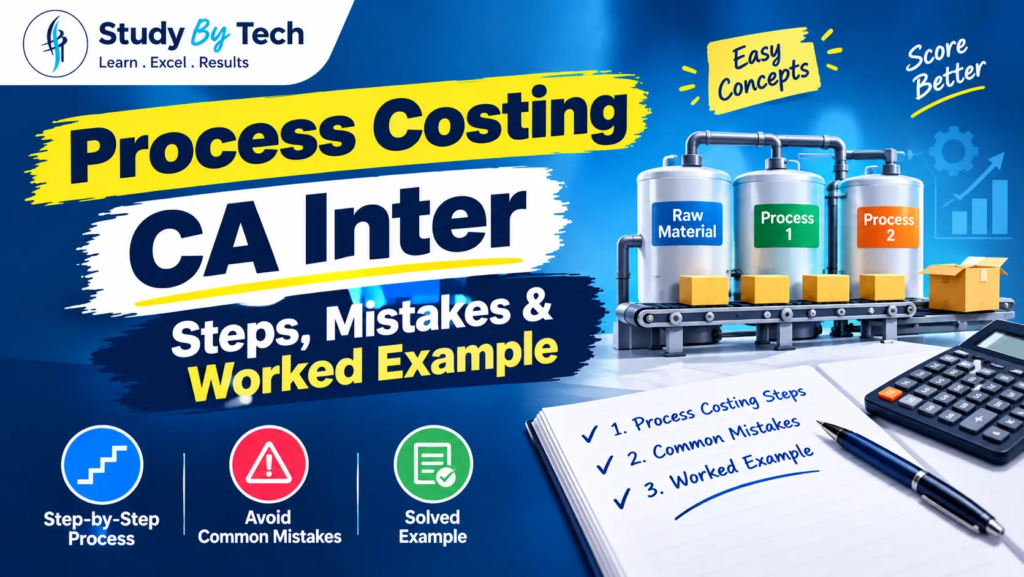
Process Costing CA Inter: Steps, Mistakes & a Worked Example
CA Inter, Costing

CA Inter : Basic of Process Costing by CA Parag Gupta

Process Costing CA Inter: Steps, Mistakes & Answers Parag Gupta Classes📞 +91 99688 75529 Process Costing CA Inter: Steps, Mistakes & a Worked Example By CA Parag Gupta · Parag Gupta Classes · Updated September 2026 Process costing CA Inter is the method you use to find the cost of products made in a continuous, multi-stage process, like chemicals, textiles or oil refining. This guide by CA Parag Gupta is for CA Inter students preparing Cost & Management Accounting. You’ll learn equivalent units, normal and abnormal loss, five common exam mistakes and a worked example. The key takeaway: divide each process’s total cost by equivalent units, then split it between finished and unfinished units. Table of Contents What Is Process Costing in CA Inter? How CA Inter Process Costing Works Process Costing Worked Example 5 Process Costing Mistakes to Avoid Why Learn with Parag Gupta Sir Process Costing CA Inter FAQs Key Takeaways Process costing fits continuous, multi-stage production, not one-off jobs. Equivalent units turn partly finished units into full-unit terms. Cost per equivalent unit = total process cost ÷ equivalent units. Normal loss is absorbed by good units. Abnormal loss is costed separately. Most marks are lost through weak records, wrong overhead allocation and skipped reviews. Always reconcile costs at the end of each process. What Is Process Costing in CA Inter? The simple definition Process costing finds the cost of a product by assigning costs to each stage of production. It works when goods flow continuously through the same steps, so every unit is basically identical. Where you’ll see it Think food and beverages, chemicals, textiles and oil refining. Your exam questions use the same logic. Why use it? Benefit What it means for you Simple and efficient It tracks the process, not every single job. Less paperwork than job costing. Accurate cost estimates You know what production really costs, so pricing and budgeting get easier. Cost control Tracking each stage shows where you can cut waste. Performance checks Compare actual with standard costs to spot inefficiency early. How CA Inter Process Costing Works The 5-step flow 1Collect costsDirect materials, labour and overheads for the process. 2Find equivalent unitsUnits completed + (units in process × % completion). 3Cost per equivalent unitTotal cost ÷ equivalent units. 4Allocate costsSplit between completed units and closing WIP. 5ReconcileCheck totals so nothing is left unexplained. Key elements of CA Inter process costing Element What you do Cost accumulation Collect direct materials, direct labour and overheads in each process or department. Cost allocation Assign the accumulated cost to units produced in the period. Equivalent units Convert partly finished units into the equivalent amount of completed work. Cost per equivalent unit Divide total department cost by equivalent units. Use it for finished units and WIP. Cost reconciliation Match costs across processes and fix any differences. Normal vs abnormal loss Process loss is the gap between input and output. It comes in two types. Type What it is Usual treatment Normal loss Expected, unavoidable wastage. Also called normal process loss. Its cost is absorbed by good units. Any scrap value reduces process cost. Abnormal loss Unexpected, non-recurring loss. Valued at cost per unit and costed separately from good output. Want the full syllabus coverage? Read the ICAI CA Inter costing syllabus and the official ICAI study material. Watch: process costing basics ▶ Watch on YouTube: Process Costing Basics Process Costing Worked Example (May 24 Practice) This is a practice example in the style of CA Inter May 24 Costing Q4A. It isn’t the ICAI question. For the official answer, see ICAI’s suggested answers. Given data (Process 1) Item Amount Raw materials ₹50,000 Labour ₹20,000 Overheads ₹10,000 Normal loss 5% of input The calculations 1. Total cost: 50,000 + 20,000 + 10,000 = ₹80,000 2. Normal loss: 5% × input units 3. Equivalent units: Units completed + (units in process × % completion) 4. Cost per equivalent unit: Total cost ÷ equivalent units Follow these steps and you’ll allocate cost to finished units and work-in-progress cleanly. Want more? ▶ Watch all suggested answers on YouTube 5 Process Costing Mistakes to Avoid Parag Sir has seen these again and again. Even one small slip can throw off your whole answer. Mistake Why it hurts Do this instead 1. Sloppy documentation You can’t allocate costs correctly without clear records. Note every cost for every stage, every time. 2. Overlooking variable costs Costs get skewed and profitability looks wrong. Spot and account for variable costs in each process. 3. Ignoring process variability Variations change how costs should be allocated. Adjust your allocation method to match the process. 4. Misreading overhead allocation Product costs get distorted. Use an appropriate allocation basis. 5. Never reviewing methods Inefficiencies stay hidden. Review and update your costing approach regularly. Watch: 5 mistakes explained ▶ Watch on YouTube: 5 Mistakes Explained Why Learn Process Costing with Parag Gupta Sir Full coverageEvery CA Inter Costing topic, including process costing, in a clear structure. Practical examplesQuestions that mirror what you’ll see in the exam. Step-by-step solutionsYou see the logic behind every line. Interactive classesAsk questions. Stay involved. Remember more. Join CA Inter Costing classes Get the 8th-edition book 59 questions for 60+ marks (PDF) Group 2 combo New here? See the CA Inter registration, fees, syllabus and study tips, compare CA Inter faculties, or browse the best CA coaching classes in Delhi. Process Costing CA Inter FAQs What is process costing in CA Inter? Process costing is a method for finding the cost of products made through continuous, multi-stage production. You collect materials, labour and overheads for each process, divide by equivalent units, and assign cost to finished and unfinished units. In CA Inter Cost & Management Accounting, it’s a chapter you can’t skip. How does process costing work? You accumulate costs for each process first. Then you convert partly finished units into equivalent units, work out cost per equivalent unit, and split the total between completed units and closing work-in-progress. Normal loss is absorbed by good

CA INTER COSTING BEST FACULTY - CA Parag Gupta Sir
Blog, CA Inter

CA Inter Cost & Management Accounting Best Faculty – CA Parag Gupta Sir

Introduction One of the critical factors that can dramatically affect your exam preparation and success is the correct selection of the Cost & Management Accounting Best Faculty. Besides, the rivalries are stiff. Are you going through a hard time in search of the best guide to simplify them? Do not be perplexed. There are many options out there, each of them bearing the curse of choice. But the best decision you can make is to enroll with the best faculty, who can be both intelligible and give you the graces of success. This blog provides step-by-step assistance on how to choose the right educator for your CA Inter Costing requirements. Why Choosing the Cost & Management Accounting Best Faculty? With CA Inter in mind, the faculty that is not only acquainted with the syllabus but, most importantly, understands what specifically you need when studying for the exam is of supreme importance. Opting for an expert faculty ensures you maximize your study efforts, preparing more efficiently and boosting your confidence. Key Qualities of the Cost & Management Accounting Best Faculty 1. Experience in Teaching CA Inter Costing Teachers with a lot of teaching experience who are ICAI syllabus experts have a clear advantage. They keep themselves updated on the syllabus and the new types of exams they should do, so they can use different kinds of methods for their students. 2. Strong Educational Background Choose educators who have passed their CA exams with the highest marks or who have a major in Cost and Management Accounting. This way they are able to have an in-depth understanding of the subject. 3. Availability of Multiple Learning Modes Expert professors frequently provide students with flexible learning opportunities such as the alternative of live online classes, video recorded lectures or even discussing privately their doubts. According to the priority list, which includes the scheduled time of the teaching point, students are controlled by the class instructors. 4. Consistently Positive Student Reviews One of the best indications of how good a teacher is the students’ feedback. See the students’ comments that reflect this style: 5. 1 to 1 doubt sessions Parag sir’s usual saying in class: “There is No silly doubt” 6. Regular Tests during classes Regular tests with different difficulty levels has always helped students to understand the performance and understanding level of the students, with a proper analysis of test performance guide them to improve their scores. 7. Test series included with Class subscription Parag sir’s test series is one of the thing which can never be replaced by anyone. His especially selected questions has helped millions of students to score good marks in exams. 8. Regular new variety of questions added to students portal This helps in regular practice of questions and further improvement in scores. 9. Regular 1-1 sessions for Recorded batch students For those who enrolled to recorded sessions, Parag sir keeps talking to students to take the track of how they are studying. This is one of the best thing which you never get from any faculty. How to Maximize Your Learning with Top Faculty 1. Make the Most of Study Materials The best faculties typically provide detailed study materials, including: Use these resources effectively by following a study schedule that aligns with your syllabus progress. 2. Practice with Mock Exams Demo exams that are offered by the best academy are meant to replicate the real CA Inter Costing test thus helping students cope with the time issue and better understand the exam patterns 3. Engage in Doubt-Solving Sessions Extract as much as is possible out of doubt-solving sessions. Get into these courses consistently, make a point to ask well-defined questions, and ascertain you grasp the crux of the concepts. Who is the most Recommended CA Inter Cost & Management Accounting Best Faculty for 2025? CA Parag Gupta With 20 years of experience in teaching CA Inter Cost & Management Accounting, Parag Gupta sir is considered as India’s most recommended faculty amongst students. Here’s why? Conclusion Popular for his thorough explanations and interactive teaching style, CA Parag Gupta classes with many exercises, assisting CA Inter students. He presents the learners with lectures where the main themes are covered, test papers are done, and with personal advice, he can help them finally understand the subjects they do not know very well through other exercises. FAQ’s

ICAI self-paced Module details,registration & process
Blog, CA Final, Self paced online module

ICAI self-paced Module details, Registration process

The Institute of Chartered Accountants of India (ICAI) recognizes this need and offers Self-Paced Modules tailored to meet the evolving demands of finance and accountancy professionals. These modules provide a convenient and flexible way to enhance expertise without compromising on existing commitments. In this guide, we will simplify the registration process and provide an overview of what individuals can expect from ICAI’s Self-Paced Modules, making the path to continuous learning accessible to all. Understanding ICAI Self-Paced Modules ICAI’s Self-Paced Modules, in partnership with Studybytech, are meticulously crafted to cater to the diverse needs of finance and accountancy professionals. These modules cover a wide range of subjects, including financial accounting, taxation, auditing, and more, ensuring that learners have access to comprehensive and up-to-date content. With Studybytech’s innovative learning platform, participants can delve into interactive lectures, engage in practical exercises, and access a wealth of resources to deepen their understanding of the subject matter. Registration Process At the time of registration of Final Course, students would also be registering for Self-Paced Online Modules. The form for Final Course registration will have the option for selecting the subjects under Self-Paced Online Modules SET C and SET D. No separate fee is payable for registration of Self-Paced Online Modules. Step 1: Visit the ICAI Website To register for Self-Paced Modules, visit the official website of the Institute of Chartered Accountants of India (ICAI) at www.icai.org. Step 2: Navigate to the Self-Paced Modules Section On the website, navigate to the section dedicated to Self-Paced Modules. This section typically provides comprehensive information about the available modules, including course details, fees, and registration guidelines. Step 3: Select the Desired Module Browse through the list of available modules and select the one that aligns with your learning objectives and career goals. Each module covers specific topics, so choose wisely based on your interests and professional requirements. Step 4: Register Online Once you’ve selected the module, proceed with the online registration process. This usually involves filling out a registration form with your personal details, contact information, and payment details. Ensure that all information provided is accurate to avoid any issues later on. Step 5: Pay the Course Fee There is no extra fees additionally added for SPOM. FAQ’s

Introduction to Reconciliation of Cost and Financial Statements
Blog, CA Inter

Reconciliation of Cost and Financial Accounts

What is Reconciliation of cost & Financial Accounts? Reconciliation of cost and financial statements is a critical aspect of financial accounting. It involves aligning the cost records with the financial statements to ensure accuracy and consistency. This process enables businesses to identify discrepancies, rectify errors, and present a clear financial picture to stakeholders. Importance of Reconciliation in Financial Accounting Ensuring Accuracy in Financial Reporting Reconciliation ensures that the cost records and financial statements reflect the same financial transactions. This accuracy is vital for compliance with accounting standards and regulations. It helps in building trust among investors, creditors, and other stakeholders. Identifying Discrepancies and Errors By reconciling cost and financial statements, businesses can quickly identify discrepancies and errors. Whether it’s a simple data entry mistake or a more complex accounting error, reconciliation helps in rectifying these issues promptly. Enhancing Decision-Making Accurate and consistent financial data provided by reconciliation aids businesses in making informed decisions. It provides a clear understanding of costs, revenues, and profitability, enabling better strategic planning and resource allocation. Steps to Reconcile Cost and Financial Statements Gather Relevant Data The first step in reconciliation is to gather all relevant cost records and financial statements. This includes invoices, receipts, bank statements, and general ledger entries. Compare and Analyze Data Next, compare the cost records with the financial statements line by line. Analyze the differences and identify any discrepancies or errors. Make Adjustments Once discrepancies are identified, make the necessary adjustments to align the cost records with the financial statements. This may involve correcting errors, updating records, or reallocating costs. Document the Reconciliation Process It’s essential to document the reconciliation process, including the steps taken, adjustments made, and reasons for discrepancies. This documentation serves as a reference for future reconciliations and audits. Best Practices for Effective Reconciliation Regular Reconciliation Performing reconciliation regularly, such as monthly or quarterly, helps in maintaining accuracy and consistency in financial reporting. Utilize Automated Tools Use of automated reconciliation tools can streamline the process, reduce manual errors, and save time. These tools can automatically match transactions, highlight discrepancies, and generate reconciliation reports. Review and Approval Always have a review and approval process in place to ensure the accuracy and integrity of the reconciliation process. This involves having a second set of eyes to verify the reconciliation and approve the adjustments made. Conclusion Reconciliation of cost and financial statements is a crucial process that ensures accuracy, consistency, and transparency in financial reporting. By following the steps mentioned above and implementing best practices, businesses can master the reconciliation process and present a clear and reliable financial picture to stakeholders. Implementing these strategies not only enhances the credibility of financial statements but also supports informed decision-making and strategic planning. Therefore, mastering the reconciliation of cost and financial statements is essential for the financial health and success of any business. FAQ’S Want to subscribe to latest lectures by Parag Gupta sir?

How & When to Study CA Final SPOM? Let's dive more in this!
CA Final

How & When to Study CA Final SPOM? Let’s dive more in this!

Attention, future CAs! The Institute of Chartered Accountants of India (ICAI) has rolled out a significant update to the CA Final SPOM course curriculum, introducing Self-Paced Online Module (SPOM) for May 2024 exams onwards. Feeling bewildered? This blog is your compass, guiding you through the essential details of this crucial change. What are Self-Paced Online Modules (SPOM)? Self-Paced Online Modules (SPOM) are interactive online learning modules designed to enhance your understanding of specific subject areas. These modules cover Set A: Corporate and Economic Laws and Set B: Strategic Cost & Performance Management. Why the change? The ICAI aims to provide students with greater flexibility and self-directed learning opportunities. SPOM allow you to tailor your learning pace and schedule, catering to your individual needs and preferences. Key Features of SPOM: Preparing for the New Exam Format: The Takeaway: The introduction of Self-Paced Online Modules (SPOM) presents both challenges and opportunities for CA Final aspirants. Don’t view it as a burden, but rather as a chance to take ownership of your learning and gain a deeper understanding of crucial subject areas. Adapt your study strategies, embrace flexibility, and conquer the New CA Final with confidence! Bonus Tips: Telegram: https://t.me/CAFinalGroup Instagram: https://www.instagram.com/studybytech/ Twitter: https://twitter.com/StudyByTech Linkedin: https://www.linkedin.com/company/studybytech/ Pinterest: https://in.pinterest.com/studybytech/ Facebook: https://www.facebook.com/StudyByTech/ Instagram: https://www.instagram.com/studybytech/ WhatsApp: https://whatsapp.com/channel/0029VaALt4684Om9Nynyhk2U Remember, while the syllabus may evolve, the essence of the CA journey remains the same – dedication, perseverance, and the relentless pursuit of knowledge. So, buckle up, future chartered accountants, and embark on this new chapter of your professional journey with an agile learning spirit! FAQS Want to enroll to the classes?

CA Final SCPM By Parag Gupta Sir
CA Final

Master CA Final SCPM: Unlock Success with Parag Gupta’s Expertise & StudyByTech’s Comprehensive Self-Paced Module

Facebook Twitter Youtube Whatsapp Telegram Linkedin Instagram Pinterest Introduction Aspiring to excel in the CA Final SCPM examination? Look no further than StudyByTech, your gateway to success in the world of Chartered Accountancy. In this blog, we will delve into the intricacies of StudyByTech’s CA Final SCPM Self-Paced Module classes, meticulously crafted and delivered by Parag Gupta Sir – India’s eminent faculty for CA Final SCPM. Let’s explore how this program, renowned for its excellence, can help you prepare effectively for the upcoming exam. The Essence of CA Final SCPM The CA Final Strategic Cost and Performance Management (SCPM) paper is a crucial stepping stone in the journey to becoming a Chartered Accountant. It demands a profound understanding of strategic cost management, performance measurement, and business valuation. Given its complexity, aspirants often seek guidance from the best in the field, and Parag Gupta Sir stands tall as a beacon of knowledge and expertise. Parag Gupta Sir: India’s Best Faculty for CA Final SCPM When it comes to preparing for the CA Final SCPM, having the right mentor can make all the difference. Parag Gupta Sir, with his extensive experience and deep understanding of the subject matter, has earned the reputation of being India’s best faculty for CA Final SCPM. His teaching methodology blends theoretical concepts with practical insights, making the learning process not only comprehensive but also engaging. StudyByTech: Your Learning Companion StudyByTech, a renowned educational platform, has collaborated with Parag Gupta Sir to offer classes for CA Final SCPM. This module is designed to cater to the diverse learning needs of aspirants, providing them with the flexibility to study at their own pace while ensuring comprehensive coverage of the syllabus as per ICAI. Key Features of StudyByTech’s CA Final SCPM Self-Paced Module 1.Comprehensive Study Material: The self-paced module includes a well-structured study material provided by ICAI that covers the entire CA Final SCPM syllabus. The content is not only comprehensive but also aligned with the latest examination trends, ensuring that aspirants are well-prepared for any curveballs that may come their way. Parag sir will be teaching the course from this ICAi study material only and add important notes to the study material itself. 2. Recorded Lectures by Parag Gupta Sir: The self-paced module provides recorded lectures by Parag Gupta Sir himself. This feature allows aspirants to revisit complex topics, grasp difficult concepts, and learn at their own pace. The ability to pause, rewind, and replay lectures ensures that no doubt remains unresolved. 3. Strategic Exam Preparation: Parag Gupta Sir, known for his strategic approach to teaching, guides aspirants not just in understanding the subject matter but also in developing an effective exam strategy. Tips, tricks, and insights into the examination pattern are invaluable assets that set StudyByTech apart. 4. Doubt Resolution Sessions: A unique feature of StudyByTech’s module is the provision for doubt resolution sessions. Aspirants can clarify their doubts directly with Parag Gupta Sir, ensuring that no query goes unanswered. This personalized touch adds immense value to the learning experience. Preparing for CA Final SCPM exam: A Roadmap Now that we’ve explored the features of StudyByTech’s CA Final SCPM Self-Paced Module, let’s outline a roadmap to help you make the most of this comprehensive program. 1. Familiarize Yourself with the Study Material: Begin by acquainting yourself with the well-structured study material provided. Take note of the key concepts, formulas, and case studies to be covered. This initial overview will help you understand the scope of the syllabus. 2. Attend Online : Leverage the flexibility offered by StudyByTech’s module. Attend online or offline classes as per your convenience. Parag Gupta Sir’s engaging teaching style ensures that even complex topics become comprehensible. 3. Revisit Recorded Lectures: Use the recorded lectures to revisit challenging topics. The ability to pause, rewind, and replay ensures that you grasp every concept thoroughly. This feature is particularly beneficial when dealing with intricate subjects within SCPM. 4. Attend Doubt Resolution Sessions: Take advantage of doubt resolution sessions to seek clarification on any lingering questions. Parag Gupta Sir’s expertise ensures that you receive accurate and insightful responses, enhancing your overall preparation. 5. Review and Revise: In the final weeks leading up to the exam, allocate time for comprehensive review and revision. Focus on key concepts, formulae, and case studies. The goal is to reinforce your understanding and solidify your grasp on the subject.  6. Practice: Check previous year question papers, Mock tests and Revision test papers released by ICAI of atleast 5 years and with time bound scenario, practice questions by writing their answers. Conclusion In conclusion, StudyByTech’s CA Final SCPM Self-Paced Module, curated and delivered by Parag Gupta Sir, emerges as a beacon of excellence for aspirants preparing for the CA Final SCPM examination. With its comprehensive study material, flexible learning options, and the guidance of India’s best faculty for CA Final SCPM, this module equips you with the tools needed to navigate the complexities of strategic cost and performance management. Embark on your journey to success with StudyByTech, where preparation meets excellence. Join for more daily information on the WhatsApp channel. Read more: ICAI FAQ’s Is IBS an open book exam? Yes, IBS Paper 6 is an open book exam. As per ICAI’s official notification, Final Paper 6: Integrated Business Solutions is an open book and case study-based examination. You are allowed to bring all your subject materials, ICAI modules, concept notes, and question banks to the exam. What is IBS in CA final? IBS is Paper 6: Integrated Business Solutions – a mandatory multidisciplinary case study paper for CA Final Group 2. It integrates all seven subjects of the earlier CA syllabus into integrated business situations. The paper tests students’ skills in analyzing intricate business situations and offering complete solutions. Can I pass the CA final without coaching? Though self-study is feasible, CA Final has an extremely low pass percentage of 8-10%. With such a huge syllabus and complexity, studying with expert faculties like Parag Gupta sir really augments your prospects. The methodical

Blog, CA Inter

CA Inter-Costing Best Classes: Unlocking Success with StudyByTech

Facebook Twitter Youtube Whatsapp Telegram Linkedin Instagram Pinterest Best CA Inter Costing Classes – Why Parag Gupta Sir is a Student Favorite When we talk about CA Inter Group 2 preparation, Cost and Management Accounting (Costing) is a subject which many students either like or hate. It is generally agreed upon that the subject is rank productive, but the trick is to have a sound conceptual base, with an ability to solve questions under time pressure, which is the conditions of an examination. With numerous faculty choices in the online and offline education sphere, students are faced with a genuine confusion regarding who is the Best for CA Inter Costing classes. Having been through the same confusion myself, I can confidently say that CA Parag Gupta Sir’s classes offer everything a student needs to understand the subject thoroughly and score well. Why Choosing the Right Costing Faculty Matters CA Inter Costing is not just about memorizing formulas. It’s about: Understanding real-life applications of costing techniques Managing time during lengthy questions Avoiding silly calculation or presentation mistakes Interpreting examiner expectations A good faculty doesn’t just teach the syllabus; they teach you how to think like a ranker. CA Inter Demo Lectuers- Click Here Why CA Parag Gupta Sir Stands Out CA Parag Gupta Sir is one of the best faculties for CA Inter Costing all over India. His decades of experience and success in helping students get top grades makes his lessons perfect if you want to understand a concept or if you’re prepared for the exam. Key Highlights of His CA Inter Costing Classes: 1. Concept-Based Teaching with Practical Application Parag Sir doesn’t teach any formulae—he teaches the “why” behind each topic, because “why” brings understanding. This transforms problem-solving from being a mechanical process to a logical one. 2. Inbuilt Test Series to Track Progress With your course enrollment, you get access to a well-structured test series. These tests are carefully designed to cover every important topic and are based on actual difficulty levels—a great way to prepare before the real exam. 3. Personal Doubt Solving (1-on-1 Sessions) This is a big advantage. Parag Sir offers direct support for doubt clearing, ensuring no confusion is left unresolved. Whether it’s a small conceptual doubt or a difficult question, you’re not left alone to figure it out. 4. Smart Revision Support You also get access to 20 hours of the full course for selective revision—perfect when you’re close to the exam and want to brush up on weak areas quickly. 5. Exam Strategy from an Ex-Examiner’s Perspective One of Parag Sir’s biggest strengths is that he is a former ICAI examiner. This gives students a rare and valuable insight into: How answers are evaluated What common mistakes to avoid How to present solutions effectively in exams He even discusses examiner mindset and presentation techniques during classes, which gives students a strong edge. Final Verdict: The Best Choice for Costing If you’re serious about scoring well in CA Inter Costing and want to build strong concepts, structured practice, and confidence for exam day, CA Parag Gupta Sir’s classes are among the best available. His focus on clarity, consistent practice, and smart exam techniques makes his teaching truly stand out. As a student, choosing Parag Sir for Costing was one of the smartest decisions I made in my CA journey. It didn’t just help me clear the subject—it helped me understand and enjoy it. Reviews FAQ’s Which group is harder in CA Inter? The majority of individuals concur that auditing is the most challenging CA Intermediate subject. For many students, independent study is challenging and competitive. How many hours do you need to study for CA Inter? The amount of time you need to study for the CA intermediate exams will depend on when you begin, but on average, you should dedicate 8 to 12 hours a day, or more, to succeed. How to get rank in CA Inter in 2 months? Don’t leave any subject behind. It is important that you go through every subject of Group I and Group II and then revise it as many times as possible. This will ensure you remember your concepts. Ensure to understand the subject and not memorize things or practice rote learning. How much time to study for CA Inter? This will vary depending on when you start your CA intermediate preparations, but anywhere from 8 to 12 hours (or more) per day on average is required to crack the CA inter exams. How many hours do you need to study for CA Inter? The amount of time you need to study for the CA intermediate exams will depend on when you begin, but on average, you should dedicate 8 to 12 hours a day, or more, to succeed.

Scroll to Top