ICAI

ICAI Exams
ICAI

ICAI Exam

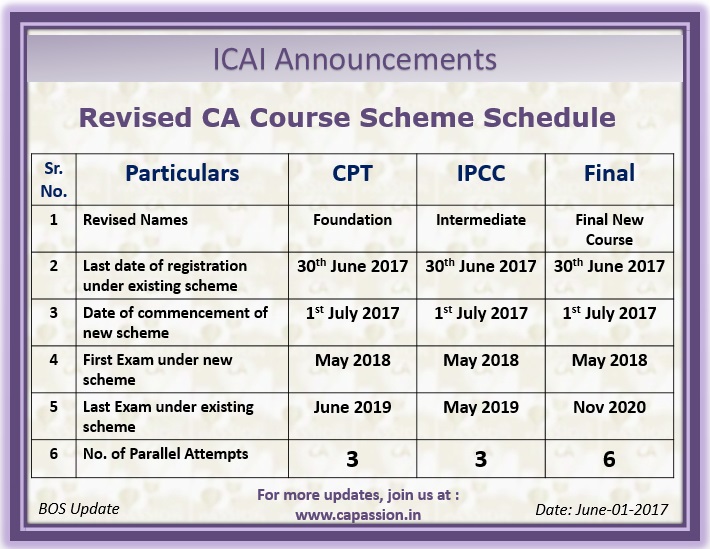
ICAI Exam – The Institute of Chartered Accountants The Institute of Chartered Accountants of India (ICAI) is the national professional accounting body of India. It was established on July 1, 1949, as a statutory body under the Chartered Accountants Act, 1949, enacted by the Parliament (acting as the provisional Parliament of India) to regulate the profession of chartered accounting in India. ICAI is the second largest professional accounting & finance body in the world. Candidates who wish to take up Chartered Accountancy as a career, are required to enroll for the program at ICAI and qualify all the levels of exams within a stipulated period of time to be certified as a Chartered Accountant. Image – ICAI Exam Dashboard ICAI Exams Level 2019 ICAI Exam level for the new course 2019 Foundation Course (CPT) Intermediate Course (Inter) Final Course (CA Final) ICAI Exam About Features & Details Exam Name – ICAI Exam, CA CPT, CA IPCC, CA Final ICAI Name – Institute of Chartered Accountants of India ICAI Exam Level – National Level Exam Exam Frequency – Twice a year ICAI Exam Mode – Online (CPT) & Offline (Inter & Final) ICAI Exam Duration – Three hours Language – English & Hindi Exam Helpdesk No. – 1800-200-2501 Exam Website – visit ICAI Exam Eligibility 2019 ICAI Exam CPT Eligibility Criteria CA CPT Course is the entry level for Chartered Accountancy Course. Students who have appeared in the 12th class examination conducted by an examining body constituted by law in India or an examination recognized by the Central Government as equivalent thereto can register for the Foundation Course. A candidate who registered for CPT 60 days prior to the first day of the month in which the CPT examination is to be held, i.e., on or before April 1 and October 1, can appear in the CPT examinations to be held in June and December, respectively. Candidates who are Graduate or Post Graduate in Commerce with a minimum of 55% of total marks or its equivalent grade in the examination conducted by any recognized University (including Open University) with certain subjects OR Graduates or Post Graduates in any other stream having secured a minimum of 60% of the total marks or its equivalent grade in the examination conducted by any recognized University (including Open University) are exempted from passing CPT. Read More ICAI Exam Intermediate (IPC) Eligibility A student who has passed the Foundation Examination is eligible for registration to Intermediate Course. A student who is Graduate/ Post Graduate in Commerce having secured in aggregate a minimum of 55% of the total marks or its equivalent grade in the examination conducted by any recognized University (including Open University) by studying any three papers carrying a minimum of 50 marks in a semester/year and cumulatively 100 or more marks over the entire duration of the concerned course out of Accounting, Auditing, Mercantile Laws, .Corporate Laws, Economics, Management (including Financial Management), Taxation (including Direct Tax Laws and Indirect Tax Laws), Costing, Business Administration or Management Accounting or similar to the title of these papers with different nomenclatures or other than those falling under Commerce stream having secured in aggregate a minimum of 60% of the total marks or its equivalent grade in the examination conducted by any recognized University (including Open University)and candidates. defibulators.orgimp source> who have passed the Intermediate level examination conducted by The Institute of Cost Accountants of India or by The Institute of Company Secretaries of India are exempted from qualifying Foundation Examination and can join the Intermediate Course. ICAI Exam Final Eligibility The candidate who have passed the Intermediate examination or Professional Education Examination – II./PCC/IPCC, are eligible to apply for the Final exam. The candidate must also have completed 3 years or 3½ years or must be due to complete, as the case may be, of articled training as on the date of filling the form. The candidate must be serving the last twelve months of articled training including excess leave if any, and due to complete 3 years on or before 31st October 2017. (for PE-II stream student and PE-II stream students converted to IPCC). Read More. CA Final ICAI Exam 2019 Exam Center The ICAI exams are conducted at 197 exam centers across India and abroad. Moreover, ICAI has facilitated CA exam centers in five test cities abroad: Abu Dhabi Dubai Kathmandu Muscat Doha List of Test Cities for CA Exam. Agra Ahmedabad Ahmednagar Ajmer Akola Alappuzha . Aligarh Allahabad Alwar Ambala Amravati Amritsar Anand Anantapur Asansol Aurangabad Badlapur Banswara Bareilly Bathinda Beawar Belgaum Bellary Bengaluru Berhampore Bhagalpur Bharatpur Bharuch Bhavnagar Bhilwara Bhiwandi Bhiwani Bhopal Bhubaneswar Bhuj Bikaner Bilaspur Bundi Burhanpur Chandigarh Chandrapur Chennai Chhindwara Chittorgarh Churu Coimbatore Cuttack Dehradun Delhi Dhanbad Dhule Durg Durgapur Eluru Ernakulam Erode Faridabad Fatehabad Firozabad Gandhidham Gandhinagar Ghaziabad Gondia Gorakhpur Guntur Gurugram Guwahati Gwalior Haldwani Haridwar Hisar Hubli Hyderabad Ichalkaranji Indore Jabalpur Jaipur Jalandhar Jalgaon Jalna Jammu Jamnagar Jamshedpur Jhansi Jhunjhunu Jind Jodhpur Junagadh Kaithal Kakinada Kannur Kanpur Karimnagar Karnal Kishangarh Kolhapur Kolkata Kollam Kota Kottayam Kozhikode Kumbakonam Kurnool Latur Lucknow Ludhiana Madurai Malappuram Mandsaur Mangalore Mapusa Margao Mathura Meerut Moradabad . Mumbai Muzaffarnagar Muzaffarpur Mysore Nagpur Nanded Nashik Navi Mumbai Navsari Neemuch Nellore Nizamabad Noida Ongole Palakkad Palgarh Pali Marwar Panipat Panvel Parbhani Patiala Patna Pimpri-Chinchwad Pondicherry Pune Raipur Rajamahendravaram Rajkot Ranchi Ratlam Ratnagiri Rewa Rewari Rohtak Rourkela Saharangpur Salem Sambalpur Sangli Sangrur Satara Satna Shimla Shimoga Sikar Silliguri Sirohi Sirsa Sivakasi Solapur Sonepat Sri Ganganagar Srinagar Surat . Surendranagar Thane Thiruvananthapuram Thrissur Tinsukia Tiruchirapalli Tirunelveli Tirupati Tirupur Tuticorin Udaipur Udupi Ujjain Vadodara Vapi Varanasi Vasai Vellore Vijaywada Visakhapatnam Warangal Yamuna Nagar Yavatmal ICAI Exam 2019 Contact Information Website – http://www.icai.org.in/ The Institute of Chartered Accountants of India (Set up by an Act of Parliament) A-29, First Floor, Administrative Block, ICAI Bhawan Sector-62, Noida(U.P.), P.C.-201301 E-mail: [email protected] Phone No. : 0120-3045994 (Direct) ICAI Exam 2019 The Institute of Chartered Accountancy of India (ICAI) released an official notice regarding the changes introduced in the CA exam pattern from the May
Indian Accounting Standards
ICAI

ICAI releases e-version of a compendium of revised Indian Accounting Standards

Chartered accountants’ body ICAI Thursday said it has released the e-version of a compendium of revised Indian Accounting Standards that incorporate new ICAI standard on leases among other amendments. As part of annual improvements, the Ind AS (Indian Accounting Standards), which is based on International Financial Reporting Standards (IFRS), undergo regular upgradation due to the issuance of new standards or amendments in existing standards by IFRS, the accounting body said in a release. The e-version of the compendium of Ind AS includes amendments that were made in Companies (Indian Accounting Standards) Amendment Rules and became effective on April 1. “During the previous year, there have been certain amendments to Ind AS which have all been incorporated in appropriate places and relevant standards in this updated a version of the compendium,” the release said. The existing standard on leases has been replaced in the new accounting standards (Ind AS 116). “In the new lease accounting model for lessees, leases will be recognized on balance sheet by recognizing a lease liability with a corresponding ‘right-of-use’ asset,” it said. Ind AS 116 will have an impact on the financial statements of the firms. The extent of the impact would vary across industries depending on the financing and leasing structures prevalent in an industry, the release added. Similarly, the compendium also includes changes that provide guidance as to how uncertainty about a tax treatment should be reflected in the accounting for income tax. Learn More:- ICAI CA Exam 2019 “The compendium of Ind AS will be highly useful to all stakeholders in particular prepares and auditors of financial statements. ICAI will also continue to engage in disseminating knowledge of these standards and the changes through a series of initiatives including webcasts, workshops, training programmes, and certificate courses,” Institute of Chartered Accountants (ICAI) President Prafulla P Chhajed said. Source:- Download Here

ICSI (also ICAI) Charging Rs. 500 for certified copies is illegal
ICAI

ICSI (also ICAI) charging Rs. 500 for certified copies is illegal : Supreme Court

ICSI (also ICAI) Charging Rs. 500 for certified copies is illegal As per a recent judgment of the Supreme Court in ICSI v. Paras Jain [Civil Appeal No. 5665/2014, dated 11-4-2019], the High Court held that educational Bodies cannot charge more than RTI fee for providing certified copies to students. The RTI Fee as per RTI Rules, 2012 read with RTI Act, 2005 is Rs. 10 fixed per application + Rs. 2 per page. Hence, charging of Rs. 500 or Rs. 1000 per copy is illegal. Example: Suppose, a student has written 20 pages. Hence, he can be asked to pay only Rs. 50 (Rs. 10 for application + Rs. 2 per page × 20 pages = Rs. 50). Download Copy of Judgment    IN THE SUPREME COURT OF INDIA   CIVIL APPEAL NO. 5665/2014        INSTITUTE OF COMPANIES SECRETARIES OF INDIA (ICSI) v. PARAS JAI ORDER 1. This appeal is directed against the order dated 22.04.2014 of the Delhi High Court wherein, while allowing the Letters Patent Appeal, filed by the respondent herein, it set aside Guideline No.3 notified by the statutory council of appellant–Institute of Companies Secretaries of India (ICSI) and directed it to charge fee prescribed as per Rule 4 of the Right to Information (Regulation of Fee and Cost) Rules, 2005. 2. The factual matrix of the case is that the respondent appeared in the final examination for Company Secretary (ICSI) conducted by the Appellant in December 2012. On being unsuccessful in qualifying the examination, the respondent made an application under the Right to Information Act for inspection of his answer sheets and subsequently, sought certified copies of the same from the appellant. The appellant thereafter has demanded Rs.500/per answer sheet payable for the supply of certified copies of answer book(s) and Rs.450/per answer book for providing inspection thereof respectively as per Guideline No.3 notified by the statutory council of the appellant. It is to be noted that the respondent obtained the said information under the Right to Information Act, 2005. 3. Being aggrieved by the demand made by the appellant, the respondent preferred a Writ Petition before the Delhi High Court wherein the Learned Single Judge dismissed the petition. A Letters Patent Appeal was thereafter preferred by the respondent wherein, the Division Bench quashed Guideline No.3 notified by the appellant and held that the appellant can charge only the prescribed fee under Rule 4, The Right to Information (Regulation of Fees and Cost) Rules, 2005. 4. The short issue before us is when the answer scripts of appellant’s examination is sought whether the fee prescribed under Rule 4 of the Right to Information (Regulation of Fee and Cost) Rules, 2005 payable or that under Guideline No. 3 of the Guideline, Rules and Procedures for Providing Inspection and/or Supply of Certified Copies of Answer Book(s) to Students, framed by the Examination Committee of appellant’s statutory Council at its 148th Meeting held on 14.08.2013. 5. The learned counsel appearing on behalf of the appellant argued that it is undisputed that the Right to Information Act, 2005 is applicable to the appellant. However, in light of specific guidelines formulated under the (ICSI) Company Secretaries Act, 1980, the same should be applicable and not that which is provided under the Right to Information Act. He further contends that owing to quashing of Guideline No. 3 by the Division Bench of Delhi High Court, the appellant cannot collect any amount of fee except the one prescribed under Rule 4, The Right to Information (Regulation of Fees and Cost) Rules, 2005 which adds to financial strain on the appellant. 6. On the other hand, the learned counsel appearing on behalf of the respondent submitted that any candidate who seeks his answer scripts under Right to Information Act, 2005 can only be charged under Rule 4, The Right to Information (Regulation of Fees and Cost) Rules, 2005. Further, the learned counsel submits that the candidates must have a choice to seek the answer scripts either by the avenue under Right to Information Act or under the Guidelines of the appellant framed by the examination committee of statutory Council under the (ICSI) Company Secretaries Act, 1980. 7. Having heard the learned counsels appearing for the parties and we have also meticulously perused the record. 8. The appellant is governed by the provisions of the Company Secretaries Act, 1980 (ICSI) and under Sections 15, 15A and 17, the Examination Committee of the statutory Council has framed Guideline No. 3 providing an avenue to the candidates to either inspect their answer scripts or seek certified copies of the same on payment of the stipulated fees. Guideline no.3 stipulates the payment of Rs. 500 for obtaining certified copies and Rs. 450 for seeking inspection of the same. “3. Fee of ₹500 per subject/answer books payable for the supply of certified copies of answer book (s) and ₹450 per answer book for providing inspection thereof respectively. The fee shall be paid through Demand Draft drawn in favor of “The Institute of Company Secretaries of India”, payable at New Delhi.” 9. On the contrary, Rule 4, The Right to Information (Regulation of Fees and Cost) Rules, 2005 stipulates, “4. For providing the information under subsection (1) of section 7, the fee shall be charged by way of cash against proper receipt or by demand draft or bankers cheque or Indian Postal Order payable to the Accounts Officer of the public authority at the following rates:— (a ) rupees two for each page (in A4 or A3 size paper) created or copied; (b) actual charge or cost price of a copy in larger size paper; (c) actual cost or price for samples or models; and (d) for inspection of records, no fee for the first hour; and a fee of rupees five for each subsequent hour (or fraction thereof).” (emphasis supplied) 10. Thus it is clear that the avenue for seeking certified copies as well as inspection is provided both in the Right to Information Act

ICAI, CA

ICAI – New Lease Accounting Standard Now in Effect

ICAI – New Lease Accounting Standard Now in Effect NEW DELHI: The new accounting standard for leases will bring substantial visibility of companies’ lease commitments and improve the quality of financial information about companies, chartered accountants’ body ICAI said Monday. Ind AS 116, which sets out the principles for recognition, presentation and disclosure of leases has been notified by the corporate affairs ministry. The standard is effective from Monday. senior government official said the standard would affect all industries where leases are a predominant component in their businesses and result in more transparency. ICAI President Prafulla P Chhajed said the new standard on leases ushers in a path-breaking reform in accounting for leases and would improve the quality of financial information. Leasing is a well-known and long established form of obtaining financeNSE 1.76 %. The new standard on leases ushers in a substantial change in the accounting for operating leases by lessees and few improvements in the disclosure-related aspects for lessors accounting, according to the Institute of Chartered Accountants of India (ICAI). It said the key changes in lessees accounting relate to introduction of single lease accounting model by elimination of classification between operating and finance leases, and recognition of gain/loss for sale and lease-back transactions. In the new lease accounting model for lessees majority of leases will be recognised on balance sheet by recognising a lease liability with a corresponding ‘right-of use’ asset,” the release said. The standard would have an impact on three components of financial statements — balance sheet, cash flow statement, profit and loss account. The, extent of impact would vary for each industry depending on the financing and leasing structures prevalent in that industry,” the release said. The institute also noted that the exemptions given for short term leases and low-value asset leases are expected to provide substantial relief from operational complexities to many companies. Ind AS 116 is expected to have a significant impact on various industries, including aviation where airlines mostly operate planes on lease. Leasing of aircraft rather than outright purchase is a common practice in the airlines industry worldwide. Source- Economic times

CA Coaching Classes for CPT,IPCC,CA Final
ICAI

ICAI CA CPT, IPCC & CA Final | CA Online Classes

ICAI CA CPT, IPCC & CA Final | CA Online Classes ICAI CA Online Classes Benefits 1. Versatile Timings – Definitely, CA Online classes is a good option. Students can enjoy ICAI CA Classes (CPT/IPCC/CA Final) at home whatever time is best suitable for them. Many of the ca students doing an articleship/job along with the studies prefer to take the ICAI ca classes at night. For such kind of ca students, ICAI CA Online classes are the best option. 2. Comfort level – You comfort with study at home. You can pause the videos, you can replay the video, you can rewind the videos, you can adjust the speed of the video. No need to follow the rules and regulation of satellite classes. 3. Time-Saving – One of the best points of ICAI CA Online classes is that it saves time. Most of the ICAI ca students residing in other cities or far away from the ca coaching centers (CPT/IPCC/CA Final) can get benefit from these ca online classes. 4. Replay the Concept of video – Many of the times we miss the important concepts. You could not ask such a thing in satellite classes. Hence, CA online classes are better where you can replay the video and understand the vital concept until you are not satisfied (CPT/IPCC/CA Final). 5. Missing classes Problem – It’s difficult to understand the whole chapter when you missing a single class. CA Online Classes resolves this issue by providing video lectures according to your convenience (IPCC). Why Choose Parag Gupta Classes (CA Final)? Parag Gupta Classes is the best ICAI CA Coaching Classes (IPCC) all over India because it provides classes in Virtual Centres or in their app StudyByTech. It covers every concept of your ICAI ca course. Parag Gupta Classes have covered past attempt questions, questions from study material, questions from Practice Manual ,etc. Which means that you don’t need to go through the ICAI for ca study material on your own. Parag Gupta Classes smart compilers will also be provided to every ca student along with ICAI CA Online classes. The students will get connected on all social media platforms of the faculties where they can ask their doubts. All the lectures are available in Hindi and English Language (CPT/IPCC/CA Final) . Procedure for Joining the Best ICAI CA Online Classes Contact Parag Gupta Classes and complete the registration procedure for ICAI CA Online classes. For the first time, Parag Gupta Classes launched ICAI CA Foundation / CPT Online Classes (CPT/IPCC/CA Final) For ordering and further information on ICAI CA Foundation/CPT Online classes (CPT/IPCC/CA Final), you can contact us. Subjects of ICAI CA Foundation/CPT Paper 1: Principles and Practices of Accounting Paper 2: Mercantile Law and General English Paper 3: Business Mathematics and Logical Reasoning Paper 4: Business Economics and Business Commercial Knowledge Subjects of ICAI CA Intermediate/Inter/IPCC Paper 1: Accounting Paper 2: Corporate Laws and Other Laws Paper 3: Cost and Management Accounting Paper 4: Taxation Paper 5: Advanced Accounting Paper 6: Auditing and Assurance Paper 7: Enterprise Information Systems & Strategic Management Paper 8: Financial Management & Economics for Finance Subjects of ICAI CA Final Paper-1: Financial Reporting Paper-2: Strategic Financial Management Paper-3: Advanced Auditing and Professional Ethics Paper-4: Corporate and Economic Laws Paper-5: Strategic Cost Management and Performance Evaluation Paper-6A: Risk Management Paper-6B: Financial Services and Capital Markets Paper-6C: International Taxation Paper-6D: Economic Laws Paper-6E: Global Financial Reporting Standards Paper-6F: Multidisciplinary Case Study Paper-7: Direct Tax Laws and International Taxation Paper-8: Indirect Tax Laws Also Visit here– How to become a CA in India after 12th?

ICAI
ICAI

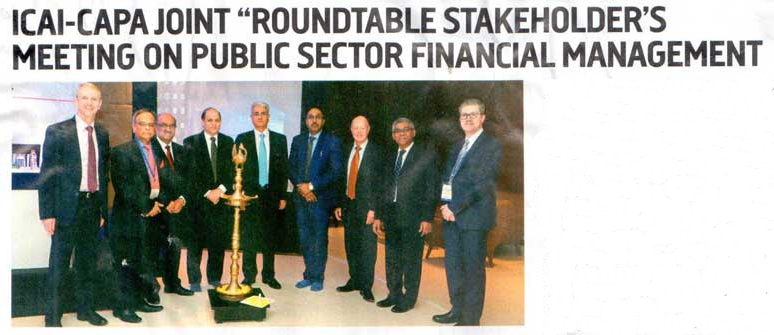
ICAI—CAPA JOINT “ROUNDTABLE STAKEHOLDER’S MEETING ON PUBLIC SECTOR FINANCIAL MANAGEMENT

Source Image – ICAI The Institute of Chartered Accountants of India in collaboration with the Confederation of Asian and Pacific Accountants organized a joint “Roundtable Stakeholder’s meeting on Public Sector Financial Management” in New Delhi on March 11, 2019. The event was inaugurated by Chief Guest Shri Shashi Kant Sharma, Former Comptroller and Auditor General of India  and attended by the delegates from more than 8 countries. The Roundtable gave the attendees an overview of Public Sector in India and the role that the accountancy profession plays in improving its financial management. CA. Prafulla P. Chhajed. President, ICAI said “This event has brought  together professionals from all arenas including the World bank, ADB, CGA, GASAB. CAPA, Ministry of  Finance, Ministry of Railways. Ministry of Communications and many others. I am certain, this sharing of views and discussions of the leamed participants will aid in empowering financial management in the public sector. Speaking on the occasion Chief Guest Shri Shashi Kant Sharma, Former Comptroller and Auditor General of India said. “Accountancy professionals have a great responsibility on their shoulders to make sure that public money is utilized in the right manner.” He further added “Earlier, India was not even among the 10 major economies but by the turn of the millennium it came amongst the top 10 economies. Today, it is 6th largest economy and most projections show that it will be the 3rd largest economy in the next decade. ICAI Vice-President CA. Atul Kumar Gupta said, “Accountancy Professionals are fully geared to take up the challenges ahead as they have in the past.” He also mentioned “ICAI through its Research wing, Accounting Research Foundation is playing a pivotal role as a Partner in Nation. Read- Click Here

CA Final Courses
ICAI

CA Final Course

CA Final Course is the last level to become CA. In this level, usually, students are very scared as this level comes with lots of pressure from family and comparison with the other companions. Although a proper routine of studies and proper diet can help you to get success in the same. Have a look over our other blog Exam Preparation Tips for ICAI and CA Final Students, which will help you to achieve your goal. Below, we have provided you with a glimpse of CA Final syllabus, it’s subjected (with marks) and the process of its registration. This is the last stage of the Chartered Accountancy curriculum. The unique feature of the entire theoretical education of the Chartered Accountancy curriculum is the supportive and complementary practical training. A student would undergo theoretical education and three years of practical training compulsorily during the course of Chartered Accountancy. This balanced approach helps the students to appreciate the underlying practical applications of the theoretical education scheme Students after qualifying both the groups of Intermediate Examination are eligible to register for CA Final Course and would be allowed to appear in CA Final Examination during last six months of practical training after successful completion of Four Weeks Advanced Integrated Course on Information Technology and Soft Skills (AICITSS). Final Course registration is valid for 5 years and can be revalidated any number of times for further 5 years period by paying revalidation fee of Rs. 500/- or as decided by the Council from time to time Subjects covered in CA Final Course Group I Paper-1: Financial Reporting (100 Marks) Paper-2: Strategic Financial Management (100 Marks) Paper-3: Advanced Auditing and Professional Ethics (100 Marks) Paper-4: Corporate and Economic Laws (100 Marks) Part I: Corporate Laws (70 Marks) Part II: Economic Laws (30 Marks) Group II Paper-5: Strategic Cost Management and Performance Evaluation (100 Marks) Paper-6: Elective Paper (100 Marks) (One to be chosen from the list of Elective Papers) Elective Papers 6A  Risk Management 6B  Financial Services & Capital Markets 6C  International Taxation 6D  Economic Laws 6E  Global Financial Reporting Standards 6F  Multi-disciplinary Case Study Paper-7: Direct Tax Laws & International Taxation (100 Marks) Part I: Direct Tax Laws (70 Marks) Part II: International Taxation (30 Marks) Paper-8: Indirect Tax Laws (100 Marks) Part I: Goods and Service Tax (75 Marks) Part II: Customs & FTP (25 Marks) The subjects of the CA final course are classified into two groups which a student can study and appear in the examination group-wise or both the groups together. Download ICAI CA Final Course PDF – Click Here CA Final Courses Registration A candidate has to register for CA Final Course by filling Online Registration Form available on ICAI website (www.icai.org) in “Course Registration Forms” under “Students tab”. CA Final Students While filling the online form, candidates should take care of the following: After filling the Online Form pay the required fees online using the payment gateway. On successful payment, the system will automatically generate the Form, which is to be printed Following documents are to be submitted to concerned Regional Office within 7 days of the date of online registration along with the print out of the online registration form, duly signed by the candidate. Attested copy of proof of Nationality if the student is a foreigner. Attested copy of proof of special category certificate,i.e, SC/ST, OBC, Differently abled. The form and documents are to be submitted in consonance with the address at the following Regional Offices: Download ICAI CA Final Course Registration PDF – Click Here CA Final Courses Syllabus. Download ICAI CA Final Courses Syllabus – Download Here

ICAI Syllabus New Course
ICAI

ICAI Syllabus New Course

ICAI Syllabus New Course ICAI has provided the New course syllabus for CA Exams. We are providing the full syllabus for the new course for CA Final subjects. This will help students to study their course in a proper way. We have also written an article providing tips to score good marks in exams. You can view this article in this link- Click Here Learn:  ICAI Exam- CPT/IPCC/FINAL ICAI CA Final Course ICAI Syllabus New Course There are 8 papers in CA Final Exams, which are further divided into 2 groups. Group 1 contains 4 papers- Paper 1- Financial Reporting Paper 2- Strategic Financial Reporting Paper 3- Advanced Auditing & Professional Ethics Paper 4-Corporate & Economic laws Group 2 consists of 4 paper- Paper 5- Strategic Cost Management & Performance Evaluation Paper 6A- Risk Management Paper 6B- Financial Services & Capital Markets Paper 6C-International Taxation Paper 6D- Economic Laws Paper 7- Direct tax laws Paper 8- Indirect Tax laws PAPER – 1: FINANCIAL REPORTING (One paper – Three hours – 100 Marks)  Contents: Application of Existing Accounting Standards 15, 21, 23, 25, 27 and 28. (The students will also be required to apply other Accounting Standards if applicable in any of the questions). Application of Guidance Notes issued by ICAI on specified accounting aspects. Framework for Preparation and Presentation of Financial Statements in accordance with Indian Accounting Standards (Ind AS). Application of Indian Accounting Standards (Ind AS) with reference to General Purpose Financial Statements Consolidated and Separate Financial Statements (as per Ind AS) Application of Industry specific and Transaction Specific Indian Accounting Standards (other than Business Combination, Financial Instruments and Share Based Payment) Business Combinations and Accounting for Corporate Restructuring (including demerger)(as per Ind AS) Accounting and Reporting of Financial Instruments (as per Ind AS) Accounting for Share Based Payment (as per Ind AS) Analysis of Financial Statements Common defects in financial statements of corporate entities Accounting for Carbon Credits Accounting for E-commerce Emerging trends in Reporting (i) Integrated Reporting (ii) Corporate Social Responsibility Reporting (iii) Human Resource Reporting (iv) Value Added Statement Notes: If either a new Indian Accounting Standard (Ind AS) or Accounting Standard (AS) or Announcements and Limited Revisions to Ind AS / AS are issued or the earlier one are withdrawn or new Ind AS / AS, Announcements and Limited Revisions to Ind AS / AS are issued in place of existing Ind AS / AS, Announcements and Limited Revisions to Ind AS / AS, the syllabus will accordingly include / exclude such new developments in the place of the existing ones with effect from the date to be notified by the Institute. The specific inclusions/exclusions in any topic covered in the syllabus will be effected every year by way of Study Guidelines. The list of Guidance Notes in Accounting and significant Expert Advisory Opinions, wherever applicable, will also form part of the Study Guidelines.  PAPER – 2 : STRATEGIC FINANCIAL MANAGEMENT (One paper – Three hours – 100 marks) Contents: Financial Policy and Corporate Strategy (i) Strategic decision making framework (ii) Interface of Financial Policy and strategic management (iii) Balancing financial goals vis-à-vis sustainable growth. Indian Financial System (i) Introduction to Financial Market (ii) Role of Financial Market in Economic Development Risk Management (i) Identification of types of Risk faced by an organisation (ii) Evaluation of Financial Risks (iii) Value at Risk (VAR) (iv) Evaluation of appropriate method for the identification and management of financial risk. Security Analysis (i) Fundamental Analysis (ii) Technical Analysis a) Meaning b) Assumptions c) Theories and Principles d) Charting Techniques e) Efficient Market Hypothesis (EMH) Analysis Security Valuation (i) Theory of Valuation (ii) Return Concepts (iii) Equity Risk Premium (iv) Required Return on Equity (v) Discount Rate Selection in Relation to Cash Flows (vi) Approaches to Valuation of Equity Shares (vii) Valuation of Preference Shares (viii) Valuation of Debentures/ Bonds Portfolio Management (i) Portfolio Analysis (ii) Portfolio Selection (iii) Capital Market Theory (iv) Portfolio Revision (v) Portfolio Evaluation (vi) Asset Allocation (vii) Fixed Income Portfolio (viii) Risk Analysis of Investment in Distressed Securities (ix) Alternative Investment Strategies in context of Portfolio Management Securitization (i) Introduction (ii) Concept and Definition (iii) Benefits of Securitization (iv) Participants in Securitization (v) Mechanism of Securitization (vi) Problems in Securitization (vii) Securitization Instruments (viii) Pricing of Securitization Instruments (ix) Securitization in India Mutual Fund (i) Meaning (ii) Evolution (iii) Types (iv) Advantages and Disadvantages of Mutual Funds Derivatives Analysis and Valuation (i) Forward/ Future Contract (ii) Options (iii) Swaps (iv) Commodity Derivatives Foreign Exchange Exposure and Risk Management (i) Exchange rate determination (ii) Foreign currency market (iii) Management of transaction, translation and economic exposures (iv) Hedging currency risk (v) Foreign exchange derivatives – Forward, futures, options and swaps International Financial Management (i) International Capital Budgeting (ii) International Working Capital Management a) Multinational Cash Management Objectives of Effective Cash Management Optimization of Cash Flows/ Needs Investment of Surplus Cash b) Multinational Receivable Management c) Multinational Inventory Management Interest Rate Risk Management (i) Interest Rate Risk (ii) Hedging Interest Rate Risk a) Traditional Methods b) Modern Methods including Interest Rate Derivatives Corporate Valuation (i) Conceptual Framework of Valuation (ii) Approaches/ Methods of Valuation a) Assets Based Valuation Model b) Earning Based Models c) Cash Flow Based Models d) Measuring Cost of Equity Capital Asset Pricing Model (CAPM) Arbitrage Pricing Theory Estimating Beta of an unlisted company e) Relative Valuation Steps involved in Relative Valuation Equity Valuation Multiples Enterprise Valuation Multiple f) Other Approaches to Value Measurement Economic Value Added (EVA) Market Value Added (MVA) Shareholder Value Analysis (SVA) g) Arriving at Fair Value Mergers, Acquisitions and Corporate Restructuring (i) Conceptual Framework (ii) Rationale (iii) Forms (iv) Mergers and Acquisitions a) Financial Framework b) Takeover Defensive Tactics c) Reverse Merger (v) Divestitures a) Partial Sell off b) Demerger c) Equity Carve outs (vi) Ownership Restructuring a) Going Private b) Management/ Leveraged Buyouts (vii) Cross Border Mergers International Financial Centre (IFC) (i) Constituents of IFC (ii) Islamic Finance a) Major difference between Islamic Finance and other forms of

ICAI-CA-Final-Exam-Preparation-Tips
ICAI, Blogs

ICAI CA Final Exam Preparation Tips

Exam Preparation Tips for ICAI and CA Final Students Exam tips while writing our exam paper The biggest blunder we commit in an ICAI exam or other exam is that we don’t relax just before the exam. We try to mug up everything at the last moment. What we forget is that no race can be won by a fatigued mind. What we need to do is to close our eyes for a while and meditate for the time being.This will soothe our minds and we will perform well in the final exam. While writing exams we seem to be very slow at the beginning but as time passes we start gaining momentum and this will boost our confidence with the help of early exam meditation. Best way to write an exam paper Remember the best way to write an ICAI exam paper is to first analyze what has been asked in that paper. It will take around five to six minutes to gain that understanding. Your approach shall be now the whole paper is in your grip in just five to six minutes. Now, start writing the paper at full pace. Do not wait for an ultimate moment to increase your speed. Start writing at full pace from the initial moment itself. How to attempt the question paper? Let’s talk something about theoretical and numerical questions. Always prefer to do theoretical at the beginning. In theory, we have only two options : Either you know the answer or You don’t know the answer to the mind is clear but if we talk about the numerical part we would not be sure where we are going to be stuck while attempting the question. The reason for getting stuck can be an error in calculation, a comprehension problem in a line of questions, a lack of confidence in applying a concept, etc. Being an ex-examiner, I can assure you that, in general, every exam step marking is done in both theories as well as numerical and it does not hamper your impression if you attempt theory first. One more thing, in several CA final exam papers theory and numericals are in the blended form . What I mean to say is that , in general, one-third of paper belongs to theory questions so obviously, you can’t ignore it. Now, let’s allocate your time for writing our paper. Avoid these after exam : Don’t be afraid that you have not completed a question, Do not feel uncomfortable, Don’t lose your confidence If youa are unable to complete your question, do not worry at all because as I mentioned above you about the step marking processor . I know we don’t feel happy unless we write the whole solution but remember there is a difference between the cinema hall and exam hall so focus on scoring, not on happiness. After ICAI exam, keep this thing in mind that do not dicuss exam after attempting it beacuse it may leads to hamper your next exam . So, it will be better for you if you  focus on your next exam. Note– If you like this post then you can share this post with your friend, family members or another person.

Scroll to Top